

Good morning.
There’s something especially cruel about being fired by the place you go to get hired. Reuters reported Wednesday that Microsoft-owned LinkedIn is preparing to lay off 5% of staff. The company says the cuts are not related to artificial intelligence, and that it is refocusing personnel around growth areas, the news agency reported.
Unfortunately, this year has been a nightmare for tech workers, even without evidence of a mass-scale AI disruption. According to layoffs tracker Layoffs.fyi, more than 103,000 employees in the sector have been let go in 2026, or more than 80% of the 124,000 who were laid off through all of last year. Surely, someone will comp the latest batch a LinkedIn Premium Career subscription?
What Wall Street CEOs Want from Trump-Xi Summit
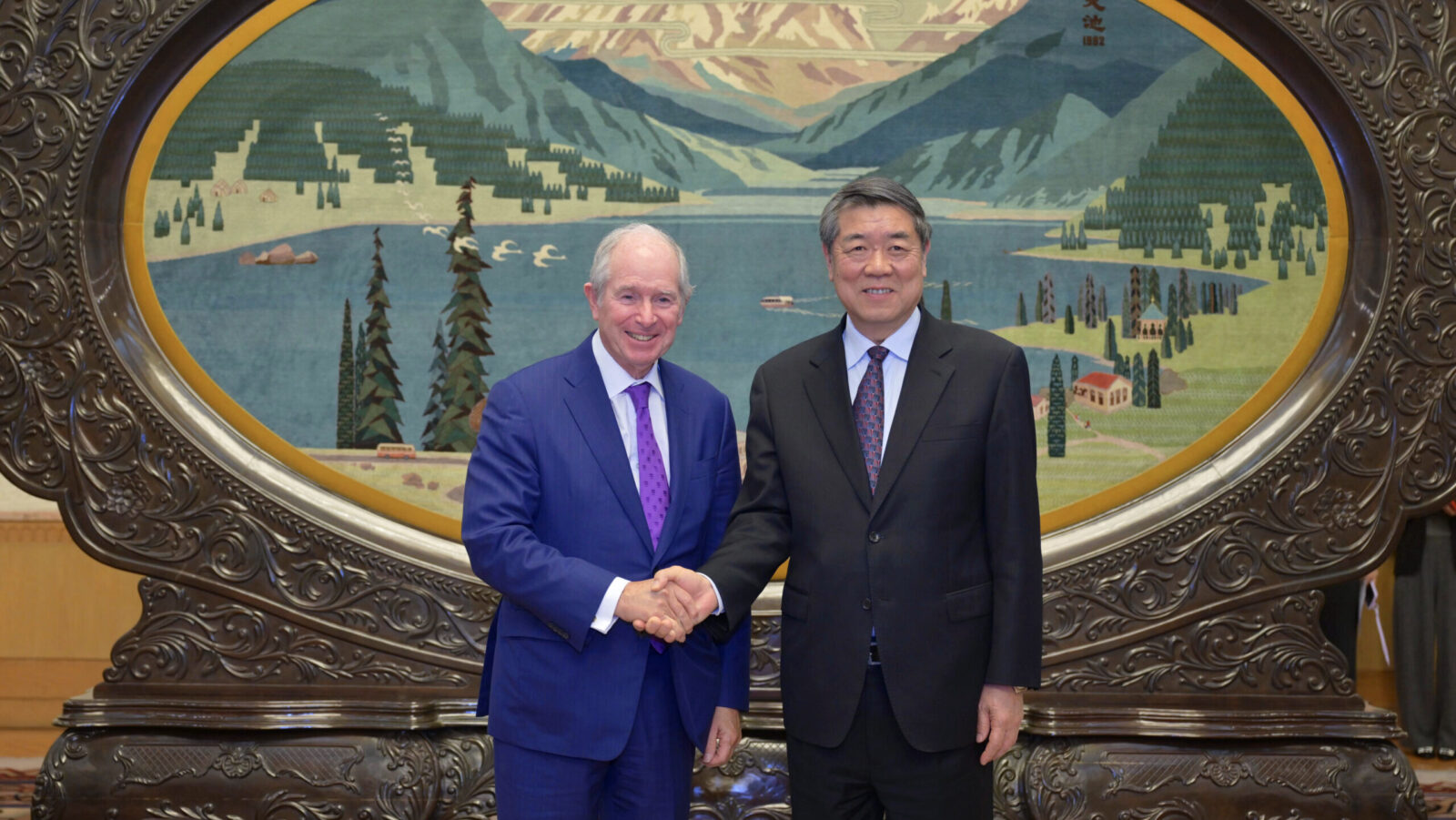
The combined net worth of the more than a dozen US CEOs who joined President Donald Trump for a two-day summit in China that kicked off today is nearly $1 trillion. Yes, $688 billion of that is Elon Musk’s, but any beggar would happily settle for Jensen Huang’s estimated $183 billion fortune.
Most of the total comes from the tech powerhouses represented: In addition to Tesla’s Musk and Nvidia’s Huang, there’s “Tim Apple,” as Trump once called Apple CEO Tim Cook. However, a mighty Wall Street contingent featuring the likes of Stephen Blackstone, Larry BlackRock, Jane Citigroup and David Goldman Sachs is there, too.
Just One Ask
The thing Wall Street wants from this week’s gathering is more obvious than 7-foot-6 former NBA star Yao Ming at China’s National People’s Congress: less uncertainty. Last year, Trump’s global trade war heated up to Sichuan levels of spicy, as he at one point imposed 140% tariffs on Chinese imports. China responded by blocking exports of rare earth minerals, crucial to all kinds of advanced manufacturing, to the US.
Citigroup, which maintains a major institutional presence in the country, said on an earnings call in February that major global clients have been put “in a very challenging environment” because of geopolitical factors including US-China relations.
Goldman Sachs, in its March annual report, echoed the sentiment, saying its business “may be adversely affected by disruptions in the global economy caused by escalating tensions between the US and China.” Predictions markets are betting these firms, all of whose CEOs are in Beijing with Trump, will get the sort of stabilizing news they want, while other Wall Street firms go in with more bespoke hopes:
- As of this morning, traders on Kalshi placed the odds Trump will announce the extension of an October tariff truce with Beijing at 80%. That deal saw China pause its export controls on rare earths while the US halved the tariffs Trump levied over fentanyl.
- Of particular note, payments giant Visa, whose CEO Ryan McInerney is on the trip, has been waiting nine years for Chinese regulators to approve its application for a domestic payments license. Rival Mastercard, whose President Michael Miebach will also be there, was approved in 2020 (the same year as Amex) and, according to Reuters, wants US officials to press China to allow it to take a bigger stake in its joint venture with Chinese partner NetsUnion.
Car Problems: The share of China’s foreign direct investment made in North America has plummeted from 27% a decade ago to 2.6% last year, but Trump told the Detroit Economic Club in January he would welcome Chinese companies, especially automakers, manufacturing on US soil if it meant creating American jobs. Members of Congress, however, both Republican and Democrat, cautioned him against entertaining any such notion ahead of this week’s summit.
The $1T-a-Year Traders Who Got Sick of Waiting on Wires

Institutional payments still take days to settle, leaving fees to stack up. The infrastructure underneath hasn’t meaningfully changed in decades.
The team behind Monad knows this problem intimately. Founded by former high-frequency traders from Jump Trading — where they helped move over $1 trillion in notional volume annually — they applied that same obsession with speed and efficiency to borderless payments.
The result: 10,000 transactions per second, near-instant settlement and near-zero fees. High-performance infrastructure that lets institutions:
- Cut prefunding with real-time stablecoin settlement.
- Power debit card flows and other use cases that need fast finality.
- Run payroll continuously, not in batch cycles.
Wall Street speed, borderless rails. The rails have finally caught up to the traders.
Citrini Finds Upside for AI Power Player Wolfspeed
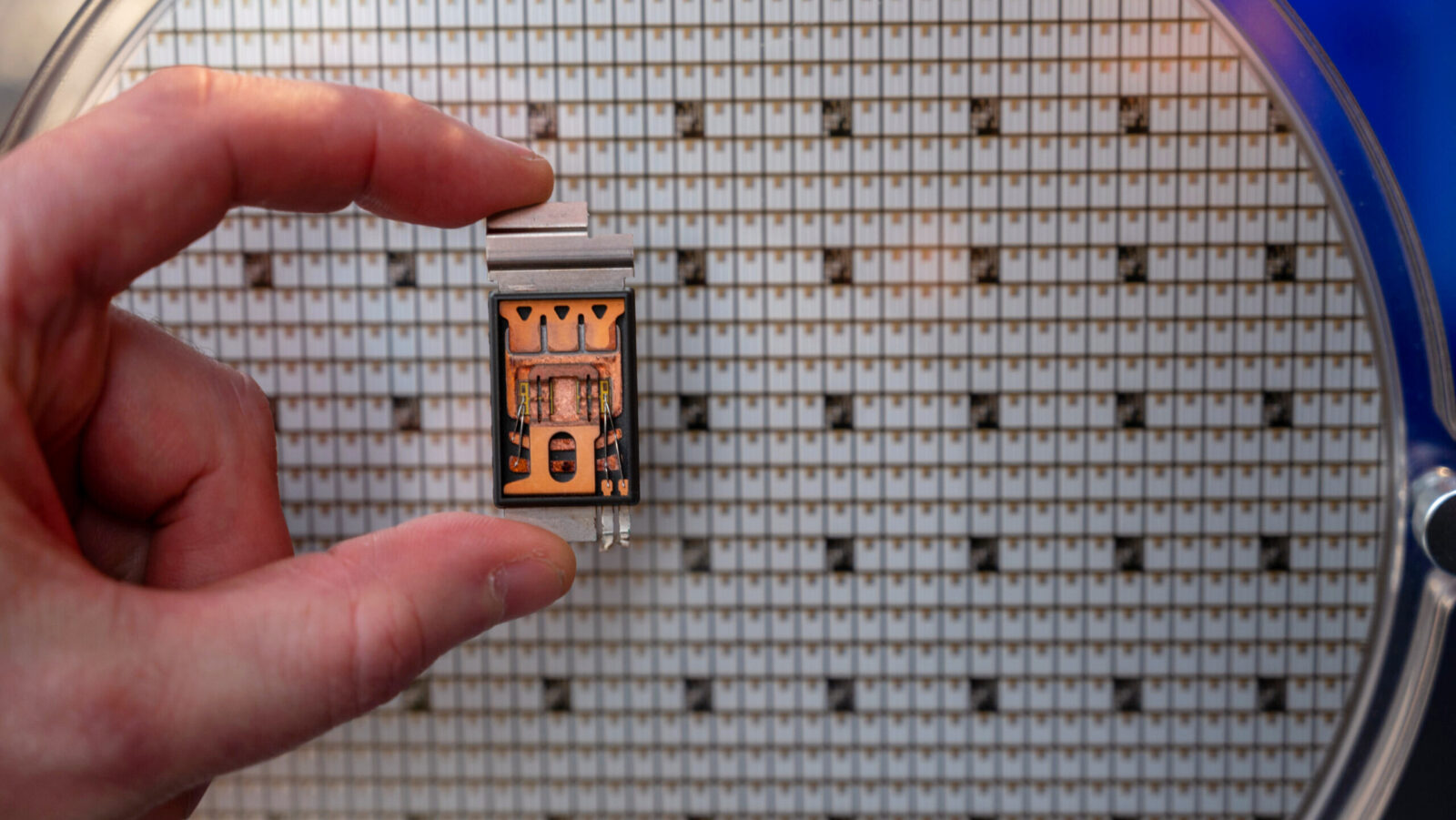
When it comes to data centers, all power flows through Wolfspeed. Literally.
Shares of the company soared more than 16% on Wednesday after a Citrini Research report argued that its silicon carbide “power semiconductors,” which control the voltage of power flowing through everything from AI data center servers to EVs, place it comfortably at the center of the ongoing AI infrastructure rollout. Yes, the same Citrini Research whose 2028 AI doomsday scenario spooked Wall Street earlier this year is now moving markets by finding a little daily upside in the AI boom.
The Next Chapter
The Citrini callout, part of a broader paywalled analysis of AI supply chain winners posted Tuesday, is a sign of Wolfspeed’s remarkable comeback. The company filed for Chapter 11 bankruptcy last June, after it failed to secure $750 million in government grants via the 2022 Chips Act that were contingent on the company successfully refinancing its debt load. In May of last year, Wolfspeed was the most shorted US stock by percentage of shares sold short, according to S&P Global Market Intelligence. But the firm exited Chapter 11 bankruptcy by September, having successfully reduced its debt by 70%.
Now, it has become one of the hottest stocks on the market, up more than 230% this year, and its past missteps seem to be the very thing setting it up for success:
- Last year, the company crumpled under its debt after aggressively expanding its production capacity before demand could catch up. But in 2026, the biggest AI firms can’t keep up with compute demand, and Wolfspeed’s efficiency-minded tech is looking more appealing than ever.
- In its report, Citrini called Wolfspeed “a crouching tiger getting ready to reveal a dragon that deserves to not just be priced based on what their fab’s replacement value theoretically is, but reflect the fact that it’s not going to be replaced,” adding that its “setup now, on the other side of bankruptcy, is perfect.”
Speed Trap: Still, Wall Street isn’t exactly basing its positions on current fundamentals. In its third-quarter earnings call earlier this month, Wolfspeed reported a net loss of roughly $120 million on revenue of about $150 million, down from about $185 million a year ago, and said it paid $52 million in interest. In other words, the turnaround is still very much in progress, though Citrini sees light at the end of the tunnel.
The 15-Minute Retirement Plan

A comfortable retirement requires a plan that accounts for all your cash flow needs, as well as inflation’s quiet erosion of your savings. Fisher Investments’ guide offers insights to help you prepare. If you have $1 million or more, get your guide to help build a portfolio that lasts.