

Good morning.
With the United States hosting this year’s World Cup, FIFA is adding some Super Bowl panache, staging its first-ever halftime show during the July 19 final at New Jersey’s MetLife Stadium. On Thursday, FIFA said the performance will be co-headlined by South Korean boy band BTS, Colombian singer Shakira and the USA’s very own Queen of Pop, Madonna.
The news sent shares in Hybe, BTS’s publicly traded agency, up 7.2%, adding $470 million to its market capitalization. The wildly popular group may well prove worthy of the stock bump, but nothing will prove more entertaining than the ritual UK media meltdown when England inevitably crashes out before the semi-final.
Building Batteries for Data Centers Re-Energizes Ford Stock
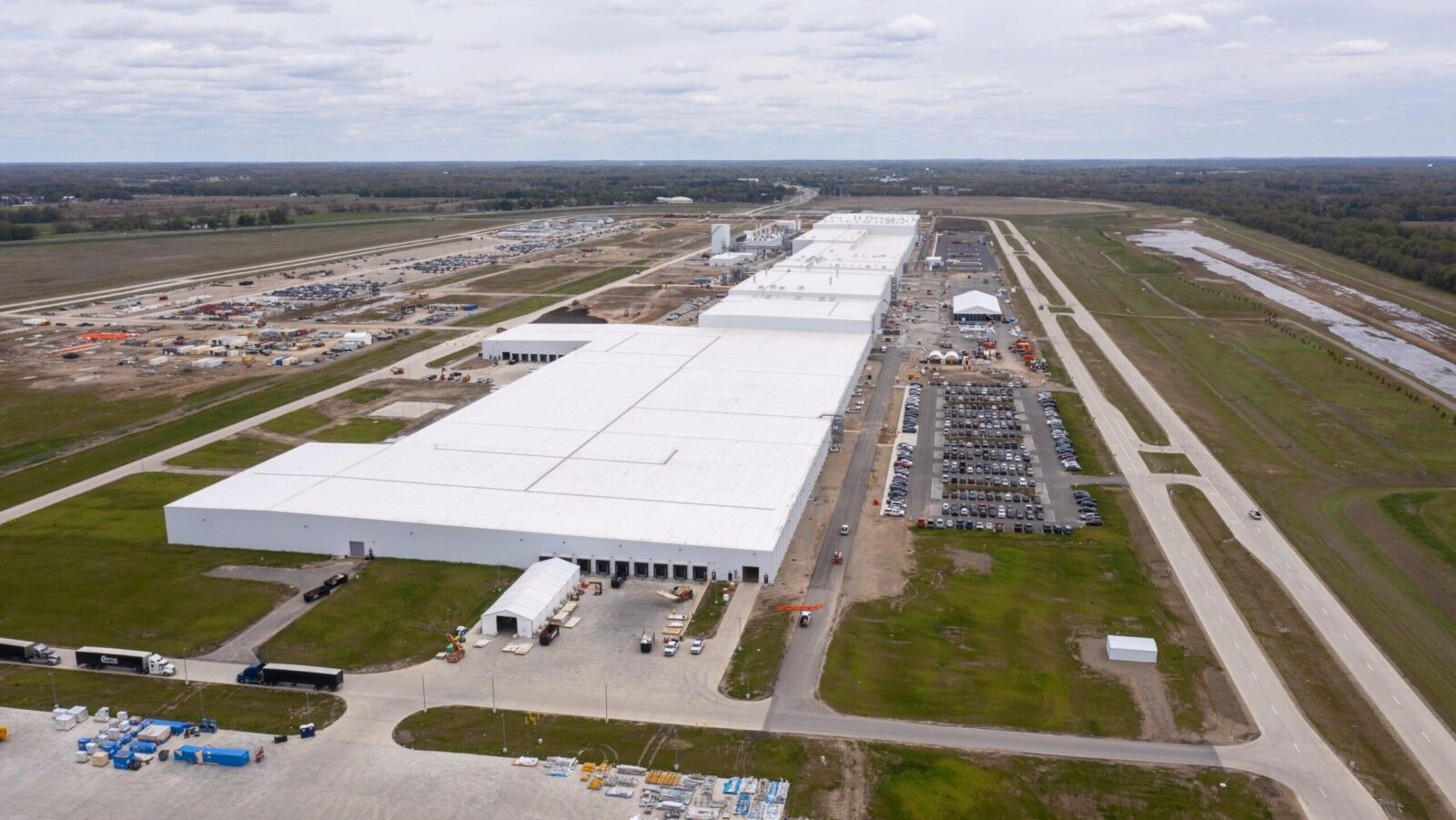
After slamming the brakes on its EV push, Ford is charting a new route back to the electrified future.
This week, the Detroit automaker formally announced Ford Energy, a subsidiary that’s repurposing its EV battery-making infrastructure to supply large-scale energy storage systems for utilities, large industrial and commercial customers, and, of course, AI data centers. When in doubt, drive toward the hyperscalers …
Powering Up
The energy unit has been in the works for a long time, and Morgan Stanley analysts flagged its launch as the potential starting point for a $10 billion business. Of particular note, they said, is Ford’s license to use technology from Contemporary Amperex Technology Co. Ltd., a.k.a. CATL, the Chinese behemoth that is the Nvidia of battery tech. In fact, Ford has almost finished building its $3 billion “BlueOval” battery manufacturing plant in Marshall, Michigan, despite pushback in Washington over its China ties. Another facility in Kentucky is pivoting from EVs to storage battery units. Morgan Stanley has called access to CATL technology an “underappreciated strategic competitive advantage” for Ford Energy and projected the unit would sign supply agreements with major customers in the coming months. Shares climbed 6.7% on Thursday as Ford reiterated plans to plow $2 billion into the unit, re-energizing investors after its EV strategy flopped:
- In December, the company said it would record a $19.5 billion writedown of its EV business. It canceled a line of EV trucks amid a broader pullback due to lackluster US demand and said it would double down on good ol’ combustion-engine cars.
- That was all before the energy shock from the Iran War prompted drivers to rethink their dependence on oil and gas. Global registrations of EVs rose for the second straight month in April, consultant Benchmark Mineral Intelligence said this week. They dipped 28% in North America, however, reflecting the loss of the $7,500 EV tax credit that was still in effect last spring.
Highway Diplomacy: Speaking of international relations, Ford’s CATL partnership may be a sign that Beijing’s presence in America’s auto scene will expand, if politics doesn’t get in the way. During a speech to the Detroit Economic Club in January, President Trump said it was time to “let China come in” and build auto factories that employ US workers, though he later walked back the sentiment. More recently, a bipartisan bill has been introduced to restrict certain Chinese vehicles, software and hardware from entering the US market, though some see such restrictions as self-defeating. “The only way international carmakers can compete with the Chinese carmakers is to collaborate with the Chinese suppliers,” Morgan Stanley’s Tim Hsiao recently told the South China Morning Post. Not for nothing, Detroit’s Big Three was not invited to tag along on the president’s Beijing trip this week.
Are You Happy with Your Phone Plan, or Stuck to It?

Most mobile providers need a contract. The service earns your loyalty; the exit fee makes sure of it.
Tello keeps it simple: there isn’t a contract.
No penalty, no paperwork. Get Unlimited everything for $25 a month, reliable coverage on America’s largest 5G network, a real person on the other end when something goes wrong, and the door is always open if it doesn’t work out.
You’ll stay with Tello because you want to. Not because you have to.
Go to tello.com and choose the plan that fits you best, or build your own: Up to $25/month.
Amazon, Walmart Wage Ultra-Fast Delivery War
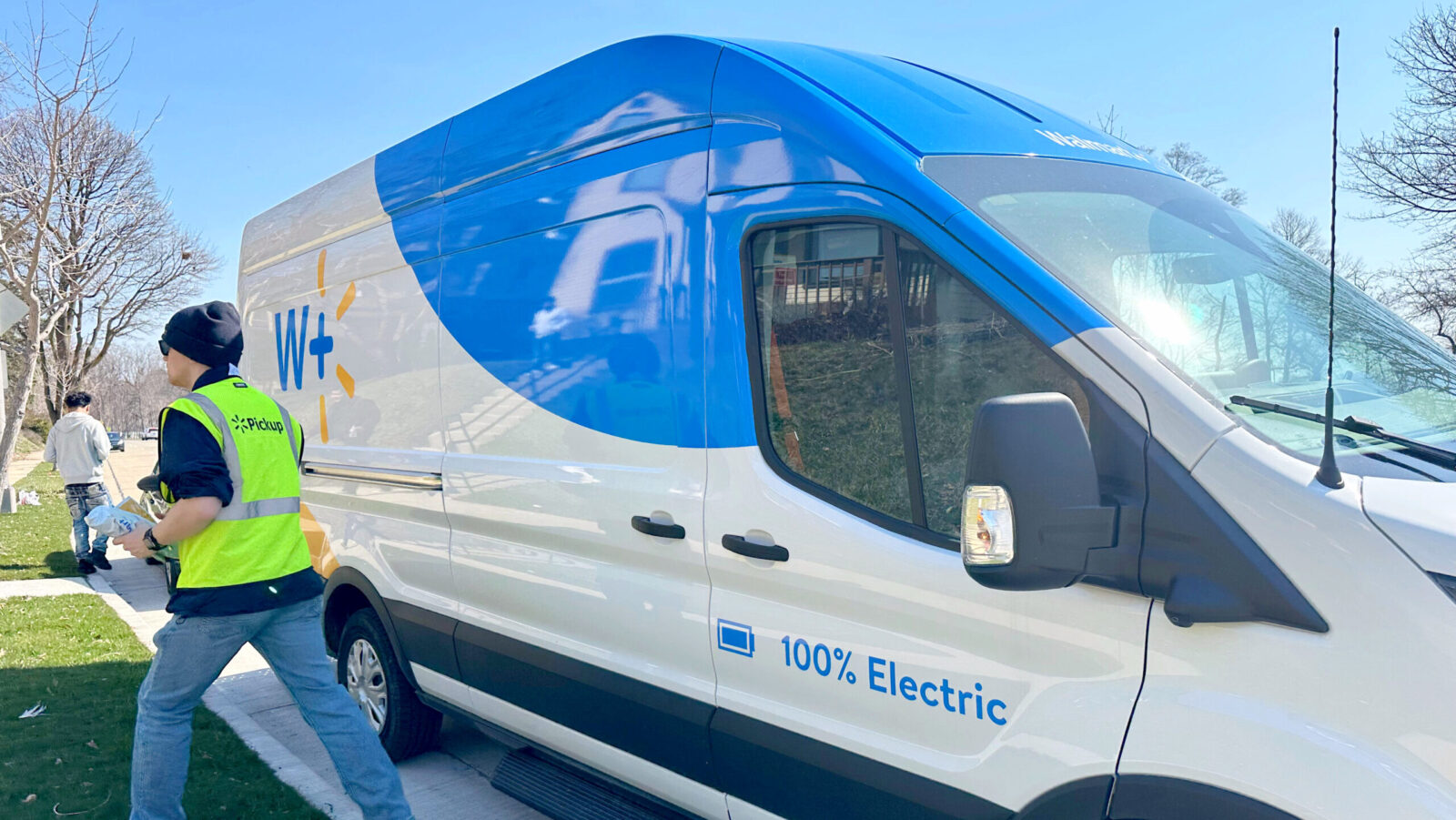
In the third decade of the 21st century, “30 minutes or less” goes way beyond pizza.
Amazon launched a 30-minute delivery service dubbed Amazon Now that provides “fresh groceries, household essentials and locally relevant items” in select markets this week, the e-commerce giant said in a statement. The move comes as fierce rival Walmart scours the nation for vacant storefronts to use as its own rapid-delivery hubs, according to a Financial Times report.
Tough Turf
In fact, Walmart has been expanding its hub footprint for some time now. Public filings show the big box behemoth has already opened delivery hub locations, dubbed Walmart Depots, in New Jersey, Dallas and Arkansas; the FT’s reporting revealed it’s exploring more locations everywhere from New York City to Florida and the Pacific Northwest.
Amazon, for its part, launched Amazon Now in Atlanta, Dallas–Fort Worth, Philadelphia and Seattle, with plans for a “rapid expansion” to dozens more US cities this summer. With the moves, both companies are attempting to encroach on each other’s territories:
- For Walmart, the rapid-delivery push is part of a broader effort to rapidly scale its e-commerce game and compete with Amazon. Last year, the company booked about $124 billion in e-commerce revenue; that’s up 24% year-over-year, but still pales in comparison with Amazon’s $588 billion in annual revenue, excluding web services.
- On the other hand, Walmart’s grocery business still wallops Amazon’s, though Amazon said in January that perishable grocery sales through its same-day delivery service grew 40 times over the past year.
In a Hurry: While Walmart’s existing network of 4,600 mainline stores has already provided a bedrock for run-of-the-mill same-day delivery, the Walmart Depots aim to solve a hidden problem: regular Walmarts are massive, and an army of delivery couriers has to navigate the roving bodies of regular customers. The much smaller and closed-to-the-public Depot locations allow delivery drivers to get in and out with much less fuss. Sounds to us like it may be time to revive “Supermarket Sweep.”