
Good morning.
There are bugs, and there are infestations. It started last Thursday, when millions around the world found themselves without Microsoft 365 services after a defective system update overloaded servers. A day later, on Friday, a mismanaged telecommunications copper wire installation halted all US air traffic, temporarily stranding millions. On Monday, the banking sector delivered the latest technical malfunction to drive Americans towards a pre-Thanksgiving crash-out.
Thousands of customers at Bank of America, JPMorgan Chase, Capital One, Wells Fargo and other major lenders found themselves unable to access their accounts after an unspecific technical issue at Chase led to knock-on effects across the financial system. We don’t subscribe to any of the conspiracy theories lighting up the dark side of the internet. But if the streetlamps in your neighborhood start flashing like they were programmed for Studio 54 in 1977 later this evening, don’t be surprised.
Welcome to the Post-Jensen Era: Nvidia Reports Today, Questions About the Old Boss Remain
It’s not a comeback. Seriously. Because it’s not happening.
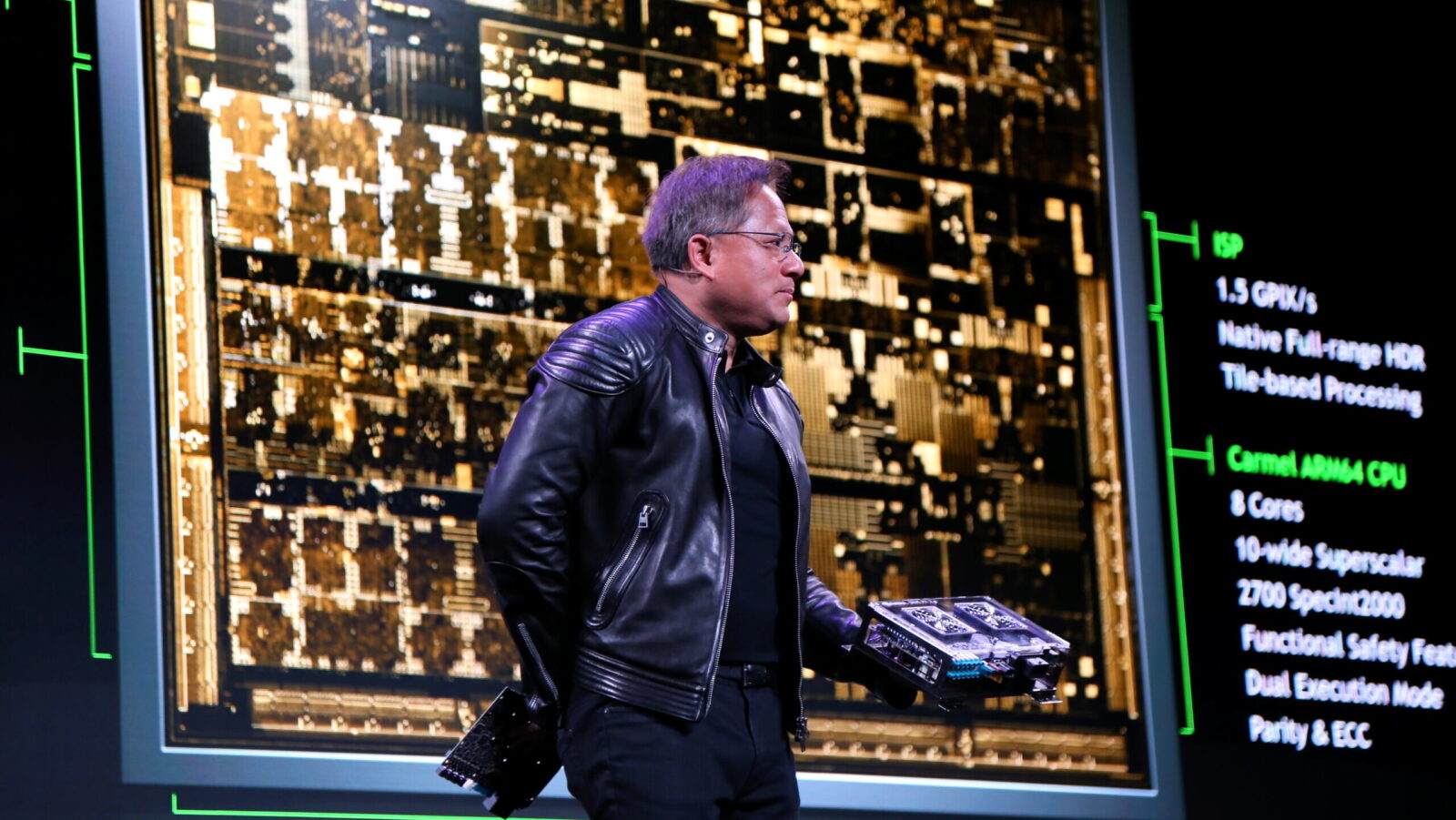
On Monday, US President Donald Trump threw his lot in with those calling for former Nvidia CEO Jensen Huang to be reinstated at the company he cofounded in 1993, a group that includes Tesla CEO Elon Musk and thousands of Nvidia employees. The company’s board, however, let the world know through unnamed media sources that the idea of bringing back Huang is not on their agenda (The Daily Upside itself had the great pleasure of hearing from “a source familiar,” who confirmed the story for us). Top of the to-do list for interim CEO Colette Kress is Nvidia’s third quarter earnings, which will be released after the bell today.
Bye Bye Leather Jacket
Huang’s unexpected downfall put markets, already skittish about the AI trade in recent months, in fingernail-chewing mode. Shares in Nvidia, the world’s second third most valuable company, have fallen more than 10% in the last five trading days. The tech-heavy Nasdaq slipped 2.5% in advance of the first Jensen-less report.
“The black leather jacket and rock star persona is gone for good,” said Yorkville Ives Senior Managing Director Dan Ives, one of the street’s most astute tech watchers, on Monday. “Any talk of a damaged Jensen coming back to Nvidia is ridiculous.” Fashion may change, but investors still will want to hear about some outstanding issues involving the old boss. First, as CEO, Huang turned Nvidia into a kind of central bank for the AI boom, placing the company at the heart of an effort to mobilize as much as $500 billion to build key infrastructure. With him gone, Morningstar analysts wrote that it’s “unclear … whether any partnerships will fizzle under new leadership.” Then there’s a more unsavory matter. Last summer, Nvidia reported data center hub Singapore was the source of 22% of its revenue, but later cut the figure from its geographic sales breakdown. The island nation is now at the center of the controversy because it’s home to Megaspeed, a major purchaser of Nvidia chips whose former director Alice Huang is the suspected Chinese intelligence asset that Jensen had a relationship with:
- Last night, the US Commerce and Justice Departments issued a joint statement indicating Megaspeed has been under investigation for export control violations (presumably involving China) since 2024 and that Nvidia added the company to a ‘no sell list’ in June 2025. They said US officials interviewed Alice Huang last year and pledged to “bring the full extent of the law against Megaspeed” if they find violations.
- In an effort to address concerns about its foreign dealings, Nvidia’s board announced this morning that it’s forming a National Security and Export Control Oversight Committee that will work with outside experts to strengthen trade compliance. That follows an announcement by the Trump administration yesterday that it is cracking down on the ability of states subject to export restrictions (e.g. China) to use third countries (e.g. Singapore) to access advanced AI chips and servers.
It’s not all doom and gloom, as the Trump admin is set to name Nvidia as one of two dozen AI “national champions,” a title that The Wall Street Journal reported will come with the privilege of expedited export approvals for its semiconductors.
Chips and Dip: For now, most analysts still believe Nvidia’s business is on sound footing, and even a bargain candidate given the stock’s recent tumble. Morningstar expects good things from today’s quarterly report, including an earnings beat (the company projects about $108 billion in third-quarter revenue) and a guidance hike. “Nvidia chip demand in the next few years is not changing without Jensen,” added Ives. “The view that the Nvidia story is done without Jensen is fictional.”
Preventing Another FAA Shutdown Won’t Be Simple (Or Cheap)
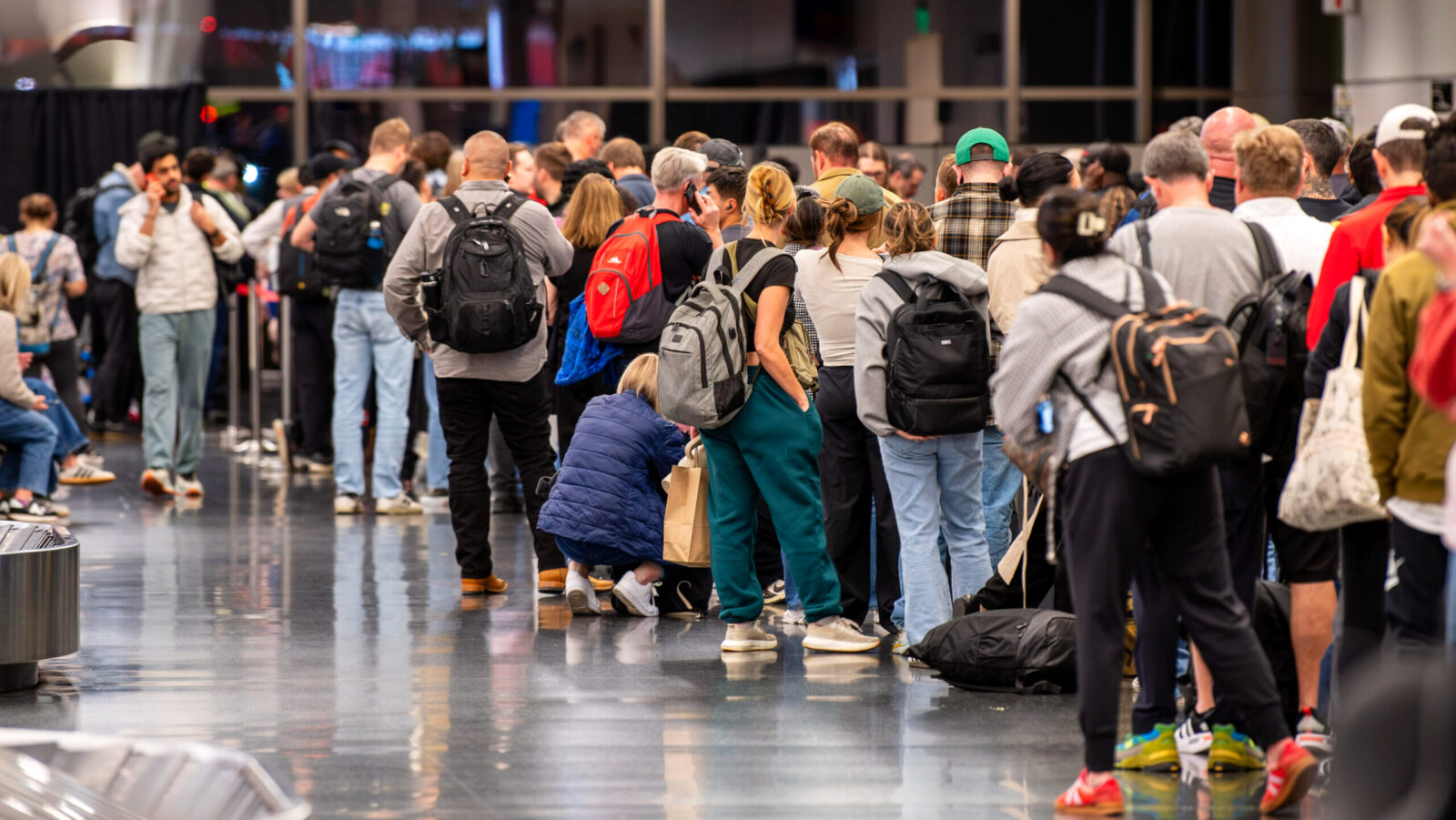
Speculation ran high last week as stranded travelers tried to figure out what caused the longest nationwide ground stop since Sept. 11, 2001. Over the weekend, investigators found out the reason was the same scenario that might shut down the internet at your parents’ house when you visit for the holidays: Someone tried to install a new router.
Government officials on Saturday blamed the installation of a router for Friday’s more than four-hour shutdown of domestic air travel that disrupted more than 20,000 flights. The tech upgrade was a small part of L3Harris’ larger plan to modernize aging US air communications systems.
Turn It All Off and Back On Again
Transportation Secretary Sean Duffy doesn’t only blame the technician who had a very unlucky Friday the 13th installing new tech. Duffy instead pointed to a shortfall in the funding needed to upgrade the US’ air traffic control systems — a plan that includes swapping old copper wiring for fiber — and asked for $50 billion in emergency funding.
L3Harris has said it’s more than 70% done swapping the FAA’s copper lines for fiber. It’s still unclear how one piece of equipment wreaked havoc on a national scale, but the epic oopsy has Duffy reconsidering all of the US’ air-traffic network’s underlying tech infrastructure:
- On Sunday, Duffy said L3Harris owns and operates the FAA’s communications network, and he’s “stuck with” the company until a new system is built. Its current FAA contract dates back to the dial-up internet era of 2002.
- Duffy’s solution: replace L3Harris’ network with a new one built by major telecom providers. That will require a huge cash infusion at a time when government funding has dried up. “I’m asking for billions of dollars from Congress to build a brand-new architecture of a network, by the best companies in the world including AT&T, Verizon and Lumen,” Duffy said.
Airplane Mode: The entire industry that handles air travel has become notorious for outdated tech. United Airlines yesterday said it was experiencing a “widespread system outage,” and it’s the latest in a string of aviation tech failures. In 2022, Southwest canceled more than 16,000 flights amid a meltdown of its crew-communications system, a system that still necessitated phone calls. And in 2024, a faulty update from cybersecurity firm CrowdStrike knocked major airlines offline — Delta alone canceled about 7,000 flights over five days. Outdated systems don’t just make disruptive accidents more likely but leave gaps hackers can target. While Friday’s shutdown turned out not to be cybersecurity-related, those speculating weren’t wrong to raise the possibility.
200+ Claude Prompts to Level-Up Your Day-to-Day

How well do you really know Claude? For many professionals, it’s a handy grammar tool and search bar. Sign up for Superhuman AI and you’ll receive 200+ prompts that transform it into your personal analyst, editor, and strategist. Claim your free prompts today.