

Good morning.
The blue chip index rode the blue wave like a World Surf League champion. The Dow Jones Industrial Average closed up 3% on Wednesday, a day after American voters chose Democrats to take control of Congress in the New Year.
The Dow hasn’t had such a strong post-midterm election rally since 1982, when Democrats held the House of Representatives and Republicans held the Senate during GOP stalwart Ronald Reagan’s first term. The return of divided government, with President Donald Trump keeping the executive branch in Republican hands until at least January 2029, definitely contributed to Wednesday’s chipper mood. That’s because, the thinking goes, gridlock in Washington means fewer and less dramatic policy swings for financial markets to absorb. Some Reagan-era gas prices wouldn’t hurt, either.
The Lone Star State of Data Centers After Historic Texas Midterms
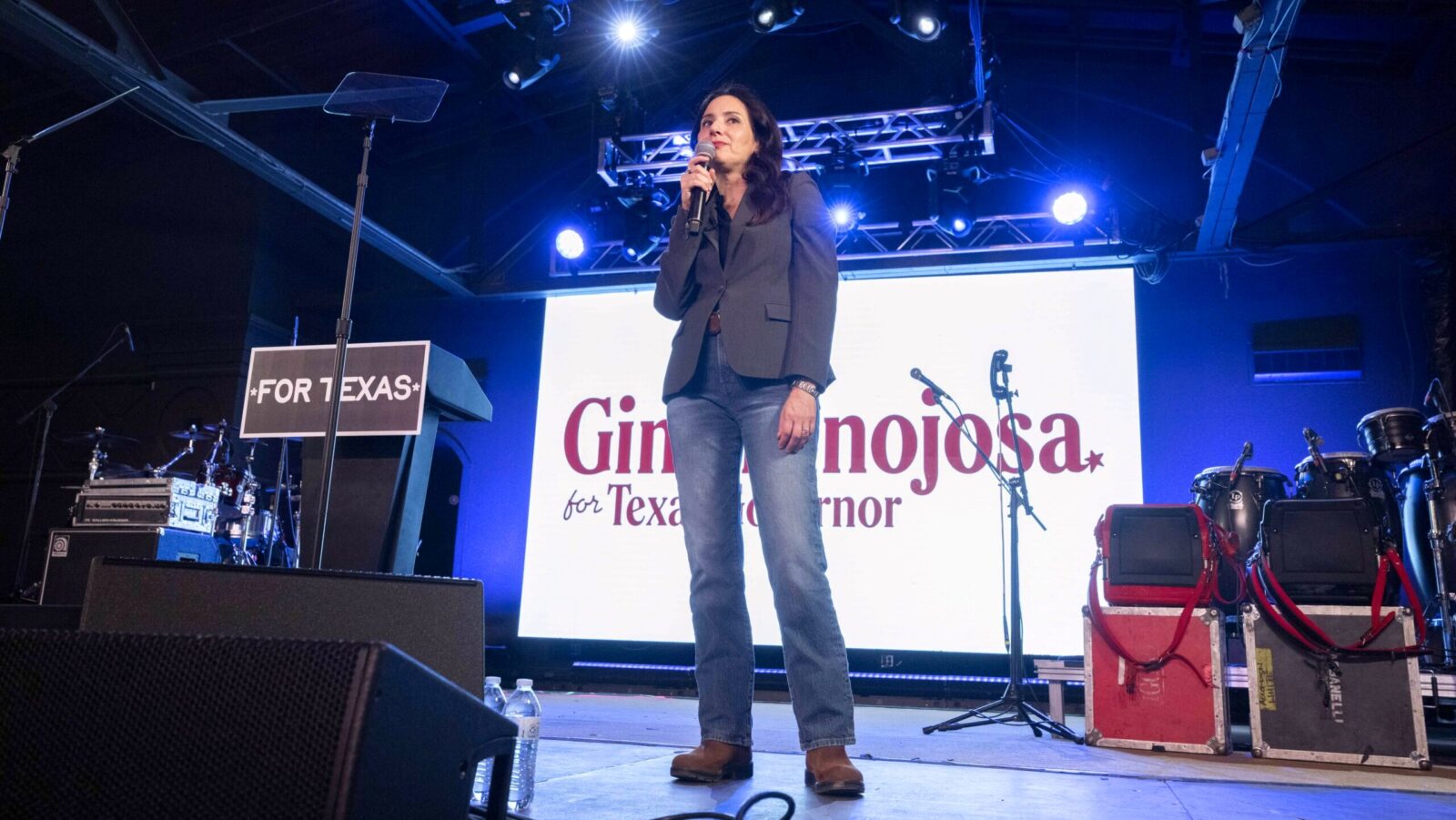
As Jeopardy host Ken Jennings said after Tuesday’s midterm elections: “All my exes now live in Blexas.” Democrats won or led in every statewide race in Texas as of yesterday, turning the Lone Star State blue (hence Blexas) for the first time in three decades.
The upset victory in the gubernatorial vote by Democrat Gina Hinojosa, who has pledged to hit the brakes on new data center approvals, could alter the trajectory of the state’s nation-leading buildout. But Texas’ AI infrastructure buildout isn’t buzzard bait just yet.
Rodeo Circuit Breaker
Until earlier this year, data center development in Texas was as hot as a two-dollar pistol. The state’s vast supply of habitable and usable land combined with abundant rural and suburban real estate made it ideal for new projects. A deregulated electricity market, its own independent power grid, and direct access to liquified natural gas allowed developers to negotiate large-scale power deals and build on-site energy sources. Throw in a pro-business regulatory climate along with no traditional state taxes, and you’re fine as cream gravy.
With all those favorable factors, analysts at global real estate firm JLL earlier this year tipped Texas to leapfrog Virginia as the world’s largest data center market by 2030. Among those developing major campuses are Amazon, Google, Meta, Microsoft, OpenAI and Vantage. Recent months, however, saw momentum stall. Texans voiced increasing concerns about air quality, noise pollution, electricity and water bills. Polls showed a majority of them oppose having data centers in their communities. Politicians on both sides of the aisle responded. In September, outgoing Republican Governor Greg Abbott ordered a moratorium on new data center permits until the state grid operator completed an audit of existing applications. This put almost one fifth of the 253-GW data center development pipeline in all the United States at risk of delay. Hinojosa, set to be inaugurated on January 19, pledged to go one two-step further. She campaigned on a statewide moratorium on new data center approvals until the Texas Legislature passes a slate of new regulations:
- Analysts at Jefferies wrote that a Hinojosa victory would mean greater political risk for data centers as it could translate to “tighter rules around who pays for grid infrastructure, water use and data center tax incentives.” However, they added it’s “more likely to increase development costs and requirements than materially restrict the Texas pipeline.”
- At the federal level, Yorkville Ives Managing Director Dan Ives wrote Wednesday that “there is no way to sugarcoat that Democrats taking control, especially over the Senate, will create some major hurdles for AI and tech legislation.” He forecasts the 800 to 1,000 data centers currently planned across the US will face delays and that 10% of them “will not happen now.”
Portfolio Swings: The election results slammed cloud providers CoreWeave and IREN, which closed down 9.9% and 11.2%, respectively, on Wednesday. Data center cooling and temperature systems makers Vertiv and Modine fell 12.9% and 21.4%, respectively. But post-election certainty gave the more diversified Big Tech hyperscalers, which are financing the AI buildout, a boost: Alphabet, Amazon, Meta and Microsoft rose 3.3%, 6.1%, 1.4% and 6.7%, respectively.
Put a Wall Street Quant Behind Your Portfolio

Picking stocks well takes time, and no one has hours to comb thousands of tickers. Alpha Picks does the digging for you: a quant system from an ex-Morgan Stanley desk head combs the market and hands you two buy-and-hold ideas a month. Since 2022, it’s returned +295.71% against the S&P’s +99.82%. Get the picks.**
Who Cares About Declining US Sales? The World Is McDonald’s McOyster

Revenue missed expectations, visits declined and US same-store sales fell year over year. None of that stopped Wall Street from woofing down a happy meal following McDonald’s latest earnings call.
Shares of the fast-food titan surged more than 6% on Wednesday following its third-quarter report, good for the stock’s largest single-day jump since April 2020. The skinny? The company still beat on earnings, in part because of success in metric system markets where the Quarter Pounder is known as a Royale with Cheese.
Supersize Me, Bitte
While same-store sales declined 0.2% stateside, they still increased 1.5% year-over-year overall for the company in the quarter due to strong international growth. Its international developmental licensed markets business, which includes the Chinese and Japanese markets, saw same-store sales growth of 4.2%. Its international operating division, which features markets including Australia and Germany, grew 1.4%.
Next for the company? CEO Chris Kempczinski told investors and analysts yesterday that the company intends to continue with its plans to reinvest in restaurants and facilities while supersizing its McValue menu:
- Shares of the company are now up more than 18% since it announced its “NEXT” turnaround plan in September, which is centered on flushing some $8.5 billion back to franchisees through 2036 to protect profitability amid remodeling and other upgrades.
- Kempczinski also said Wednesday that the company has launched a “mix and match” value meal program across 1,900 US locations in a bid to entice consumers amid stubborn inflation.
Where’s the Ribs? The Golden Arches have a few other blemishes, too. Last week, a US District Court judge in Chicago ruled that a class action lawsuit can move forward against the company in which plaintiffs allege McDonald’s misled consumers by calling its occasional menu item the McRib despite the sandwich not actually featuring rib meat. A more accurate name, according to McDonald’s own description of the item, would be McSeasoned Boneless Pork Meat, though that doesn’t quite have the same ring to it.