

Good morning.
Nobody asked to play debit card roulette with Flamin’ Hot Cheetos, shrimp ramen noodles and brittle Christmas ornaments, but here we are. The Federal Trade Commission and 20 states sued Dollar General on Monday for “long-running deceptive pricing practices,” alleging the country’s largest discount retailer charged customers more for products than their listed prices on shelves and in advertisements.
The FTC said Dollar General “failed to correct the issue despite extensive corporate knowledge of the problem” (i.e. people complaining like crazy) and “betrayed the trust of millions of American consumers.” Since 2019, the company has agreed to settle more than a half dozen similar cases in multiple states for nearly $8 million, including a $1.9 million settlement in New York last week. There’s inflation not just in the balloon section but at the cash register.
Meta, SpaceX Detail New Financing Plans as Capital Squeeze Hits AI Industry
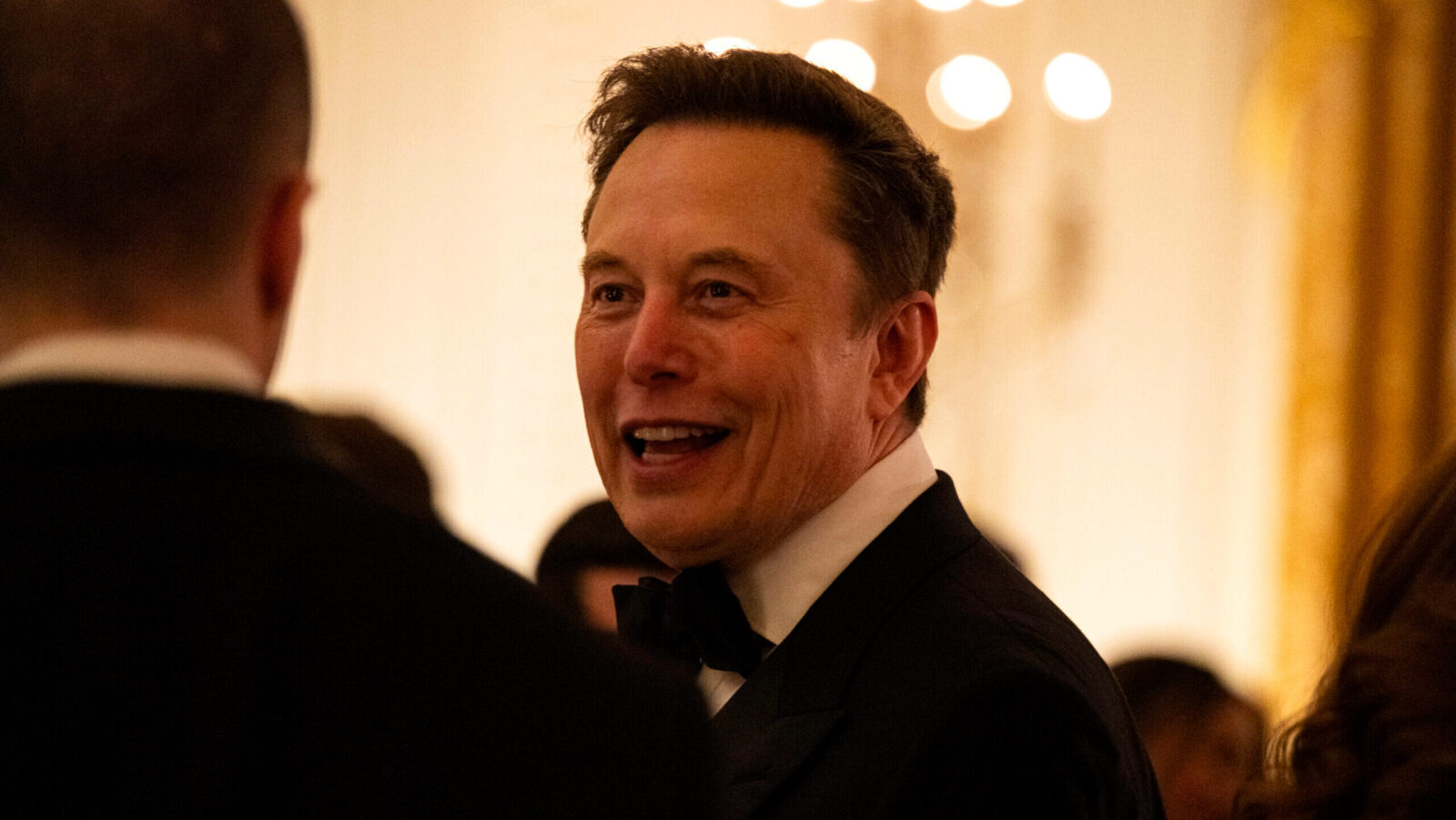
Last we checked, Coreweave doesn’t manufacture rockets or dominate the advertising industry. It’s just a data center, which makes it a guppy according to Elon Musk.
Over the weekend, the CEO of SpaceX declared on X that “debt markets have almost entirely shut off access to money for any company that doesn’t have substantial revenue independent of AI data centers.” For SpaceX, that means securing a new $40 billion debt financing deal for GPUs (Meta, meanwhile, gave more details of a $95 billion AI financing plan of its own on Monday). As for the neoclouds? Musk predicts some “200+ … are going to see guppy-level death and consolidation.”
Debt Crunch
There’s a reason all those guppies seem to be flopping around in a smaller and smaller capital puddle. US corporations have issued $1.76 trillion worth of investment-grade bonds this year as of Monday, according to data compiled by Bloomberg. That supplants 2020’s record $1.75 trillion in borrowing, a debt spree sparked by pandemic necessity and ultra-low interest rates.
The AI industry has raised $300 billion in high-grade debt so far this year, per Bloomberg, already roughly triple the amount raised through all of 2025, and it’s not even Halloween yet. Still, Musk (whose SpaceX does plenty of business renting out compute space and just might own a guppy net, for what it’s worth), is hardly alone in seeing a growing divide between AI’s little fish and big sharks. In a note to clients on Monday, Morgan Stanley analysts said that higher borrowing costs are bifurcating the industry by credit quality, with four major hyperscalers (Amazon, Alphabet, Meta and Microsoft) standing as those that can withstand higher borrowing costs. Wall Street is seeing red flags everywhere else:
- Investors bought more than $9 billion worth of credit default swaps per week in September on bonds linked to Amazon, Alphabet, Meta, Nvidia, Broadcom, SpaceX and Oracle, according to Morgan Stanley Research data. That was up from $2 billion per week in July.
- In fact, Bloomberg data found that total credit default swap index trading volumes this year have already exceeded last year’s entire total.
“One part [of demand] is a true bond investor who is looking to hedge their book. Another part is multiasset and equity speculators who are trying to find a cheap hedge to their technology exposure,” Jim Caron, chief investment officer of Morgan Stanley’s portfolio solutions group, recently told the Financial Times.
Alternative Solutions: The massive debt market crunch has the hyperscalers focused on broadening their financing. On Monday, SpaceX announced a $40 billion GPU leasing deal with Apollo; in a statement, the company said the deal “diversifies our funding sources.” Meta, meanwhile, said on Monday it plans to raise $95 billion through waves of stock offerings to continue to fund its buildout.
Profit Is Sanity, Cash Is Reality

OK, If you manage your company’s finances, listen closely: Do your profits translate into cold hard cash?
If not, don’t blame the books; blame EBITDA (deep breath in … earnings before interest, taxes, depreciation and amortization).
Sure, your lenders love this tidy figure, but it skips equipment costs and cash stuck in unpaid invoices or unsold stock. That means your business can look healthy on paper while your bank account runs dry.
Cash tells the real story. This six-minute guide from Oracle NetSuite, featuring CPA and former commercial banker Oana Labes, shows you how to:
- Spot where cash slips away: late invoices, unsold stock, bills paid early.
- Turn sales growth into cash.
- Review your cash monthly with a 15-question checklist.
What’s Going on at Powerhouse Law Firm Weil, Gotshal & Manges?

The white shoes at one of Wall Street’s top law firms could really use a shine.
Weil, Gotshal & Manges has been rocked by a series of increasingly dramatic departures. Merger talks reportedly fell through, and now the lawyer slated to be its next leader is apparently having second thoughts. Here’s where all the action stands.
Legal Brain Drain
With more than 1,200 lawyers and over a dozen offices across the US, Europe and Asia, Weil is one of the world’s elite law offices. Its leading bankruptcy and restructuring franchise, considered an industry gold standard, guarantees a bedrock of high-margin earnings (which get turbocharged in times of economic stress). Weil said earlier this year that it’s on track for record annual revenue and profit, and it’s one of the world’s most profitable firms on a per lawyer basis. But its roughly $2.1 billion in annual revenue was flat last year, while the 100 largest US firms collectively grew revenue by 13%, according to The American Lawyer.
Since the start of this year, the firm has hemorrhaged enough talent to fill a charter yacht or two, with some 30 partners defecting to rivals. Michael Aiello, the head of its M&A practice and rainmaker extraordinaire, announced plans to leave last month for Cravath and take five lawyers with him. Last week, The Wall Street Journal said at least four more partners were on the way out, among them management committee members. Then, over the weekend, the Financial Times reported that Ramona Nee, the private equity expert who was slated to become the firm’s next executive partner in January, backed out of the job. A report in Semafor added that Nee has held tête-à-têtes with Wall Street rival Simpson Thacher & Bartlett about joining them. Oof.
The driving force behind the exodus is simple: The market for top lawyers is highly competitive and rivals have proven willing to dole out massive compensation, with some top Wall Street lawyers making $20 million per year. Matching all the offers of those leaving would likely risk taking money away from other partners. Poaching sprees have typically hit smaller elite firms, which makes Weil’s size and prestige especially notable. It also highlights a wave of white-shoe consolidation. Rumors have swirled since late September that Weil is looking to merge with a competitor. The firm denied them at first, but more recent evidence points to the contrary:
- Last week, just days after it leaked that Weil was in merger talks with Willkie Farr & Gallagher, negotiations were called off. Ace sleuthing by Law360, which discovered that someone registered a URL combining the firms’ names, suggests things may have gotten close.
- Partner defections have served as catalysts for other, typically smaller firms to merge. Take for example Shearman & Sterling, which combined with Allen & Overy in 2024, or Cadwalader, Wickersham & Taft, which earlier this year completed what was billed as “the largest law-firm merger in history” when it became one with Hogan Lovells.
Vindication: “My old law firm is falling apart,” tweeted Gabriel Shapiro, a former Weil associate and now CEO of legal tech startup MetaLeX Labs. “Guess I should be glad I stopped chasing the brass ring.”