

Good morning and happy Sunday.
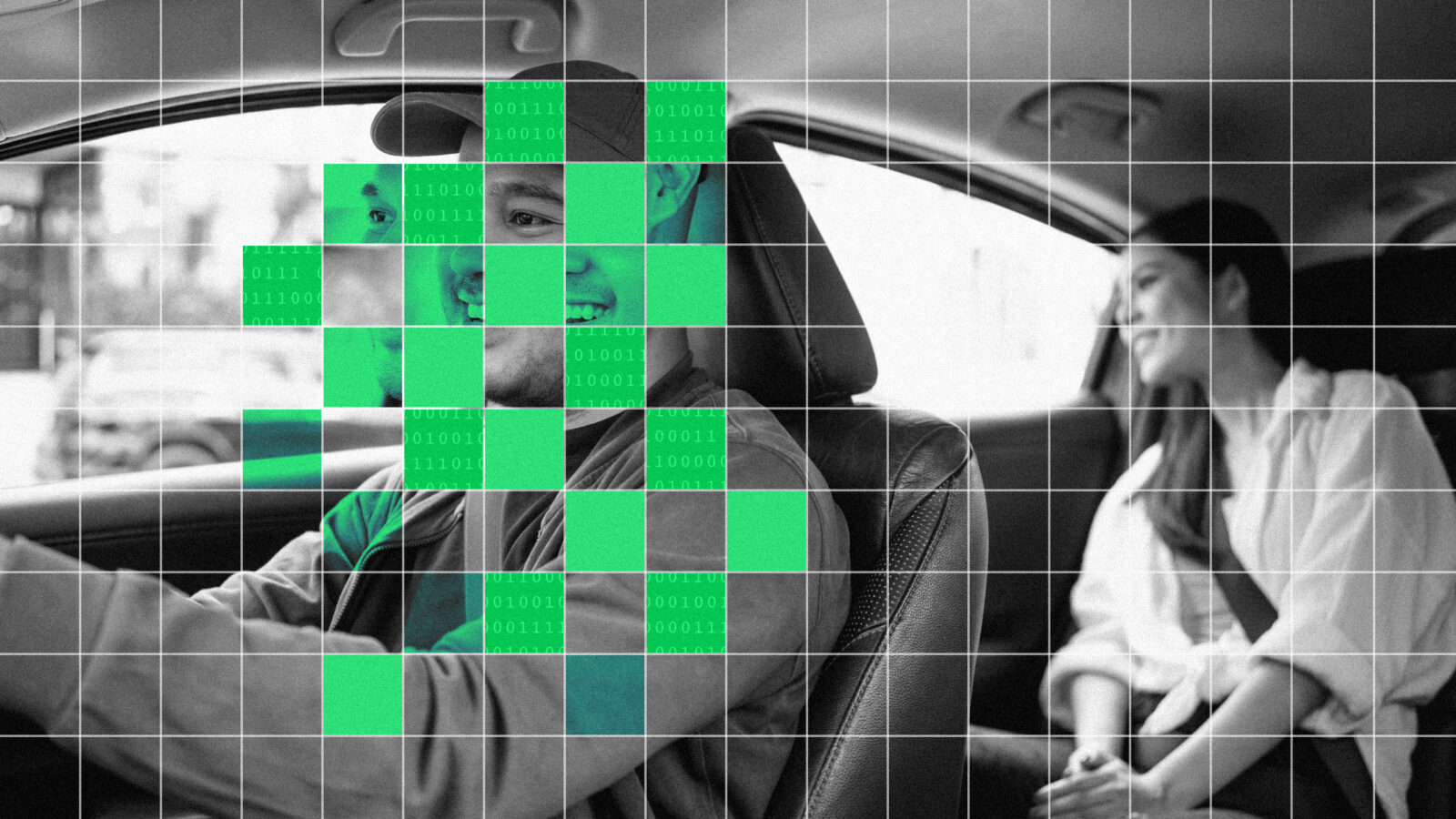
The self-driving future has arrived at your doorstep, at least if you live in cities such as Austin, Los Angeles or Phoenix, and the meter is running. Robotaxis cruising the streets in full force are upending a gig economy that human workers have grown to rely on for fast and easy income streams.
What that means for the world of tomorrow and its workers is the subject of today’s deep dive.
But first, a word from our sponsor, Oracle NetSuite.
Back in the 1990s, basketball legend Michael Jordan collected headlines, sneaker deals and scoring titles for the Chicago Bulls.
His eccentric teammate Dennis Rodman scored comparatively little. His specialty was chasing down missed shots and shutting down opponents, which never earned him the headlines but helped win five NBA championships over his career.
Sound familiar? Every team has one. They’re the specialist everyone turns to when problems get hard and whose expertise is difficult to replace. And because they rarely look like future executives, they often go unnoticed in succession plans until they resign.
Jack McCullough of the CFO Leadership Council argues losing one can actually do you more damage than losing an executive (the Rodman Paradox). In this new guide from Oracle NetSuite, he shows how to spot these individuals on your team, and how to keep them.
Read the guide and find the players you can’t afford to lose.
The Gig’s Up: Robotaxis, Delivery Drones Reshape the Side-Hustle Market
Last week, DoorDash agreed to a $131 million settlement with New York City to resolve a probe that found it not only underpaid many delivery workers but also paid them late.
The workforce of the future, however, may be much less insistent on getting its due, not needing to worry about paying the rent or buying food.
Whether it’s self-driving robotaxis, flying delivery drones or four-wheeled courier robots, Silicon Valley is rapidly turning to an automated fleet to perform jobs long held by gig workers. Whether the droids will ultimately replace their human counterparts, or merely supplement them, is a question being answered in real time. One study from George Washington University found that the transition to robotaxis could “decrease frontline jobs by 57% to 76%.”
The disruption of the gig economy’s informal social safety net is putting Waymo robotaxis at odds with everyday people driving for Uber and Lyft. While almost everyone agrees that some AI displacement is inevitable, experts told The Daily Upside that gig work is more likely to evolve rather than die off entirely.
Margin Call
Sharing the road with autonomous cars may already feel like the new status quo to the people of cities such as Austin, Los Angeles and Phoenix. Businesses like Uber, Alphabet-owned Waymo, Tesla and others, meanwhile, are trying hard to bring the rest of the world onto the robotaxi route.
“Uber is looking to drive out the margins in the business, and what’s the biggest cost to driving a passenger from Point A to Point B? It’s the driver in that equation,” Brian Jackson, emerging technology analyst and principal research analyst at Info-Tech, told The Daily Upside. “If you cut out the driver from it, the cost goes way down.”
And put enough robotaxis on enough roads in enough cities, and the economics of driving humans from Point A to Point B suddenly and dramatically change at scale, fueling an explosive expansion in the taxi industry’s potential market. As Uber COO Andrew Macdonald recently put it, a mass fleet of robotaxis that can reliably, cheaply and quickly ferry passengers anywhere they want to go at any moment could disrupt the personal car ownership industry. That world would have just as little utility for driver’s ed instructors as it would for Uber drivers.
Robot Economics
Such a future could mean a $415 billion global market for robotaxis by 2035, according to a recent Goldman Sachs report, with the US share at $48 billion.
How large robotaxi fleets must be to achieve that is an open question. Ditto, how much the cost-per-mile metric must fall. The current cost of owning and operating a personal car in the US comes out to as little as 77 cents a mile, per Goldman, while a typical human-driven rideshare costs about $2 per mile. Robotaxi firms have been opaque about specifics of their still relatively small fleets so far, but most estimates peg current robotaxis as operating somewhere in between the two figures.
“To surpass traditional rideshare margins, AV fleets must drive down unit operational costs” by optimizing network planning and routing, reducing human operational support, and minimizing downtime tied to charging and maintenance, Third Bridge analyst Natasha Nair told The Daily Upside.
Tipping Point
In the present, robotaxis still represent a hair of a sliver of the overall taxi industry. Waymo has rapidly expanded its rollout this year, and now operates about 4,000 robotaxis in 15 cities, completing about 500,000 rides per week. Uber, with its massive army of human gig workers, reported 300 million trips per week globally, including deliveries, in its past quarter.
In other words, the great displacement has not yet begun. By most estimates, it’s still at least a couple of decades away. But don’t tell that to drivers in robotaxi-heavy cities.
While hourly gross wages for Uber and Lyft drivers increased 1.8% nationwide from the previous year in the last quarter of 2025, wages fell in AV-heavy markets such as Los Angeles (down 3.7%) and San Francisco (down 1.7%), according to rideshare tracking platform Gridwise.
“Full displacement may be decades away, but wage pressure is already here,” Veni Dhir, director of corporate venture capital at ADP, told The Daily Upside. “Automation gives platforms option value. They can squeeze driver pay today knowing the automation alternative caps what labor can demand. The Gridwise pattern is the market pricing the future in advance.”
Safety Net First
To put it bluntly, even in their infancy, autonomous vehicles are fraying the social safety net of the gig economy, which studies from MIT and The University of North Carolina at Chapel Hill show that otherwise unemployed workers have come to rely on.
“Driving for Uber was about the easiest side income ever invented. You needed a car and a phone and you could be earning by the weekend,” Matt Barrie, CEO of freelancer platform Freelancer, told The Daily Upside. “Robotaxis will take a lot of that away, and I don’t think anyone should pretend they won’t.”
Worry over that is already spurring political pushback. Like data centers, self-driving cars have become a physical-world lightning rod for AI anxieties. Some activists have been pushing for policies that would encourage personal driver asset ownership. In Washington, DC, local labor unions and civil rights groups have launched a lobbying campaign against a bill to legalize robotaxis. Multiple Minneapolis City Council members have backed legislation that would require paid human “safety monitors” in robotaxis as a way to protect jobs from automation; Waymo has likened the proposal to a “de facto ban.”
“There are going to be cities that either do want this or don’t want this. Not only do [companies] have to invest in the technology, but [they] have to invest in solving all the compliance and regulatory challenges,” Jackson said.
Side-by-Side Hustle: In the meantime, it’s not all doom and gloom for human gig workers. Not yet, anyway. Demand for rideshares continues to increase, while consumers are also expecting quicker and quicker deliveries. That means automation may not displace human gig workers, but rather simply serve the excess capacity that the current crop of gig workers cannot meet, Nicolò Masorgo, assistant professor of business at Miami University of Ohio, told The Daily Upside.
“Every wave of automation needs people standing behind it,” Barrie said. “Somebody has to check what the machines produce and fix it when it goes wrong, and a surprising amount of that is ending up as freelance work.”
Your Team’s Real MVP Is Buried in the Org Chart

They don’t seek the spotlight, but their expertise is indispensable, and some of your most complex problems end up on their desk.
Should they resign, their knowledge can take months or even years to replace. Yet the usual reward of a bigger title and a team to manage typically isn’t what they’re after, and often takes them away from the very work that makes them so valuable.
This five-minute read from Oracle NetSuite shows you how to spot them, pay them for their impact over their title and keep what they know in the building.