Shares jumped as much as 4% through Tuesday’s trading session, before evening out near the end of the day.
Our daily email brings you smart and engaging news and analysis on the biggest stories in business and finance. For free.

In the US, 72% of merchants charge for at least some return options, up from 66% last year, according to a recent report.
Shares in rival used car retailers went into reverse gear following the announcement of Hertz’s Amazon partnership.
Amazon has struggled to take a bite out of the $875 billion US grocery market since launching an online grocery storefront in 2006.
History suggests that a little competition will be good for not just Walmart and Amazon, but the retail sector as a whole.
The warnings come as the industry adapts to seismic shifts in technology — which means it may just have some new tricks up its sleeve.
Amazon is planning to offset the massive costs of AI infrastructure by employing more and more robotics in its warehouse facilities.
With his executive order, Trump nixed the de minimis tax rule that had let the companies ship their unsettlingly cheap products for so long.
Walmart announced that it’s raising its outlook for the year, thanks in part to a rocking start to the holiday shopping season.
Google is revamping its shopping service into a more Instagram-slash-TikTok-esque feed, showing users an infinite scroll of products.
Suppliers are upset Temu is swapping to a more Amazon-esque supplier model and trying to drive prices ever-downward.
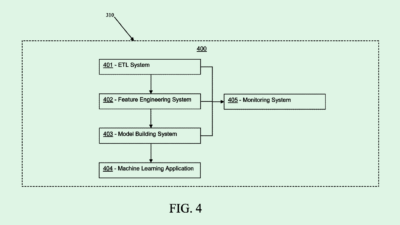
A patent from Walmart for an in-house machine learning development framework highlights that the company’s strategy to compete with Amazon extends to its tech.
Amazon has largely dodged liability for the products sold on their virtual shelves. But could the legal tides be shifting?
Amazon’s setting up a discounted shop that will fly products to consumers from China. It’s meant to copy Shein and Temu’s business models.
This patent follows another from eBay aiming to play into blockchain’s strength as a security tool.
The 50 companies with the biggest pandemic-era gains have collectively lost $1.5 trillion in market value since the close of 2020.