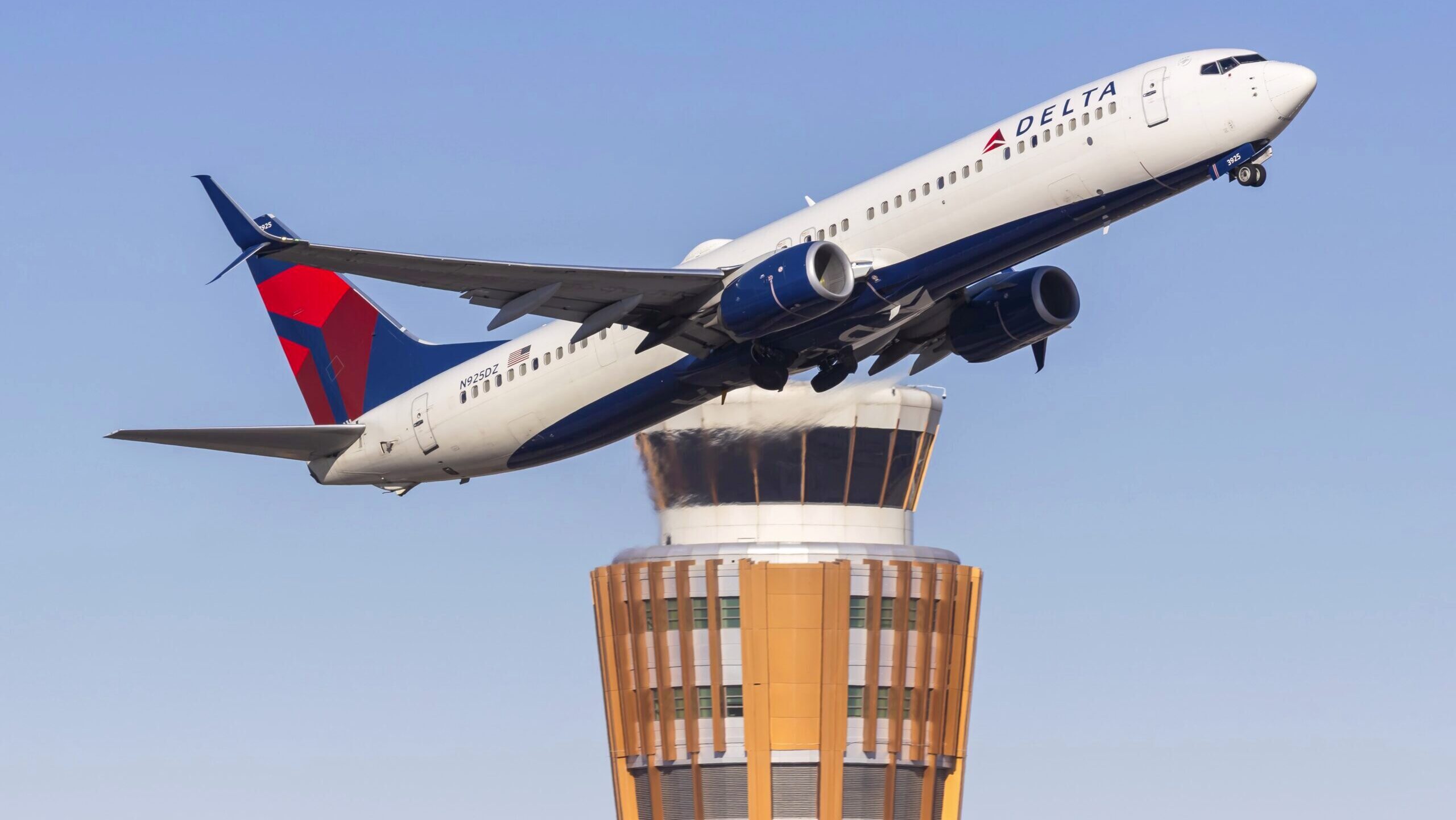
K-Shaped Buffer Helps Delta Soar Above Airline Industry’s Fuel Price Woes
The airline raised its revenue guidance on Tuesday to high-single-digit growth through March from the previously reported 5-7% growth.
Sign up for smart news, insights, and analysis on the biggest financial stories of the day.

Despite jet fuel prices jumping more than 50% this month, Delta is cruising. The closure of the Strait of Hormuz amid the US-Israel war with Iran may be crunching oil supply, but the airline raised its revenue forecast on Tuesday to high-single-digit growth through March from the previously predicted 5-7% growth. American Airlines also boosted its guidance, saying that it now expects record year-over-year quarterly revenue growth of more than 10% in its first quarter, up from the previous forecast of closer to 8.5%.
Delta, American Airlines and United Airlines have customers who can afford to fly even when prices increase, unlike many of their budget-carrier peers. But the heightened demand also suggests that travelers are looking to lock in prices before they rise further.
“When prices did spike, we saw a spike in demand,” Alaska Airlines CEO Ben Minicucci said recently. “I think people got this initial, ‘Wow, if this thing is going to go crazy, I better book my fare now before fares go up.’”
Pursuing Premium Passengers
Delta is reporting strength across all segments, but its focus on customers on the upper diagonal of the ‘K-shaped’ economy is buoying performance.
“Our consumer’s really healthy. We live at the top end of that ‘K’ that people talk about, the premium end of the ‘K,’” Delta CEO Ed Bastian recently told CNBC. “That group of folks wants to travel. They’re investing in themselves; they’re investing in the experience economy.”
The company has certainly invested in attracting those higher-income flyers:
- During Delta’s fourth-quarter earnings call in January, then-President Glen Hauenstein, who retired at the end of February, said that all new-seat growth would be concentrated in premium cabins.
- Bastian said during the earnings call that the company is expanding its premium lounge network.
Budget Blues: While airlines that cater to the top of the K-shaped economy aren’t sweating costlier jet fuel, airlines carrying less affluent passengers are struggling. “Airlines with the thinnest margins and least flexible supply chains are going to hurt the most,” the Association of Flight Attendants wrote in a recent statement on the impact of the war with Iran on the airline industry. The statement highlighted budget carriers including Frontier and Spirit, the latter of which filed for bankruptcy in August for the second time in less than a year (though it has plans to emerge in the spring or summer).
Recent News




-
World’s Largest Pork Producer Plans Billion-Dollar South Dakota Revamp

Photo via Smithfield Foods