Lower Prices Scramble Outlook for Egg Giant Cal-Maine
During its third-quarter earnings call tomorrow, executives will continue to pitch shareholders on the company’s egg-breaking transformation.
Sign up for smart news, insights, and analysis on the biggest financial stories of the day.

America’s largest egg producer is about to find out if Wall Street likes its eggs scrambled or over easy.
As egg prices continue to bottom out, so has Cal-Maine’s share price. During its third-quarter earnings call tomorrow, executives will continue to pitch shareholders on the company’s egg-breaking transformation. In the meantime, war in Iran and a possible resurgence of avian flu may deliver another bout of eggflation.
Can’t Make An Omelet …
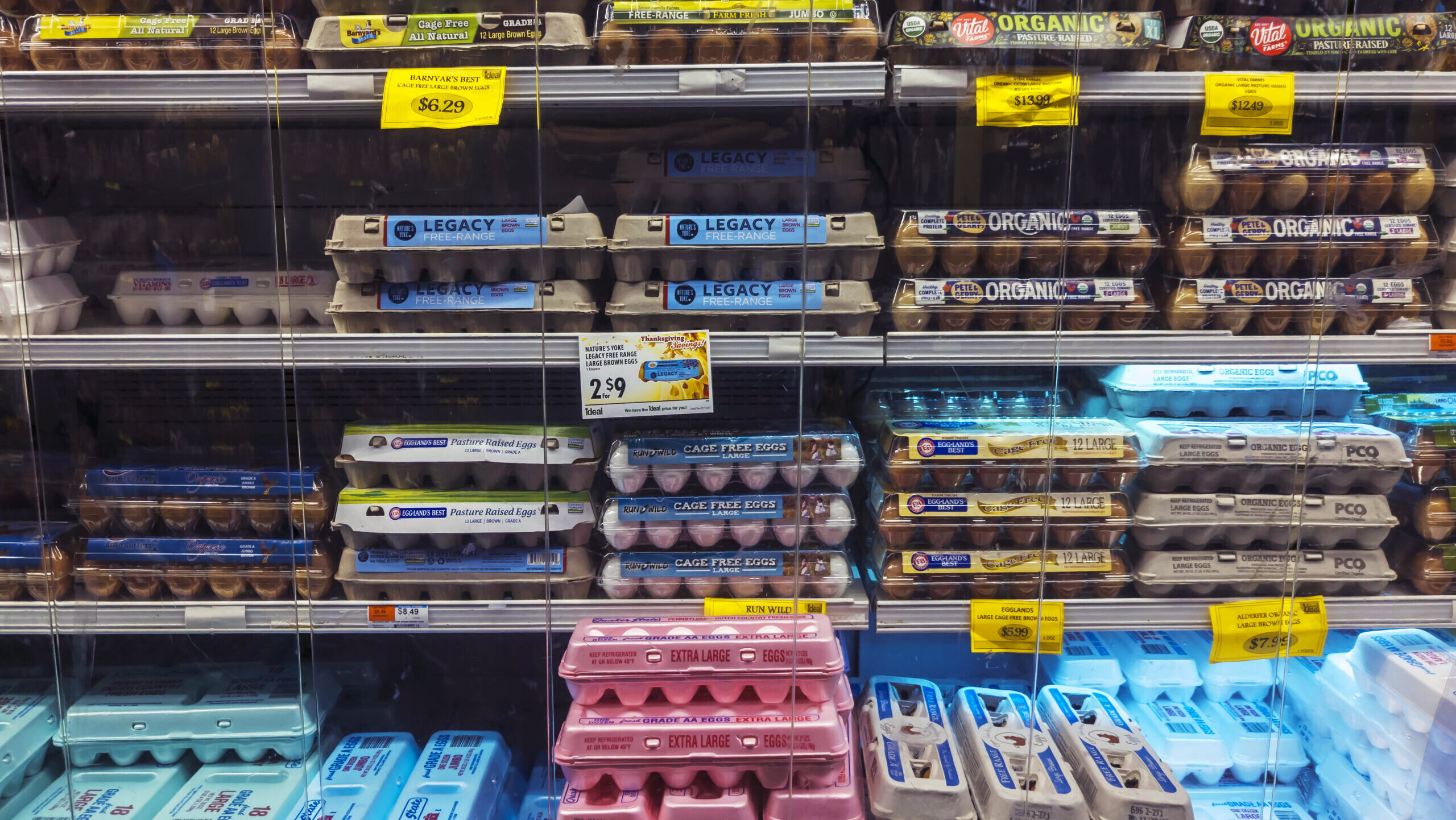
The price of a dozen Grade A eggs came in at just $2.50 in February, according to the US Bureau of Labor Statistics, down significantly from a peak of $6.23 in March of last year. The avian flu that drove up egg prices infected traders with Cal-Maine fever: Shares of the company rose just as dramatically as prices of the food staple. Net income for fiscal 2025 reached $1.2 billion, a nearly 340% increase from the year before. But shares have since dropped roughly 34% following a July peak as egg prices began to fall, and the stock is roughly flat so far this year.
In other words: Cal-Maine trades as a pure-play commodities company, tracking neatly (and unsurprisingly) with the cost of an omelet. CEO Sherman Miller vowed to reduce exposure to egg prices in the company’s last earnings call. Since then, Cal-Maine has made moves to diversify its flock:
- Earlier this month, the company announced the $128 million acquisition of Creighton Brothers and Crystal Lake assets, expanding its grip on both specialty shell eggs (think: fancy brown shell eggs) and ready-to-use egg products for the food service industry.
- The former is yet another corporate bet on the K-shaped economy. In its last earnings call, Cal-Maine said that specialty egg sales accounted for 44% of its total shell egg sales, up from 32% the same quarter of the previous year.
Counting Chickens: In the meantime, last year’s highly pathogenic avian influenza (HPAI) isn’t quite done working its way through America’s chicken stock. Detected cases of HPAI exploded in February to 11.4 million chickens, according to the US Department of Agriculture. Roughly 20 million cases have been detected so far this year. While substantial, that’s still about 11% fewer than the first quarter of last year. On the other side, there are about 9 million more egg-laying hens in the US than this time last year. Consider it a case of farmers counting their chickens too soon.
Recent News




-
Fed’s ‘Goldilocks’ Economic Strategy Disintegrating amid Hormuz Strikes

Photo via Chen Mengtong/China News Service/VCG/Newscom