
Good morning.
If this were an indie dramedy about misunderstood wealth-management regulators, the man at the microphone would shrug: “I’m not like other SEC chairs.”
That was Paul Atkins’ message before the House Financial Services Committee this week. Since succeeding Gary Gensler last April, he’s made clear he’s charting a different course. Gensler treated most crypto as securities and regulated aggressively. Democrats grilled Atkins for easing enforcement, including dropping a case accusing Binance of operating as an unregistered exchange. Founder Changpeng Zhao served four months in prison after pleading guilty in 2023 to money-laundering charges and was later pardoned by President Donald Trump. Zhao has been linked to Trump family crypto ventures, but Atkins denied politics are influencing SEC decisions. He also wants to “streamline” corporate disclosures, arguing that 1,000-page filings don’t exactly scream retail investor friendly.
Is Atkins the manic, pixie-dream chairman free-market outcasts have been waiting for? Tune in next time.
Help Shape The Future Of Advisor Upside
We know we asked recently, but if you haven’t had a chance yet, we’d still really appreciate your input.
It’s been a wild ride. When we launched Advisor Upside in 2024 we had just a few thousand readers. Today, we are a community that’s 100,000 strong.
We imagine that’s because when we wake up every morning it’s our singular focus to help advisors build stronger practices and larger books of business. To surface what your clients might be thinking about, or struggling with. And to help you think through practice management and software choices.
We think we’re on the right track and we truly hope you agree.
But we are always looking to get better, and to make this newsletter more relevant to you.
If you could spend a quick five minutes with this survey, we’d be very grateful.
Because this is finance after all — as a thank you we’ll throw in the chance to win a $500 gift card.*
This Week’s Highlights
Do ETFs Make RIA Firms More Valuable?

Would that (gently used) cherry of a 1970 Toyota Corolla fetch a higher price if its eight-track player has been upgraded to Apple CarPlay?
There’s a corollary for the advice business: Might deal-hungry private equity firms be willing to pay more for RIAs that have their own exchange-traded funds? A company that provides third-party services to help businesses launch ETFs says yes. But there’s some nuance to that, and adding new funds certainly isn’t the right move for everyone.
“Anybody buying an ETF business probably has deep pockets,” said Brittany Christensen, senior vice president at Tidal Financial Group, noting that the firm sees valuations for ETF platforms being eight to 10 times earnings multiples, compared with three to four times for most other wealth managers and asset managers. “If you become known for something or invent a category and are first to that market, that makes your business more attractive.”
Tidal Wave
That idea straddles two trends. The numbers of RIA deals and ETF launches are both at record highs. Last year, there were 322 RIA transactions announced, up from 272 in 2024, according to data from DeVoe & Company. And there were 1,167 ETF launches in 2025, up nearly 60% from the 736 in 2024, FactSet reported.
There’s also a subset of the ETF launch trend, which is the rise of 351 exchanges, where pools of appreciated assets (usually in stocks) are moved tax-free to ETFs at the time of launch. “So many ETFs have been launched in just the last two years. We will see closures … but you will see people who are shining or still innovating,” Christensen said. “Consolidation happens when an industry is growing, and growing healthily.”
But, advisors have to contend with two major aspects of the ETF business if they want in:
- Having an ETF lets them extend asset allocation services to people who aren’t already clients, and that can help with scale.
- But funds can be costly to run, and without $100 million or more, ETFs may not be self-sustaining.
Sounds Nice, in Theory: “I’ve always thought that turning our Green Sage Sustainability Portfolio into an ETF or mutual fund would be a great way to scale our portfolios, scale our impact,” said Peter Krull, partner and director of sustainable investing at Earth Equity Advisors, whose firm has a total of about $200 million assets under management. “But what we’ve consistently run into over time is expenses … We’ve never been able to make the economics work.”
Another firm, Sovereign Wealth Financial Group started a tender offer fund, which has limited liquidity. “Our mass-affluent clientele wanted exposure to alternative investments,” principal Charles Failla said about the choice of that wrapper. While 351 funds can make sense for some clients, it can be hard to argue that there isn’t already an ETF out there to address other needs, given that there are thousands on the market, he noted. Why RIAs roll out their own ETFs beyond 351s, “that, I don’t quite understand,” he said.
Forget Client Referrals. How Advisors Are Building a ‘Circle of Influence’ Instead

Put in a good word for me, will ya?
Mergers and acquisitions in the wealth management space are as hot as ever, but organic growth remains the gold standard. Nearly 55% of referrals are clients telling their friends and family about their advisor, according to a recent Cerulli report. But “circle of influence” referrals from other professionals such as attorneys and accountants are steadily gaining ground. They accounted for 14% of referrals last year, up from 12.5% in 2021, the first year Cerulli tracked the data. As advisors expand into more services such as tax and estate planning, it is becoming growingly important to build strong professional networks.
“Advisors with strong professional relationships with [circles of influence] will be well-positioned to expand their client base as client needs grow more complex and as comprehensive financial planning becomes increasingly common,” said Noah Serianni, a Cerulli research analyst.
How’s Your Short Game?
One of the most effective ways to connect with other professionals is through shared interests like sports, wine or the arts, advisors said in the survey. Business on the golf course may sound cliché, but clichés stick for a reason. “Spending three to five hours together, plus food and drinks after, creates real connection,” said Joon Um, a CFP with Secure Tax & Accounting. “You don’t get that from a quick coffee or Zoom call. It’s not about pitching. Phones are away, no one’s rushed and trust builds naturally.”
But, not every referral partnership starts with formal networking. Some advisors bypass the links and drinks, and simply send clients to professionals they trust. “Some of our best referral partners I barely network with, maybe once a year,” said Dinon Hughes, a CFP with the Nvest Group. “The relationship being built on mutual respect is much more important for us than referring to someone we play golf with.”
Internet, eh? Traditional marketing and online outreach still represents a small slice of new-client acquisition overall, but for some firms, it’s a major growth driver. Daniel Lash, a CFP with VLP Financial Partners, said roughly 40% of his firm’s new business comes from social media and digital marketing across platforms like LinkedIn, Facebook and Instagram. “We have a podcast, and getting Google reviews helps significantly with coming up more in Google and AI searches,” he told Advisor Upside. “A great website that is regularly updated is helpful as well.”
- Wealth Management EDGE: The premier advisor growth event. Register today, save 20%.
- Differentiate your firm with private markets. Secure your seat at this webinar.
DraftKings is Taking The Prediction Market Industry Head-On
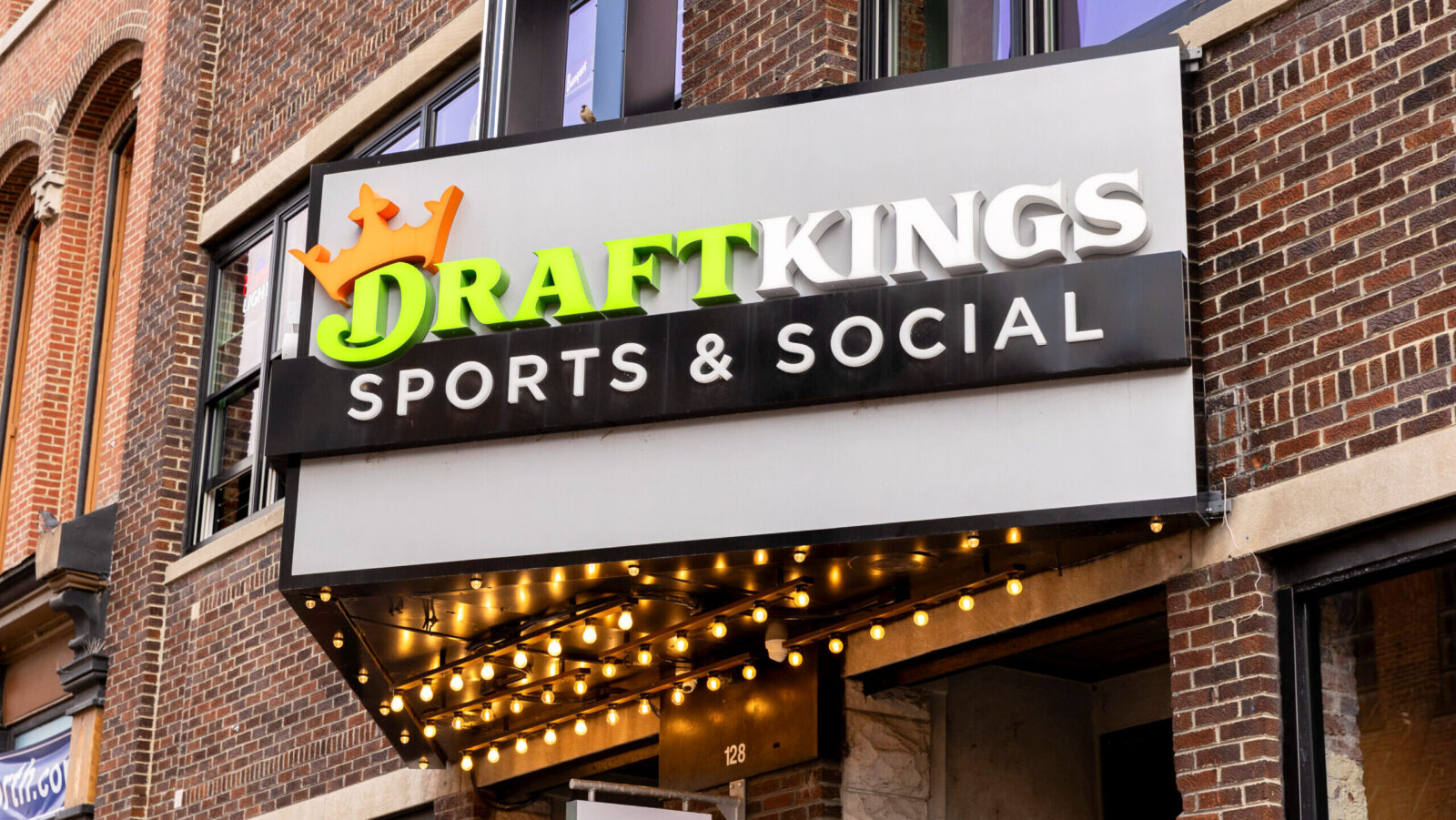
For DraftKings, the stakes have never been higher.
Its fourth-quarter earnings call today comes directly in the wake of a Super Bowl that saw prediction market platforms such as Kalshi and Polymarket eat into the sports-betting turf typically owned by traditional sportsbooks. The shift was hardly unpredictable. In December, DraftKings launched a predictions market platform of its own, turning the insurgent disruptors into direct competitors and setting up 2026 as possibly the most important year ever for the company. To put it in the parlance of your average Joe Sixpack, DraftKings is officially hedging its bets.
Picking Horses
While the final tally isn’t quite ready yet, the American Gaming Association (AGA) estimated ahead of the Super Bowl that Americans would place a record $1.76 billion worth of wagers on the game with traditional sportsbooks, both in-person and digitally. That’s nice, but hardly dwarfs the action that occurred on prediction markets. Kalshi alone booked about $1 billion in Super Bowl-related bets. Conversely, sports books in Nevada booked just under $134 million in Super Bowl bets, marking a 10-year low according to the state’s gaming regulator body.
The profound rise of prediction markets has not gone unnoticed on Wall Street; shares of DraftKings and rival FanDuel-owner Flutter Entertainment have plummeted around 40% and 45% in the past twelve months, respectively. Where traditional sportsbooks serve as “the house” taking bets with each individual player, prediction markets simply take fees while serving as peer-to-peer platforms (a distinction that places them under the regulatory umbrella of the presently-friendly Commodity Futures Trading Commission rather than state gambling commissions). “Our experts say the model is lower risk and potentially less volatile,” Alex Smith, consumer analyst at investment research firm Third Bridge, told The Daily Upside.
Of course, the rise hasn’t gone unnoticed by traditional gaming players either — and they’re betting they can stop prediction markets in their tracks:
- Last month, the AGA sent a letter to Congress urging a ban on sports contracts on prediction markets, and has claimed that states have lost some $400 million in tax revenue as bets divert from sportsbooks to prediction markets. Nevada’s gambling commission, meanwhile, recently won a lawsuit against Kalshi, blocking it from taking sports bets in the state (Kalshi is appealing); similar cases are playing out in Massachusetts and Ohio.
- If successful, the AGA would effectively kneecap prediction markets (note: DraftKings recently left the AGA). According to Kalshi data seen by the Financial Times, roughly 90% of all trading volume on the platform is on sports outcomes.
Risky Business: Smith called DraftKing’s prediction market foray both “a defensive and offensive strategy.” Most experts see traditional sportsbooks as having two distinct advantages over their new rivals: parlays and power users. Parlays are the betting style that allows gamers to score big by predicating multiple bets upon another, a risky wager that’s proven massively profitable for sportsbooks and structurally difficult for peer-to-peer platforms. Power users would be, say, your Cousin Billy, who may or may not have a gambling problem.
Upcoming Events
Edited by Sean Allocca. Written by Emile Hallez, Griffin Kelly, John Manganaro, and Lilly Riddle.
Advisor Upside is a publication of The Daily Upside. For any questions or comments, feel free to contact us at advisor@thedailyupside.com.
Disclaimer
*No purchase necessary. Open to US residents age 21+. One entry per person. Odds of winning depend on the number of eligible entries received. Void where prohibited. See Official Rules and Privacy Policy.