

Good morning.
Alas, all good things must come to an end, including the Friday edition of Advisor Upside. Fortunately, that’s only because we’re moving it to a different day.
Starting next week, our weekly highlights email will hit your inbox on Saturdays, and Friday will be taken over by Retirement Upside, our latest publication for advisors that will cover everything from 401(k)s and pensions to health care costs and Social Security. The newsletter will be led by The Daily Upside’s newest team member, John Manganaro, who comes to us after many years with ThinkAdvisor and ISS Market Intelligence, where he covered the retirement industry extensively. Click here to sign up.
Advisor Upside started almost two years ago, and already we’ve launched two other newsletters and are now publishing daily. If only there were more days in the week.
Retirement Is More Than Tee Times
Seasoned advisors know this: retirement is about more than just tee times and perfectly manicured greens.
Retirement is about building your legacy. Building a security blanket in the face of stubborn inflation and inevitable medical costs.
That’s why we are excited to launch Retirement Upside, a weekly newsletter that will illuminate the strategies and policy changes that impact how your clients should approach retirement.
This Week’s Highlights
After Supreme Court Ruling, Advisors Reassess Tariff Risk

Just like 41 of the 42 shots-on-goal Canada put up against Team USA in the Olympic hockey finals on Sunday, a wide swath of President Donald Trump’s sweeping tariffs have been denied.
Last week, the Supreme Court ruled levies imposed under the International Emergency Economic Powers Act illegal, but not before they generated nearly $200 billion in revenue, according to an analysis by the Federal Reserve Bank of Richmond. While the ruling hasn’t triggered widespread portfolio overhauls, it is shaping financial planning conversations, particularly around inflation and client budgeting. However the tariff saga plays out, the implications may be felt in financial plans for years to come.
“We’ve all been facing higher inflation and higher prices since 2020,” said Chris Maxey, chief market strategist at Wealthspire Advisors. Tariffs are one more variable advisors must account for when projecting spending needs decades into the future, he told Advisor Upside. “Inflation is being felt pretty acutely by clients, and that impact just continues to build year after year.”
Market Moves
The SCOTUS ruling could also ease pressure on the Federal Reserve to keep rates elevated. Doug Evans, chief investment officer at the Callan Family Office, said lower tariff risk may allow for a less aggressive stance this year. “You’re already seeing it in mortgage rates,” he said, noting 30-year rates have slipped back into the 5% range. “That will have a bigger impact on everyday consumer lives than the cost of toys or textiles.”
Market reactions have been relatively subdued:
- The S&P 500, Nasdaq, and Dow all fell less than 2% Monday.
- Meanwhile, yields on 10- and 30-year US Treasurys drifted slightly lower.
Maxey argued the shifts likely have less to do with tariffs and more to do with a Citrini Research report on the future of artificial intelligence, questioning whether many people will be out of work in the next few years. “If you go back six months and look at all the betting market odds, it was largely assumed that the Supreme Court was going to overturn the tariffs,” he said. “I really don’t know that the market was caught off guard by the decision.”
That’s Politics. Most advisors subscribe to a “don’t invest in politics” approach. When tariffs were first imposed last April, portfolios largely held steady despite brief volatility. Major indexes recovered within about a month. Still, advisors aren’t ruling out further trade action. The administration has multiple legal pathways to pursue additional tariffs under national security or sector-protection arguments.
“This administration is not going to give up that easily,” Maxey said.
SEC Lightens Up on Enforcement

As any company served with a Wells notice knows, not all is well.
Still, the Securities and Exchange Commission, which has adopted a more industry-friendly approach under Chairman Paul Atkins than his predecessor Gary Gensler, is making the notices slightly easier to manage. The agency unveiled an update to its enforcement manual on Tuesday, doubling the amount of time (four weeks, rather than two) that companies, including ETF issuers, have to respond to Wells notices, which inform them they have been investigated and likely face enforcement actions for securities law violations. That will be a welcome change for financial services companies, which have likened the Wells process to a Kafka novel.
“This is a meaningful opportunity for Wells recipients to address key issues of fact or law before an enforcement recommendation is made,” Judge Margaret Ryan, director of the SEC’s Division of Enforcement, said during a speech earlier this month. “Wells recipients are also typically granted the opportunity to meet with division leadership to ‘make their case.’”
Changing Priorities
The SEC has changed its views on crypto during the new administration, and it now places less emphasis on white-collar infractions and more on cases of individual investors being defrauded:
- The agency had issued more than a dozen Wells notices to crypto businesses in 2024, alleging that Coinbase and others provided unregistered securities.
- Last year, the Trump-era SEC dismissed many of the cases.
The enforcement manual changes the SEC just implemented focus on transparency and cooperation between the government and the securities industry. For example, Wells meetings (which happen after a company responds to a notice) will be attended by Division of Enforcement senior leadership. The agency also now considers waiver requests alongside settlement recommendations, which can protect parties “from automatic disqualifications and other collateral consequences that result from the underlying enforcement action,” the agency stated in its announcement.
Move Fast, Hopefully Don’t Break Things: With the changes, the SEC may be moving more expeditiously, Ryan told the Los Angeles County Bar Association. “Deliberate circumvention of the process, however, including tactical tardiness and other games, will not be tolerated,” she said.
Hypothetical AI Doomsday Scenario Lights Up Wall Street’s HALO Trade
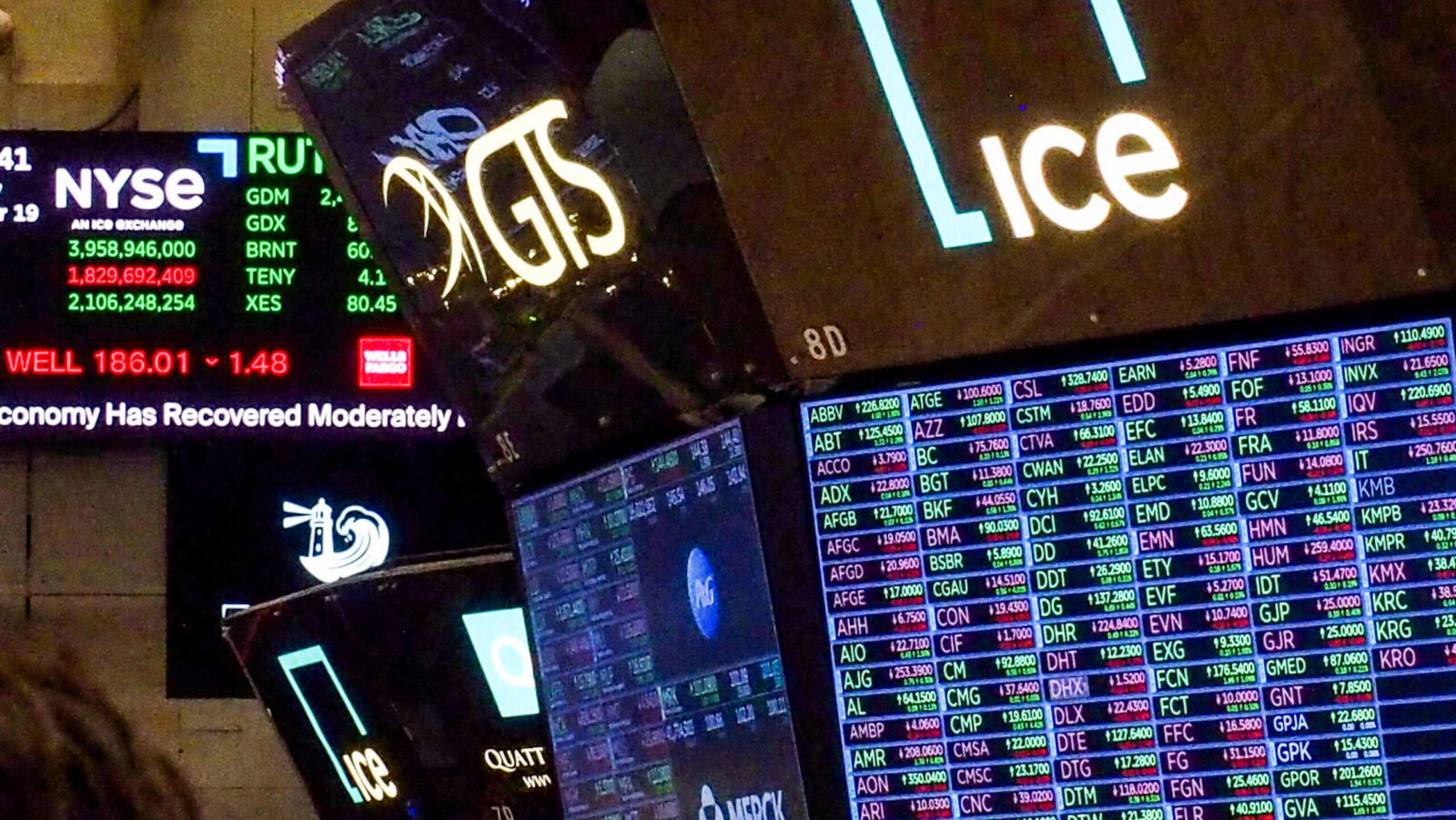
Hope you’re enjoying this round of Monopoly, the HALO Edition, where the most coveted asset on the board isn’t Boardwalk but a “Get Out of AI Jail Free” card.
The so-called “heavy assets, low obsolescence” (HALO) trade — which prioritizes investments insulated from the upheaval of artificial intelligence — was front of mind Monday. The S&P 500 fell 1%, as spooked investors circulated a note from research firm Citrini that imagines a scenario (it doesn’t predict one) in which there’s an AI-induced stock market crash before 2028.
Setback in the Future
The market has been undergoing a rotation to value stocks since the fall, with the AI hyperscalers that drove overall gains in recent years as flat as a Pepsi opened yesterday. And thus the back-to-basics HALO trade has taken on some shine. Simply put, focusing on “heavy assets, low obsolescence” means investing in sectors that will be spared from the next large language model refresh.
For example, AI could solve the Collatz conjecture tomorrow, sketch out a reliable theory of everything on Thursday and stop producing instances of subpar code by Friday and … you would still need to gas up your sedan. That’s a point in favor of oil and gas giant Exxon Mobil, a popular HALO trade whose shares are up 25% in 2026. It’s also February, you probably still need to keep warm, a point for heating and ventilation company Carrier Global, up 20% this year. And when noon rolls around, you’ll still need lunch, a point for both Deere, up 39% this year thanks to its machines that harvest your food, and McDonald’s, your cheat meal fallback that’s up 9%. Companies that make or own lots of specialized equipment, or that serve a large physical footprint, have a HALO. It glows especially bright on a day like Monday:
- A post by James Van Geelen, the ne plus ultra finance Substacker, and his firm Citrini Research drew widespread attention for its imagining of a 2028 in which AI has led to unceasing white-collar layoffs, handcuffed consumer spending power and, consequently, hammered economic growth. Ultimately, in this hypothetical scenario, the S&P 500 sinks 38%.
- Companies Citrini highlighted as being significantly (theoretically) disrupted did not have a good Monday: American Express fell 7.2%, and DoorDash fell 6.6%. Meanwhile, one leading software ETF fell 4.7%, reflecting continued broader fears about the sector’s AI exposure, and IBM had its worst day in a quarter-century, a 13% drop, after AI developer Anthropic said its Claude Code tool could modernize a programming language run on the company’s computers.
Lag Up: S&P 500 sectors like industrials, materials and utilities have already been outperforming the broader index for weeks. Some have even pilloried the once dominant Mag Seven tech stocks as the “Lag Seven.”
Edited by Sean Allocca. Written by Emile Hallez, Griffin Kelly, John Manganaro, and Lilly Riddle.
Advisor Upside is a publication of The Daily Upside. For any questions or comments, feel free to contact us at advisor@thedailyupside.com.