
Good morning.
Normally we’d ask Zoltar, the famous fortune-telling robot, to predict our futures. But in the finance world, we consult Dolltar.
It’s once again the time of year when Crossmark CEO and financial services industry veteran Bob Doll gives us a glimpse inside his crystal ball. His forecast for 2026 includes: stocks failing to reach double-digit growth, international equities outperforming US markets for the second year in a row, inflation barely inching closer, if at all, to the Fed target rate of 2%; the erratic AI sector leading to another year of heightened volatility and Republicans maintaining control of the Senate but losing the House.
Doll did get eight out of 10 predictions correct in 2025, so maybe 2026 will be a clean sweep. It is easy to see, hard to foresee.
This Week’s Highlights
US Raid in Venezuela Compounds Uncertainty for ETF Investors

Last year’s uncertainty drove investors to safe-haven assets early in the year. So far, though, 2025 doesn’t have anything on 2026.
For anyone who missed the numerous news alerts, the US captured Venezuelan president Nicolás Maduro over the weekend in a raid that reportedly killed dozens and may lead to a long-term restructuring of oil markets. In comments since Maduro’s arrest, President Trump and officials in his administration alluded to a takeover of Greenland, territory controlled by a NATO ally, and said that even without the US taking any action, “Cuba looks like it’s ready to fall.”
“The events in Venezuela over the weekend have added both policy and economic uncertainty,” said Aakash Doshi, global head of gold strategy at State Street Investment Management. “If you look at the US Economic Policy Uncertainty Index, even under Trump 1.0, that averaged not that much higher than [under] Biden or Obama. But if you look over the past 12 months, the uncertainty index is more than double what we’ve seen over the prior 12 years.”
Gold vs. Liquid Gold
Trump has been clear about intentions to open up Venezuela’s vast oil reserves and has set up meetings with petroleum company executives, Reuters reported Tuesday. Chevron, the only major US oil company operating in Venezuela, saw a jump in its stock price Monday, before falling Tuesday, with a year-to-date gain of nearly 3%, and the Dow Jones U.S. Oil & Gas Index up less than 2%. Meanwhile, spot gold prices and the SPDR Gold Shares ETF (GLD) were up close to 3%.
Near-term market impacts may be limited, according to asset managers:
- “Venezuela’s political shift is unlikely to drive broader market repricing in the very near term,” Janus Henderson equities and fixed-income leaders said in a commentary. “Yet its implications — for energy supply, emerging market sovereign bonds, geopolitical tensions and supply chain diversification — warrant continued attention.”
- “Safe-haven flows have lifted gold and created brief volatility, but fundamental impacts on USD, equities, commodities and rates remain contained absent further escalation,” Adrian Helfert, Westwood CIO of multi-asset strategies, said in a statement.
- One company, Teucrium Investment Advisors, has a different take. That company wasted no time over the weekend, filing with the SEC on Monday for a Venezuela Exposure ETF that it would seek to trade on NYSE Arca.
Crude Awakening: The US ETF with the highest percentage of its allocation to Chevron, the $247 million Strive US Energy ETF (DRLL) has climbed just under 2% year to date as of Tuesday. That firm did not respond to a request for comment. But the initial rise in oil prices following the US intervention in Venezuela was modest, given no historical precedent of a regime change globally leading to a quick ramp-up in oil production, Doshi noted.
“It opens a lot of uncertainty … The events of last weekend are bullish for gold,” he said.
Advisors Share New Year’s Resolutions for 2026

January is a time of new beginnings for everyone, and wealth managers are no different.
The end of December can be an especially busy time for advisors, who are dealing with everything from taxes to estate planning for clients in the upcoming year. There’s also the extra work of creating plans for new clients or setting fresh goals for existing ones. But the new year can be a great opportunity to connect with clients by scheduling “clean slate meetings,” said Nicholas Erwin, a CFP and senior managing director at US Capital Wealth.
“In January, I get lots of phone calls from folks focused on the legacy and philanthropic strategy side of it,” he said. “[They] use the new year as an excellent catalyst to reach out to us and their advisory team and say, ‘We want to get together and come up with a strategy on the wealth transfer aspect.’”
New Year, New Me
One of the most common New Year’s resolutions for clients is getting more organized, said Joon Um, a financial planner at Secure Tax & Accounting, and advisors can be there to help. This can include consolidating accounts, cleaning up old retirement plans and simplifying finances. Others want to save more intentionally, whether it’s by increasing retirement contributions, building emergency reserves or automating savings. “Better outcomes usually come not from radical changes, but from small improvements applied consistently,” Um added.
Another way to help clients is by pushing back against so-called lifestyle creep, or the increase in spending that usually accompanies an increase in earnings. “Year-end raises and bonuses feel like ‘extra,’ and are well-earned throughout the year, but if they aren’t intentionally directed, they’re quickly absorbed in cash flow,” said Matthew Hess, CFP and financial advisor with Berman McAleer. “I’m encouraging clients to automate savings and investments tied specifically to new or elevated compensation. This way, the financial momentum increases without changing how they live.”
Ahead of the Curve. As for advisor priorities in 2026, AI and getting to know the next generation of clients are top-of-mind this year. “I definitely see the value of getting to know the second generation and spouses of each of the families that we work with,” said Erwin. “We’d like to get to meet each of them, if we don’t know them already.”
Burned Bitcoin Investors Enter New Year with Less Swagger
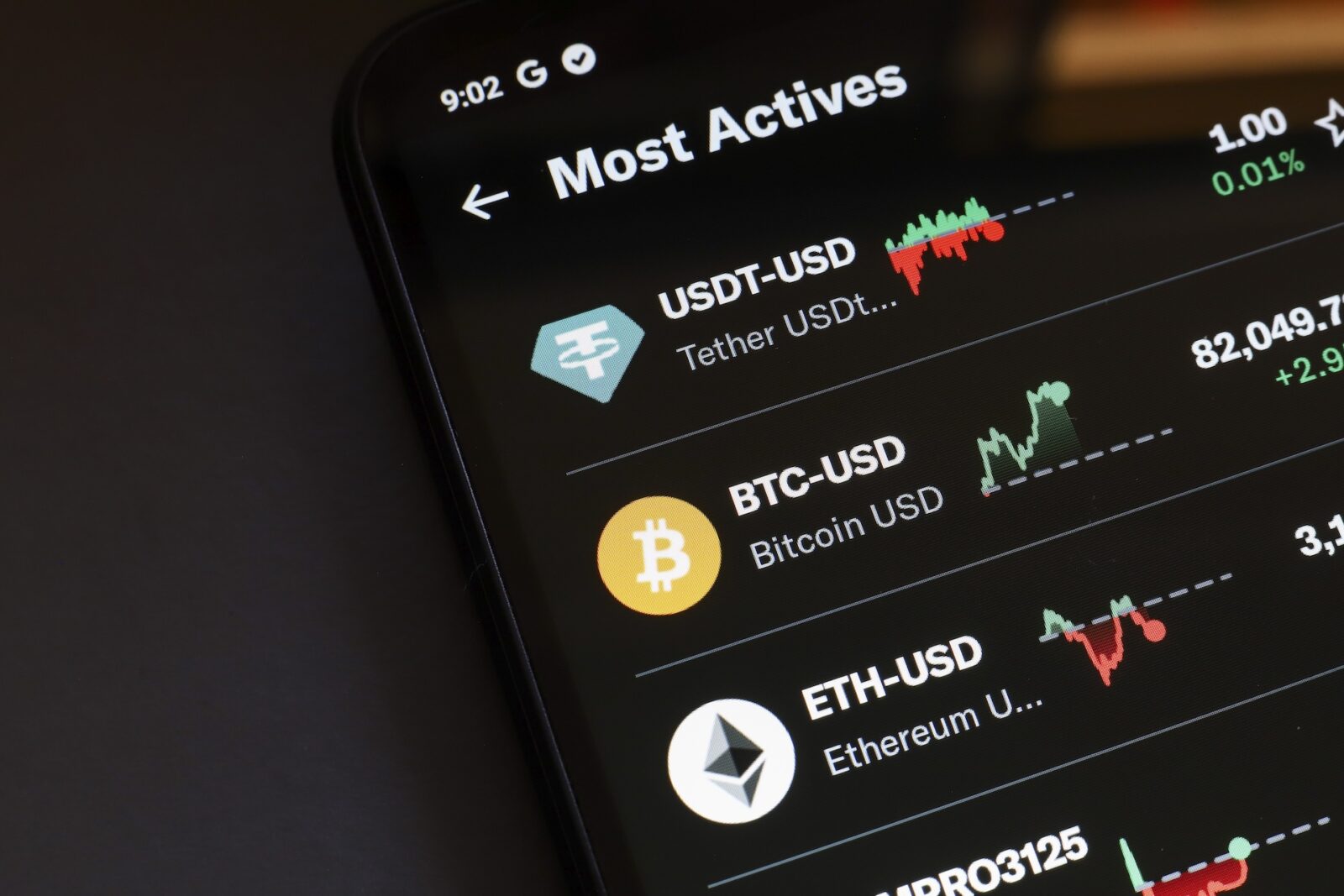
2025 was so not bitcoin’s year. The No. 1 cryptocurrency by market cap never recovered from a flash crash in the fall, wiping out more than $1 trillion from the wider crypto sector’s market value. Bitcoin was worth less than $88,000 on Dec. 31, a drop of more than 30% from its 2025 high above $126,000 in October.
The coin closed out 2025 with an annual decline for the fourth time in its history. The other three times coincided with major events, like FTX’s collapse in 2022. This time, the fall has left some scratching their heads.
Feeling the Chill
Crypto was set up for a huuuge year, with the Trump administration’s backing (he’s called himself the “crypto president”). Regulators under President Trump established pro-crypto guidelines, while financial institutions including Wells Fargo and Bank of America’s Merrill Lynch created new crypto-based products and companies like GameStop took a page from Strategy’s playbook and bought hundreds of millions of dollars’ worth of bitcoin.
But then came Red October, when several whales liquidated large sums of bitcoin after Trump announced 100% tariffs on China. While stocks recovered from the news, crypto continued to crumble. The loss forced the liquidation of leveraged positions, which spiraled into a vicious cycle.
Bitcoin bottomed out at about $80,000 in November, and though it has swung back up since (topping $90,000 on Friday), the crash seems to have left a lasting dent in investors’ confidence:
- Investors have withdrawn more than $5 billion from US spot bitcoin ETFs since mid-October. The derivatives market, meanwhile, shows strong support to keep bitcoin above $85,000, but also resistance around $95,000; that could keep bitcoin stuck in this range for the short term.
- Bitcoin mining companies are pivoting to AI. Hut8 Mining’s shares surged 36% in the past month after the company forged a 15-year, $7 billion deal to lease data centers to AI firm Fluidstack. Investors buy shares in companies like Hut8 to get indirect exposure to crypto, and now they can hedge their investment with AI. Coinbase also announced it’s adding stocks to its traditionally crypto-only trading platform.
Better Luck Next Year: Crypto’s correction is expected to slow, but not stop or reverse, the sector’s long-term growth. Standard Chartered slashed its 2026 target price for bitcoin in half, from $300,000 to $150,000. While the bank still has high hopes for the coin, they’re going to take longer to materialize than originally expected. Standard Chartered moved its $500,000 bitcoin target from 2028 to 2030.
Edited by Sean Allocca. Written by Emile Hallez, Griffin Kelly, John Manganaro, and Lilly Riddle.
Advisor Upside is a publication of The Daily Upside. For any questions or comments, feel free to contact us at advisor@thedailyupside.com.