

Good morning.
Two major CFO moves are kicking off the week: Reports say Washington Nationals CFO Ted Towne is exiting after nearly 19 years with the Major League Baseball club, where he rose from controller to assistant general manager before becoming finance chief. Meanwhile, toy-maker Mattel has tapped Amgen’s CFO Peter Griffith to replace Paul Ruh after just a year and a half.
If you’re feeling like you need a change of pace too, or maybe just an energy boost, ServiceNow CFO Gina Mastantuono suggests starting with some sleep. Speaking at Fortune’s Most Powerful Women Summit in Santa Barbara, California, last week, she said leaders working 14-hour days on four hours of rest set a “terrible example” for employees.
Of course, with year-end approaching, some CFOs might appreciate a follow-up on how to ask the board to move that 8 a.m. meeting.
Your KPIs Are Due a Performance Review

Imagine you handed your KPIs to a numerate stranger with nothing but the written definitions and source data. Don’t worry, they’ve signed an NDA.
Would that stranger land on the same number your team is currently reporting for each?
It’s a deceptively tough test. A metric like “utilization” sounds self-explanatory until finance and operations each bring their own interpretations to the year-end board meeting.
This little experiment was lifted straight out of Bernie Smith’s KPI Checklists from Oracle NetSuite. With 50 checklists and templates, this comprehensive guide will help you make sure every KPI holds up to executive scrutiny and informs better decisions.
Your dashboard should be answering questions, not raising them.
Q3’s CFO Alliance Roundtables Flag Confidence Problem
Has an AI-assisted answer delivered by a cheeky analyst come through your door lately?
At recent CFO Alliance roundtables, finance leaders have discussed how AI is giving employees answers to workplace challenges, sometimes with enough confidence to bring those answers straight to the CFO’s office.
Whether that confidence survives a few follow-up questions is where things are now getting interesting.
Nick Araco Jr., founder and CEO of the CFO Alliance, sees that gap becoming a concern in conversations with midmarket finance leaders. Following the organization’s Q3 roundtables in cities including Denver, Philadelphia and New York, as well as sessions in Southern California and Nashville, he said the discussions were previously about how teams should use AI. Now, it’s about how CFOs should manage adoption already happening without their approval.
“Six months ago it was ‘should we?’ Now it’s ‘it’s already happening and I didn’t sign off on it,’” Araco told CFO Upside. Members are also questioning whether employees can evaluate the work produced by shadow AI and whether their managers are asking enough questions.
CFOs are taking steps to address unauthorized use, Araco explained. He said in one session, members developed a working AI data standard together. “CFOs aren’t waiting for permission [to establish working standards for AI use] anymore,” he said.
Cloaking a Skills Gap
Araco calls the problem the “AI Confidence Curve,” his framework for describing how users can overestimate their abilities when AI produces convincing work. The risk, he said, becomes apparent when a finance employee can deliver an analysis without understanding how to build it.
“The output is fluent, but fluent isn’t the same as right,” Araco said. “And the analyst who can’t build the variance analysis from scratch can’t tell when the AI got it wrong either.”
Araco’s CFO members have suggested to each other that with AI doing more of the work, it’s now up to the executive leadership team to take a closer look at how employees are learning. Nowadays, a finished assignment may tell a manager less about what someone understands, making a few follow-up questions very useful.
“Confidence goes up, competence quietly goes down and nobody notices,” Araco said.
All Talk
Araco said he sees a similar communication problem in how finance chiefs assess their leadership. A CFO may believe a decision was explained clearly while employees still have questions. So his next round of sessions in Q4, which includes 21 cities in 65 days through mid-December, will ask participants to test that assumption with their own teams.
“Most of us rate ourselves as strong communicators. Few of us could prove it,” he said.
Before attending a Q4 roundtable, each finance leader will ask their team: “What’s one thing I think I’ve communicated clearly that you’re still unsure about?” Participants will bring the answers to the session, where other finance leaders will help them compare that feedback with how they rate their own communication.
Then, each participant will choose one gap to address in 2027. A fellow participant will follow up to check on their progress, giving the commitment real accountability after the session ends.
Where the Buck Stops. “And when your team stops questioning the tool and stops questioning you, errors move faster, and nobody says a word until the CEO, board or investors do,” Araco said.
Former Luke’s Lobster CFO’s Move From Surf to Turf
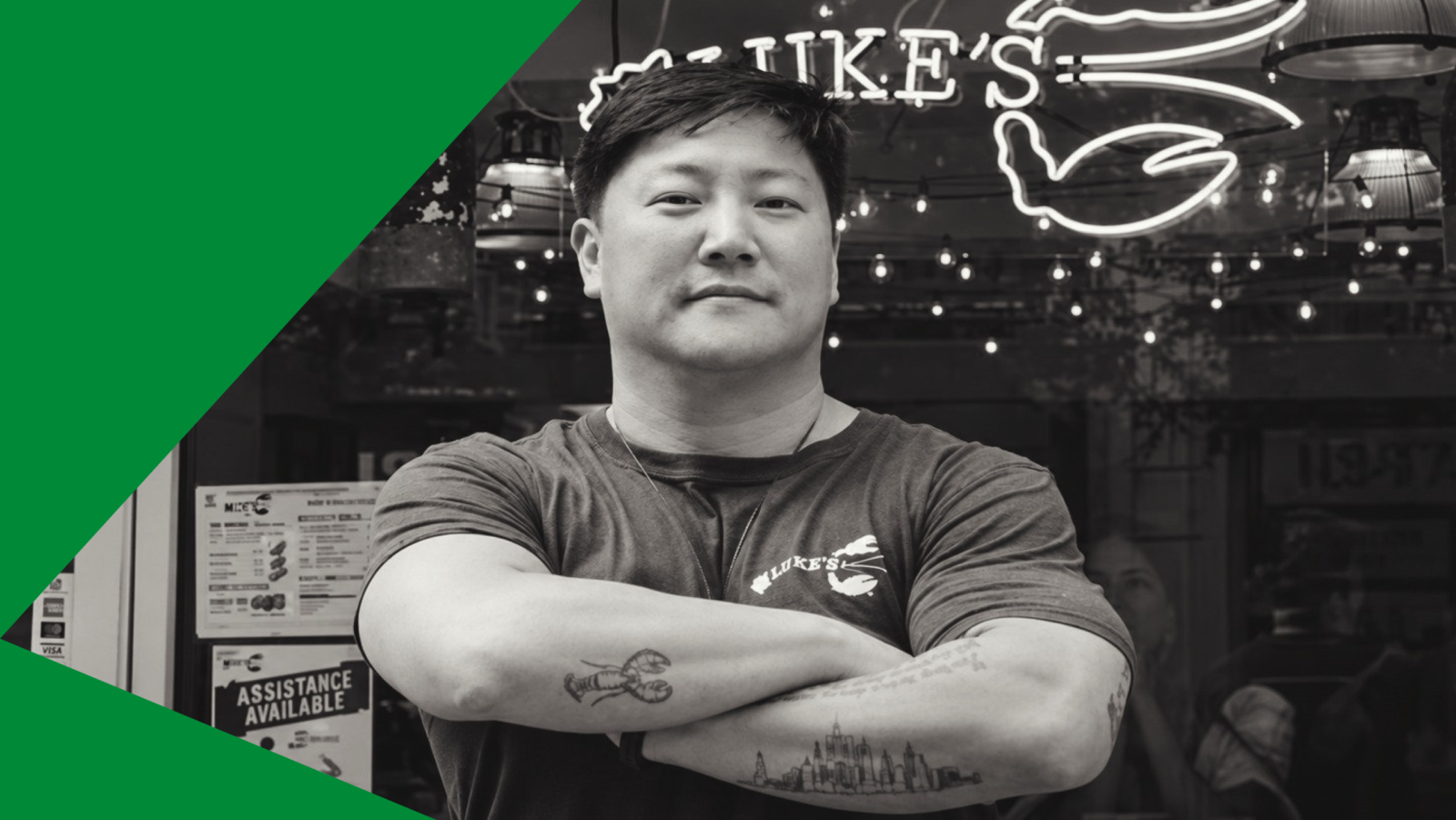
Last year, Steve Song traded lobster rolls for flame-broiled burgers.
As the former CFO of Luke’s Lobster, a seafood restaurant company with a global wholesale business, Song managed a working capital structure that required paying fishermen in cash within three days while waiting weeks to collect from customers.
Now as CFO of Rackson Restaurants, Song oversees finance for a franchise operator with nearly 100 Burger King locations, a few Dave’s Hot Chicken restaurants and more than 1,500 employees across the Northeast, mid-Atlantic and Cleveland, Ohio, area. Now, keeping cash available for new restaurants and remodels is a central part of the job.
“The difference between Luke’s and Rackson is I don’t have the wild swings of seasonality,” Song said. “I don’t have the working capital dynamic I did at Luke’s, where I’m paying out vendors 30-60 days ahead of collecting on AR.”
Whether his product comes from land or sea, liquidity remains a priority. “I’ve always said cash is the oxygen of a business,” Song said. “If you don’t have cash, you can’t keep going.”
A Fresh Coat of Capital
Building restaurants and remodeling older locations requires Rackson to set aside cash alongside the recurring expenses that fast food brings. Some Burger King restaurants have older facades that need updating, leaving Song to determine which locations receive funding first. “I need to make sure we have cash flow earmarked for those investment opportunities,” he said.
Expected financial returns help establish one ranking in determining which stores get remodeled, he explained. “If I invest X dollars to remodel, what is the return on that investment per store? What is the lift in sales and profitability?” Song said. “I would probably rank them that way.”
A store’s age can move it up the list, he said, while cash conservation may favor a less expensive project. Under those circumstances, “I might focus on which remodels require the least amount of dollars and go in that order,” Song explained.
By keeping those rankings separate, he gives Rackson’s stakeholders a clearer view of why their priorities differ before identifying investments that satisfy several needs. “Otherwise, the discussion is too commingled with various agendas and interests,” he said.
Song broke down why the franchise relationship also divides some of the responsibility for restaurant performance. Rackson handles site selection and operating expenses, including labor, while the brand oversees marketing and menu development. “There’s a shared responsibility and goal of serving guests, taking care of your team, generating sales and hopefully profit,” Song said. “We just have different areas of focus.”
Taking Orders From Operators
Before introducing changes, Song said it was important to learn Rackson’s systems and understand his predecessors’ decisions. “I think the reputation for new executives is that they come in and want to run their old playbook with the new team,” he said. “I wanted to make sure that wasn’t perceived as the reason changes were being made.”
Restaurant operators and those in direct contact with customers have since gained more influence over back-office priorities. Their feedback identified a need for better labor scheduling, Song said, and more accurate reporting on actual versus theoretical food costs per menu item.
“We want our team’s restaurant operators to be our clients,” he said. “We need to pay attention to our operating partners and truly understand what their teams need, want and expect to do their jobs.”
That feedback gives the technology and other executive decisions a clearer purpose and vision for all of the moving parts the franchise model entails. “Otherwise, we had departments coming up with ‘solutions looking for problems’ and asking operations to follow them,” he said. “That was backwards in my opinion.”
With AI, Song initially urged patience as enthusiasm spread among executives at Luke’s. “It was too early, and it couldn’t do the things they thought it could do, but they were very focused on using AI somehow,” he said.
Now, Song said Claude Cowork changed his assessment process as a CFO because it could perform tasks, an appealing capability for a finance leader with no coding experience. “I didn’t want instructional guidance on how to do something,” he said. “I wanted AI to do it for me.”
Starting with simple Excel tasks, his team progressed toward creating dashboards and building agents. Song said employees are “all increasing their productivity by at least three times, if not more.”
He broke down how Cowork’s ability to execute tasks marked the turning point. “Cowork took a chatbot and gave it the ability to take action,” he said. “When that came out, that was when I really engaged.”
Open 24 Hours. His next ambition extends that work beyond tasks employees actively supervise. “Now our next step at Rackson is figuring out how to create agents that perform work while we’re doing other work or sleeping at night,” Song said.