
Good morning and happy Wednesday.
This is not to be confused with the Artemis II moon mission launch, which may happen as early as today.
No, ETF fans. We’re here to talk about a different NASA. On Monday, Tema ETFs brought a new fund to market, a pure-play space economy fund dubbed the Space Innovators ETF (NASA). This is also an extremely rare case where “launch” is particularly fitting for a product’s first day of trading. Did the company strategically time this? Who’s to say? Some believe there are no coincidences. At any rate, the new fund is one of several now on the market that offer exposure to SpaceX ahead of that company’s anticipated IPO.
No foolin’.
Investors Shy Away from Sustainable ETFs. Energy Demands May Change That

Sustainable strategies don’t guarantee sustainable flows.
Investors pulled $21 billion last year from US mutual funds and ETFs with sustainable investment strategies, a record pace that just surpassed the previous high of $20 billion in 2024, according to a recent Morningstar report. By comparison, the broader world of US mutual funds and ETFs brought in $760 billion in 2025. The slow drain from sustainable funds follows a widespread pullback from the category that started several years ago, marked by strong fossil fuel market performance at the beginning of Russia’s invasion of Ukraine and a long-running campaign by the political right against environmental, social and governance criteria.
“While there are non-financial considerations that folks have on all sides about sustainable funds, generally investors position their portfolios based on what they expect from the market,” said Morningstar Associate Director Alyssa Stankiewicz, an author of the paper.
Energy Drain
As demand for sustainable funds has waned, asset managers have pulled backfrom them. In some cases, that has meant changing product names and/or removing sustainable investing considerations. In others, it has meant closing and liquidating funds or merging them with products that don’t have sustainable mandates. One of the most recent examples is Franklin Templeton’s Putnam funds shedding seven sustainable or ESG ETFs:
- The Putnam ESG Core Bond, High Yield and Ultra Short ETFs are closing and liquidating, per a filing Monday with the Securities and Exchange Commission.
- The Putnam PanAgora ESG International Equity and ESG Emerging Markets Equity ETFs will have the same fate.
- The company is also nixing its Putnam Sustainable Future and Sustainable Leaders ETFs.
Sustain a Bull Market? It’s not all bad news for sustainable investing advocates (this is The Daily Upside, remember?). Despite three years in a row of net outflows for US sustainable funds as a whole, some products, particularly passively managed ones, have attracted assets recently. For example, the First Trust Nasdaq Clean Edge Smart Grid Infrastructure Index Fund (GRID), raked in $2.5 billion last year, with its assets doubling to $5 billion, per the report. That fund has returned 44% over a year and over 4% so far this year. And more demand for power, including for AI and associated data centers, may bode well for clean-energy investments.
Further, climate-related risks have become central to asset management, and sustainability considerations, by any name, are probably present in a wider range of funds than is apparent at first glance. “The use of ESG factors has become commonplace within conventional investing,” Morningstar’s editorial director of sustainability, Leslie Norton, recently wrote. “A focus on financial relevance is strengthening funds that are explicitly sustainable, and trillions of dollars of assets remain sustainably invested.”
Cambria Cannabis ETF Closes Up Shop as Investor Interest Fades
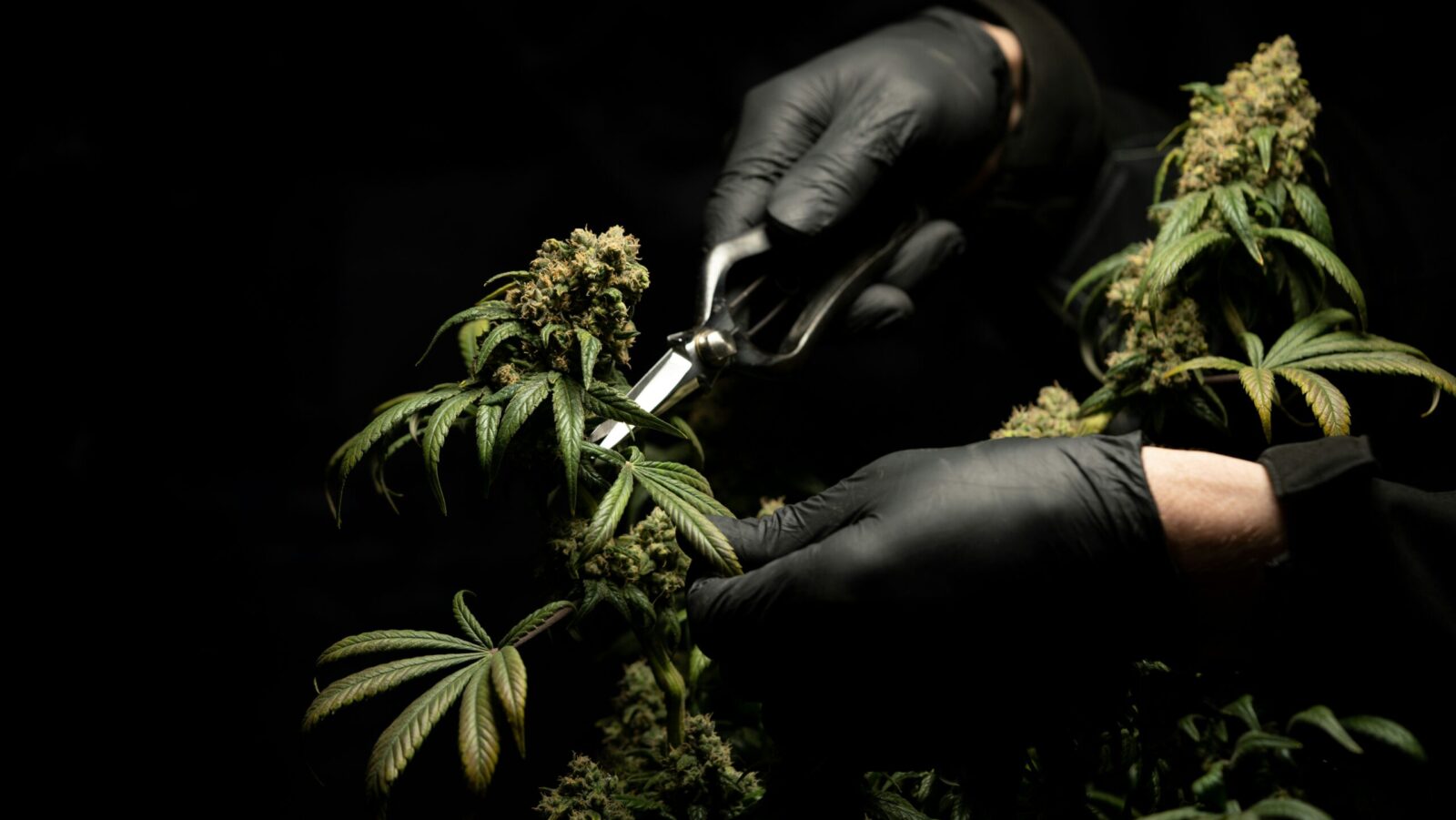
A cannabis ETF has come down from its high.
Cambria Investment Management recently announced its Cambria Cannabis ETF (TOKE) is closing up shop. Shareholders have until April 17 to sell their holdings before the fund is liquidated on or around April 24, at which point any investors still holding shares will receive cash equal to their shares’ value. The move is based on the California ETF provider’s ongoing review of its product lineup “to ensure it meets the evolving needs of its clients,” per a company statement. The ETF launched in 2019, when investor hype around marijuana was strong following Canada’s legalization of recreational cannabis. It has struggled fairly consistently since then, however, as have cannabis funds at large, amid fading excitement for the industry and regulatory barriers.
“Cannabis ETFs are tough; it’s feast or famine,” Matthew Tuttle, CEO of Tuttle Capital Management, told ETF Upside. “When the area is hot, the stocks ramp and AUM swells. But when it’s not, those stocks still have a tough time in this regulatory environment, and retail investors are fickle on the area.”
Up in Smoke
Late last year, President Donald Trump signed an executive order calling for marijuana’s reclassification from a Schedule I drug to a Schedule III drug to be expedited, which could allow for medical research for cannabinoids and reduce taxes for the industry. But as of now, marijuana is still a Schedule I drug. Not only is the regulatory environment uncertain, but these companies are also “shaky financially,” Tuttle said.
“[They] could be home runs if the regulatory chips fall in their favor, but if not, they are zeros,” he added. “From an institutional standpoint, that’s not a great trade-off. For the retail crowd, they are going to move their money to where it’s treated the best.”
TOKE isn’t the only cannabis ETF to lose its buzz of late:
- The AdvisorShares Pure US Cannabis ETF (MSOS), which VettaFi data show is the largest cannabis ETF on the market, is down roughly 30% year-to-date, while the Amplify Alternative Harvest ETF (MJ) is down 26%. Similarly, the Amplify Seymour Cannabis ETF (CNBS) dropped 28%.
- Last year, Amplify ETFs shut down the Amplify US Alternative Harvest ETF (MJUS).
Still Lit? Industry enthusiasts aren’t giving up on cannabis’ potential just yet. Aaron Edelheit, CEO of Mindset Capital, took to X to share that sentiment, despite seeing the TOKE closure. After signing on to try to “resurrect” the ETF around two years ago, his firm “continues forward with multiple private funds in the cannabis space” and remains bullish on the opportunities.