Good morning and happy Wednesday.
It’s all about the Benjamins: The average out-of-pocket cost of health care for a 65-year-old couple that retired last year is estimated at nearly $590,000, far more than what many people have saved. A pair of ETFs that launched Tuesday aim to harness Milliman’s research and risk-management expertise to help keep pace with (or exceed) those rising healthcare costs, which by all accounts are going up faster than the overall rate of inflation. In part, the funds seek to do that by investing in the health sector and related equities, along with a mix of Treasurys, TIPs, bonds, commodities and alternatives.
That in itself isn’t a fix to the healthcare affordability crisis, but hopefully it’s more than just a bandage for some investors.
Space ETF Launches Take Off Ahead of SpaceX IPO

I’m escaping to the one place that hasn’t been corrupted by capitalism: Space!
Actor Tim Curry’s character said that in a campy 2008 video game, a quote that later became a popular meme. But, sorry Tim, space is now most definitely a focal point for industry, and there are a burgeoning number of exchange-traded funds investing in a range of up-and-coming space technology companies. Ahead of the initial public offering for SpaceX, which is expected to be the biggest in history, a handful of ETFs have gotten exposure to the company. And others, with or without SpaceX, have added or prepped space tech funds. GlobalX, for example, considered the timing of Elon Musk’s forthcoming IPO, though the company’s new ETF invests much more broadly in the space theme. The company’s research showed that there were enough public companies with at least 50% of their revenues tied to space technology to build a pure-play fund, said Lis Agosto, director of product research and strategy at the firm. That fund, the Global X Space Tech ETF (ORBX) launched just over a week ago.
“We’ve been monitoring the space sector for quite a bit,” she said. “We felt that this was the right time.”
Other Funds in Its Orbit
That fund has 28 holdings, with the largest being in Rocket Lab, Planet Labs, AST SpaceMobile and Firefly Aerospace. It’s focused on companies that stand to benefit from the commercialization of the global space economy, including those developing rocket launch systems, mission-critical tech, space tourism and other subcategories. Although there are a few space ETFs on the market, others are on the way. WisdomTree filed late last week with the Securities and Exchange Commission for its Space Economy Fund, and First Trust is prepping its Bloomberg Space Economy ETF.
The existing funds on the market show some of the potential demand:
- The ARK Space & Defense Innovation ETF (ARKX) brought in $226 million during the first three months of 2026, as well as $328 million over 12 months, per data from Morningstar Direct. That fund has returned 12% year to date and 96% over a year.
- The Procure Space ETF (UFO) is up 33% so far this year and 159% over 12 months. It saw $175 million in net inflows during the first quarter and $254 million over a year.
- The Tema Space Innovators ETF (NASA), which launched on March 30, is up 29% year to date.
SpaceX Everywhere: Whether or not index fund investors like it, they will very likely soon have significant exposure to SpaceX, as it may be one of the largest public companies. That may make some investors wonder if their broad-market funds give them a good taste of the space economy. “One of the questions we often get is, ‘If I buy SpaceX when it IPOs, do I own the theme?’ And the answer is ‘no,’” Agosto said. Globax X’s new fund, which is passive, allocates to much smaller companies than investors will find in the big index funds, she noted. “To us, a basket approach makes sense,” she said. “We’re letting the winners play [out] over time.”
RayJay Hires Strategy Chief to Support Expansion of ETF Biz
Welcome the latest recruit.
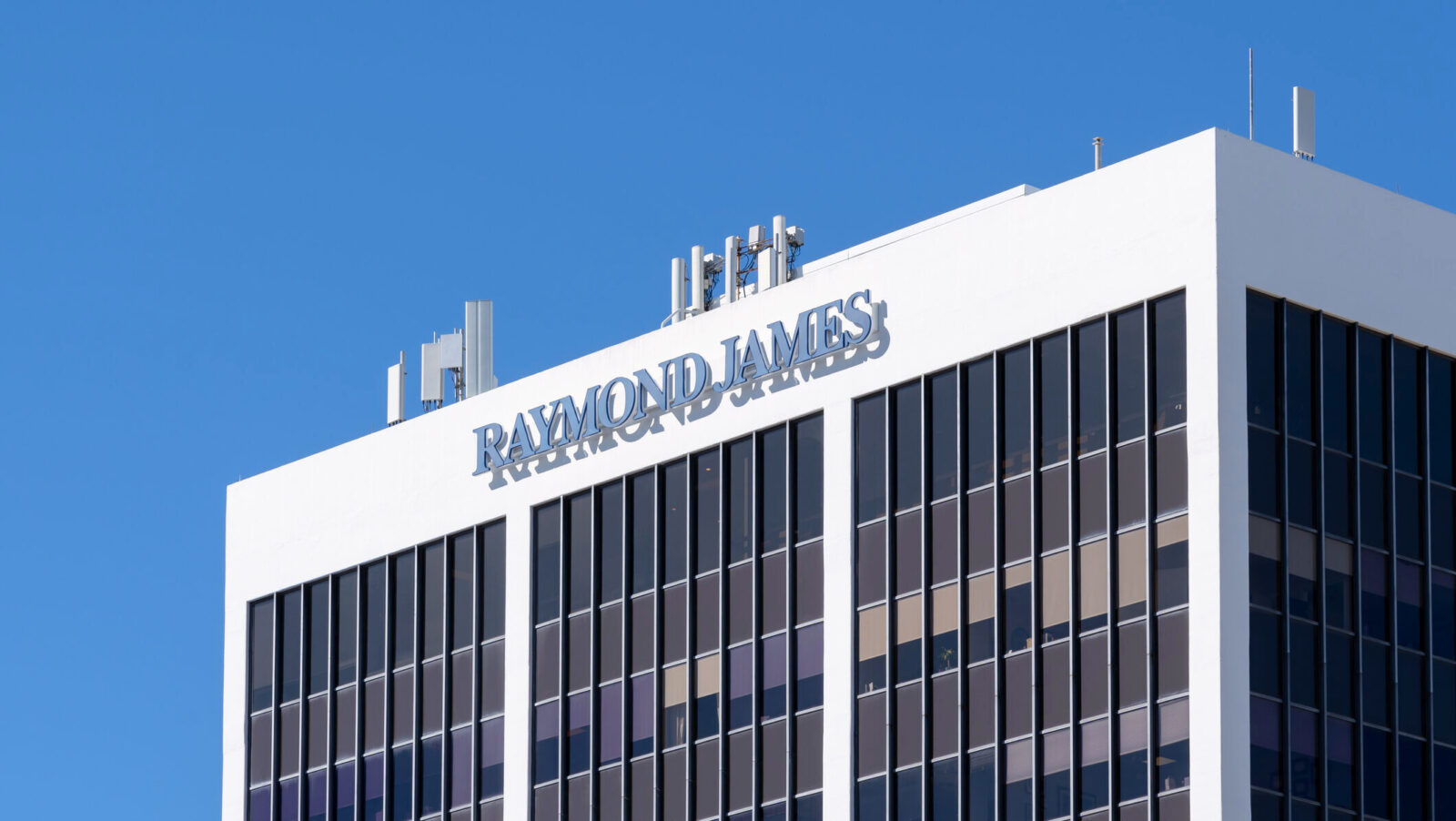
Raymond James Investment Management hired Kristi Higgins as its head of ETF strategy this week, a new position in which she will support development and expansion of the firm’s ETF platform. Higgins previously worked at Dimensional Fund Advisors and Allianz, where she helped bring more than 30 funds to market across asset classes and launched the latter’s ETF business.
The move is part of a broader wave of financial services firms and wealth managers launching and expanding ETF businesses. Baron Capital hired heads of ETF solutions and ETF capital markets in February to further develop the firm’s active ETF platform, and last June, Invesco brought on a JPMorgan alum as its first global head of digital assets. Even many RIAs have begun launching their own ETFs, a strategy used both to better serve clients and increase firm valuations.
Make Way for RayJay
Raymond James Investment Management handles about $115 billion in assets and is a newcomer to the ETF space. The division launched a suite of three active ETFs (all managed by Eagle Asset Management) in October that includes:
- RJ Eagle Vertical Income ETF (RJVI), which mostly invests in bonds issued by companies on the Bloomberg US Corporate Index, while also allocating to common stock and preferred securities. It currently holds about $14 million in assets.
- RJ Eagle GCM Dividend Select Income ETF (RJDI), which seeks yield by investing in dividend-paying US large-cap equities. It holds about $68 million in assets.
- RJ Eagle Municipal Income ETF (RJMI), which focuses on intermediate and long-term municipal fixed income bonds, and has more than $28 million in assets.
Welcome Aboard. The hire underscores Raymond James’ ambitions in the rapidly evolving ETF market. “Active ETFs are a central pillar of our long-term product strategy, and we are leaning in with conviction,” Matt Johnson, head of commercial strategy at Raymond James Investment Management, said in a press statement. “Kristi’s experience building ETF platforms makes her an ideal partner as we scale our ETF capabilities.”