
Good morning and happy Wednesday.
On second thought, maybe not.
Amid the nearly unbelievable pace of new ETF registrations, it stands out when a company has a change of heart. Late last week, crypto-ETF issuer Grayscale was an example of that, pulling the plug (at least for now) on three funds for which it had previously filed with the Securities and Exchange Commission. In letters to the SEC, Grayscale explained that it did not plan to distribute shares for its Cardano, Polkadot and Hedera trust ETFs. Why that is remains unclear, and the firm has various other digital-asset ETFs in registration that it has not sought to withdraw. The timing is also curious, as cardano futures just crossed the six-month mark that can help make spot-price products eligible under the SEC’s generic listing standards, as industry publication CryptoSlate pointed out.
Just goes to show that crypto ETF production isn’t black and white so much as it is a gray … scale.
Why This ETF’s 1,700% Return Isn’t Attracting Buy-and-Hold Investors
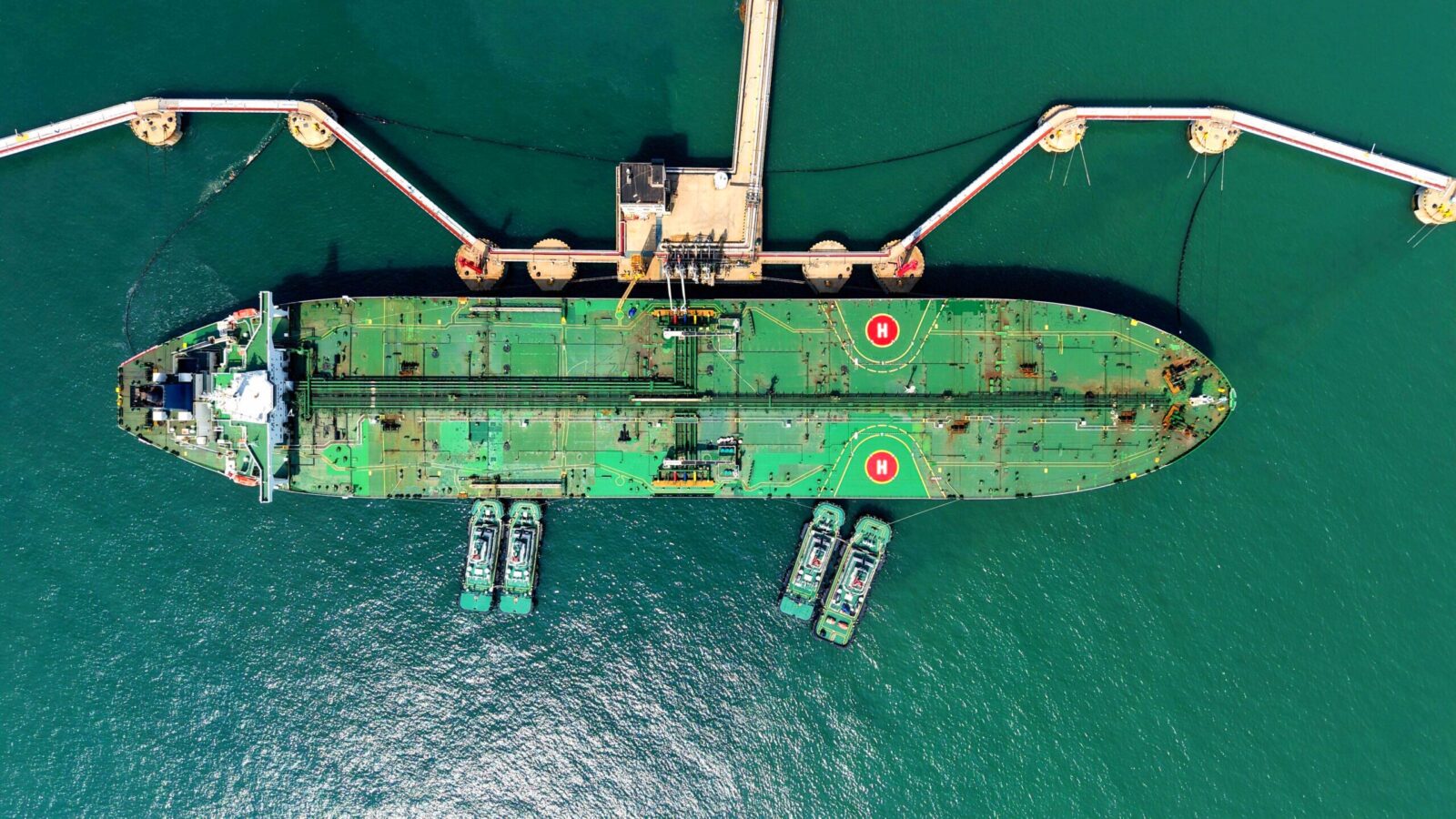
This year’s breakout star in the ETF world is a small fund, one with just $45 million in assets.
The Breakwave Tanker Shipping ETF (BWET) returned over 1,700% this year as of Tuesday, making it by far the best-performing fund on the market. And, that’s no small feat, given the preponderance of double- and even triple-leveraged funds. The closest fund, by performance, is the GraniteShares 2x Long Dell Daily ETF (DLLL), which has returned 732% so far this year. Excluding the lengthy roster of leveraged funds, the next-best-returning fund has been the Arm Holdings PLC ADRHedged ETF (ARMH), which, at an impressive 132% is still less than one-tenth the returns of BWET. Still, the Tanker Shipping ETF is intended to be a highly specific trading tool, not necessarily a buy-and-hold investment.
“The [trading] volumes have been incredibly strong, but assets under management have not changed much in the last few months, which tells me that most of the folks are in and out,” said John Kartsonas, founder of Breakwave Advisors. It’s common for a day’s trading volume to be twice as high as the fund’s AUM, for example, “which is very unusual for an ETF, but it seems that there are a lot of people who like the volatility, who would like to take a short-term bet either way,” he said.
Break the Mold, Make Waves
The fund’s unique strategy of focusing on crude oil tanker freight futures rates has benefited from the blockage of the Strait of Hormuz amid the Iran war. “It is hard to find something more niche than this,” said Todd Sohn, chief ETF strategist for Baird Strategas. “People are probably looking at it as more of a proxy than putting major dollars to work … If it was anything else, if you had a semiconductor ETF up this much year to date, it would be seeing massive inflows.”
While the fund has been the top performer in 2026, there are plentiful instances of ETFs getting triple-digit rates of return during the first six months in given years, especially recent ones, data from Morningstar Direct show.
Some examples, excluding leveraged funds:
- In the first half of 2021, Grayscale’s Ethereum Classic Trust (ETCG) returned 899.5%, which appears to be the strongest first-half performance of all time. Breakwave’s Dry Shipping ETF (BDRY) returned 264% during that time.
- During the first half of 2026, BWET returned 683.8%, compared with 225.6% for ARMH.
Low-Flow Tank: There’s a big reason why BWET isn’t soaking up assets: An agreement with Iran to reopen the strait would dramatically change the price of oil, and crude oil freight futures. “You had this crisis starting in March, and everybody was expecting this to end relatively soon … But we’re six months into the conflict, and it seems like not much has changed,” Kartsonas said. “There is a lot of risk … If there is a normalization in the Strait of Hormuz, you would expect freight rates to come down, and that would affect freight futures as well.”
Big AI IPOs Get Headlines. The Real Story Takes Longer To Tell

One down, two to go.
SpaceX is now public, with a series of lock-ups scheduled to expire through mid-2027 offering the chance for significantly more float to hit the market, and OpenAI and Anthropic aren’t far behind. The trio of “cannonball IPOs” has the potential to cause not just big initial waves but also ongoing ripples for long-term investors, according to Marta Norton, chief investment strategist at Empower Investments. The general public may pay more attention to short-term price movements in the early days and weeks after flashy IPOs, but financial advisors and their clients will have ongoing decisions to make in the years ahead as indexes, passive strategies and active investors adjust portfolios accordingly.
“Having these three big companies going public while sitting at the center of the AI economy is a big deal for investors,” Norton told ETF Upside. “In addition to their impact on mainstream indices, they’re going to give us much greater transparency into how AI is shaping up and what that uncertain future looks like as they begin to report earnings.”
Big New Kids on the Block
SpaceX, OpenAI and Anthropic will eventually take meaningful weights in different mainstream indexes in the US. By the numbers, the AI IPO wave is eye-watering:
- These companies alone could add as much as $4 trillion in extra market cap for US equities over the next six to 12 months, per an Empower Investments analysis, depending on how much float becomes available.
- That’s roughly 5.4% of the aggregate market capitalization of the Bloomberg 500 Index.
So far, Russell and Nasdaq have decided to admit SpaceX within weeks of its IPO, altering their rules to accommodate it, but the committee overseeing inclusion in the S&P 500 Index has not, likely delaying the stock’s entry for at least a year. These early inclusions and exclusions will likely have a modest effect on investors, Norton said, given SpaceX’s limited initial public float, which may very well be used as the blueprint for OpenAI and Anthropic. As lock-ups expire, however, float could meaningfully increase, which would mean these stocks take larger roles within important indexes. That will eventually open the door for additional volatility around quarterly rebalances, Norton said.
AI Trade Transparency: It’s not just the equity index reordering that interests Norton as she evaluates the AI IPO bonanza. It’s also the transparency these IPOs bring to the AI trade. “One of the biggest questions investors have had focuses on the hundreds of billions of dollars spent on AI development, both by consumers and by businesses,” Norton said. “With model businesses [like OpenAI and Anthropic] going public, we’ll get a look at their earnings on a regular basis and gain a clearer view into the growing AI implementation, for better or for worse.”