

Good morning and happy Monday.
That hot tip on Reddit might not be worth chasing.
Internet chatter can move markets. Remember GameStop during the pandemic? But just like that new PlayStation game your kids traded back to GameStop a week later, meme stocks have the potential to lose value quickly. The Roundhill Meme Stock ETF (MEME) has climbed roughly 30% this year, fueled by gains in holdings such as Terawulf, Bloom Energy and Sandisk. That all sounds well and good, until you realize the fund is trading significantly below its launch price last October.
It’s a reminder that meme stocks, and the funds built around them, are often fueled by online hype and cryptic GIFs, instead of things like, you know, revenue or profit.
No SpaceX, No Tesla? No Problem for These ‘Ex-Elon’ ETFs
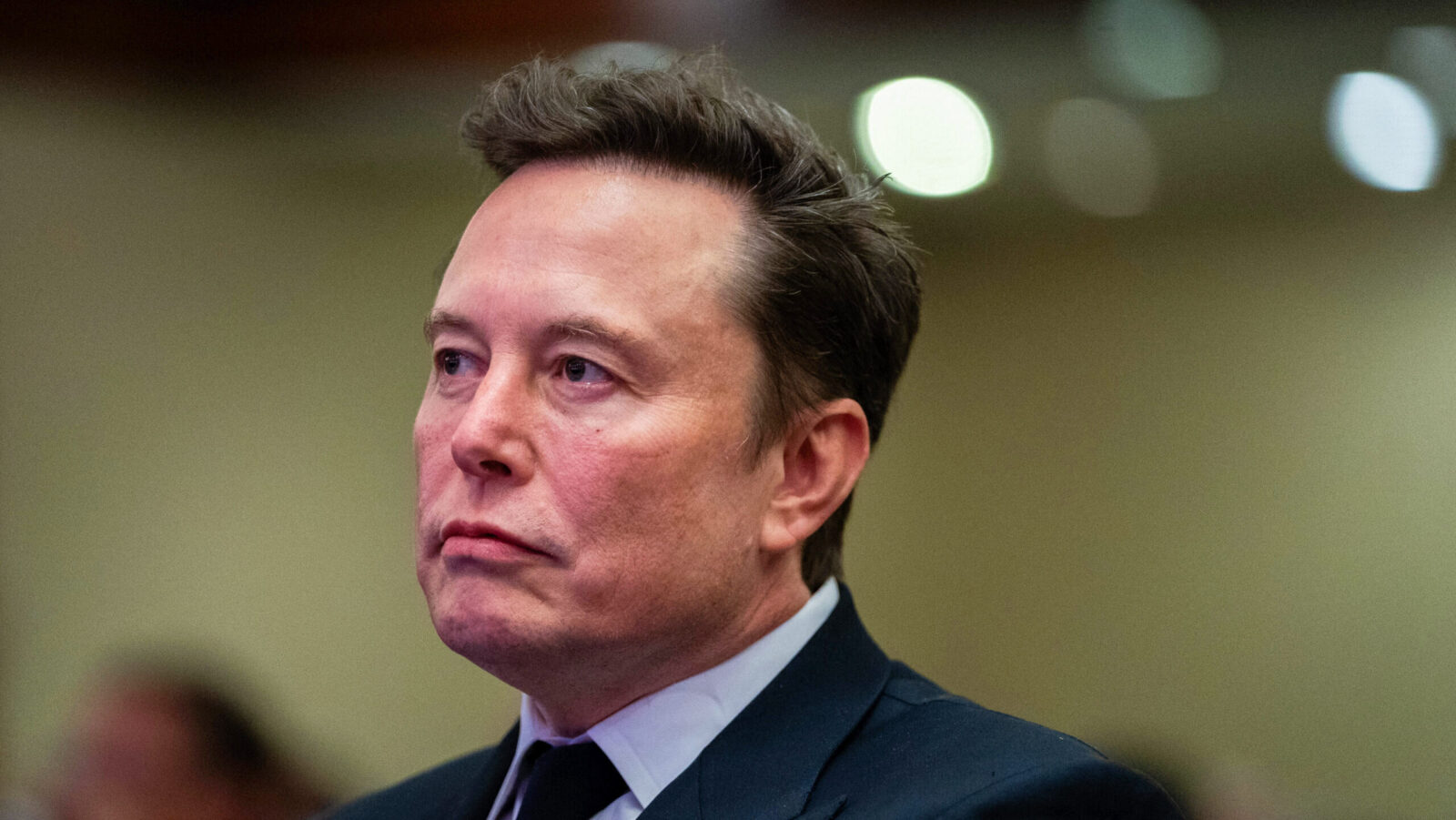
Two new funds are borrowing from Mean Girls’ Gretchen Wieners, telling Elon Musk: “You can’t sit with us.”
Subversive ETFs filed with the Securities and Exchange Commission last week to launch a pair of “ex-Elon funds,” including the Nasdaq-100 Ex-Elon Enterprises ETF (QQNE) and S&P 500 Ex-Elon Enterprises ETF (SPNE). The actively managed products offer exposure to the Nasdaq-100 and S&P 500, respectively, but ditch any securities in companies founded, controlled, led or primarily associated with Musk. In other words, mostly SpaceX and Tesla.
There are plenty of reasons investors may want to kick the world’s richest man out of their portfolios: his polarizing views and right-wing politics, including an on-again-off-again alliance with President Trump, his controversial labor practices, market-moving comments on crypto and, of course, his handling of chainsaws, just to name a few. But will that actually compel investors to move assets into these new funds?
“In theory, the ETF is an interesting idea, since many investors may have strong opinions about Elon Musk,” said Aniket Ullal, head of ETF research and analytics at CFRA. “In practice, however, it will have to overcome several challenges.”
X’ing Out Musk
This isn’t Subversive’s first time hoping that excluding certain types of investments will curry favor with investors. Its Subversive Metaverse ETF (PUNK), which focused on metaverse companies but excluded Meta, launched in 2022 before being shut down the year after. But this time, it’s betting that excluding Musk’s companies will lure investors who view the “potential corporate governance concerns, political risks, and heightened share-price volatility” often tied to those firms as “less desirable,” per the filing.
It likely won’t be an easy road for QQNE and SPNE, Ullal said:
- He pointed out that Tesla and SpaceX together constitute less than 5% of the Nasdaq-100, so QQNE may not be sufficiently differentiated from the Invesco QQQ Trust (QQQ), the largest ETF that tracks the index.
- The funds could also underperform when Tesla and SpaceX stocks are doing well. “It may test whether investors are willing to sacrifice performance for values or politically related reasons,” he said.
Subversive said the firm cannot comment as it’s in a quiet period after filing, while fund advisor Tidal Investments also declined to comment.
Shorting Celebs: Betting against influential names, whether they be companies or individuals, can be challenging. The Inverse Cramer Tracker ETF, which shorted stock picks of CNBC’s on-air personality Jim Cramer, closed in 2024 after less than a year on the market.
Tighter Spreads, Wider Opportunities

Fixed income continues to offer compelling income potential, with bond yields among the highest in 20 years. But Columbia Threadneedle Investments has observed that credit spreads are near their lowest, leaving little incentive to move down in quality.
After a volatile year of oil shocks and shifting rate expectations, fixed income continues to offer attractive income potential. Yet compensation for risk has narrowed in lower-quality and more spread-sensitive areas.
So how do you keep income working while staying disciplined about quality and valuation? Columbia Threadneedle’s team is leaning on high-quality income — including selected non-agency mortgages and consumer ABS — remaining selective in lower-quality credit where tight spreads leave less room for error.
The current environment underscores the importance of selectivity, as dispersion creates opportunities across fixed income.
What’s Behind a Rare Week in the Red for ETF Flows

You can’t win ‘em all.
ETFs as a whole had an uncharacteristic week of outflows earlier this month, with about $3.7 billion in redemptions, according to ETF.com. The week ending July 3 came amid a massive year of inflows, however, with the industry on track to grow by over $2 trillion by year’s end. So what caused the blip, and how should investors be thinking about it? Some areas with the largest monthly outflows in June were commodities and digital assets, said Brian Paoli, a research analyst for Morningstar.
“Broadly speaking, flows typically follow performance,” Paoli said, adding that the largest outflows were in gold- and bitcoin-linked funds. “In 2025, we saw a crazy performance for both bitcoin and gold … and then heading into 2026, as the price of gold has come back down, we’ve seen those outflows increase in the first two quarters.”
Go With the Outflow
There are many reasons for outflows, with causes ranging from investor uncertainty about a stock to loss of confidence in an entire sector or category of fund. When specific products lose assets, the reason might be that advisors have shifted their strategies, Paoli said. That happened recently, he added, when investors pulled out of the VanEck MSCI International Value ETF (VLUE) because of its heavy concentration in Micron, which could be worrisome for both investors and advisors. “Roughly a quarter of that ETF was actually being held in Micron, and so you had some investors both concerned about its individual stock exposure, but also, if you’re an advisor, you have a certain investment policy,” Paoli said.
Another factor that might be at play is SpaceX. Several funds that had the highest net outflows track the Russell 1000 or 2000 Indexes, which recently added the newly public behemoth to its ranks. “I can’t say with certainty that it’s [caused by] investors selling for that reason, but the Russell 1000 indexes are adding SpaceX to their holdings, both on the value and growth side,” Paoli said. “Russell 1000 trackers are going to show up naturally with the largest inflows or outflows. But it is interesting.”
Don’t Be a Worry Wart: Should investors be concerned about the negative numbers? Hardly, said Maital Legum, head of ETF solutions for Teucrium. “We as an industry have gotten so used to inflows week after week after week,” Legum said. The hundreds of funds that launched in the month of June alone, she added, indicate how “aggressive and how bullish” the industry is about the investment vehicle. “One week of outflows is really not any systematic or structural indication that things are cooling off.”