
Good morning and happy Wednesday.
August was a hot one, and not just for temperatures around the world.
It saw ETF inflows that were nearly four times the average for the month, which historically is one of the slowest for fund sales, per a report from State Street’s Matthew Bartolini. Investors piled $180 billion into US-listed exchange-traded funds, putting the market on pace to break last year’s $1.52 trillion record before the end of September. Equity funds led the pack with $103 billion going into those, followed by bond funds, at $55 billion. There were some notable changes in sectors, though, with tech and financials ETFs bleeding $6 billion and $5 billion, respectively, and healthcare funds bringing in $2 billion.
Now, on to September, which is also a song by Earth, Wind & Fire. That has nothing to do with ETFs, but it’s probably in your head now, isn’t it?
Will Hourly Resets Seriously Spice Up Leveraged ETFs?

Who remembers the psychological thriller Memento from the year 2000?
Like the Christopher Nolan film’s central character, who has anterograde amnesia and thus cannot make long-term memories, a suite of proposed exchange-traded funds would reset hourly. Last month, Defiance ETFs filed with the Securities and Exchange Commission for 16 2x-leveraged funds that, unlike existing products in the category that reset daily, would have six “intraday execution periods,” focused on popular single stocks like SpaceX, Meta and Palantir, as well as the Roundhill Memory ETF (DRAM). While that could resonate with day traders who are quite serious about watching the clock, the strategy seems to be a different way of approaching the SEC’s 2x limit on leverage for new funds.
“They’re trying to get around concerns the SEC has expressed around higher leverage,” said Benjamin Schiffrin, director of securities policy for Better Markets. “It’s fair to say this is risky, if not riskier, than an ETF that is 5x leveraged but in a different wrapper.”
Cut It in Half and Double It
Leveraged single-stock ETFs are notorious, and sought out, for their volatility. Issuers are clear, at least in fund documents, that the products are intended to be traded intraday by experienced investors. That’s because the losses can add up and are difficult to recover from, a quality known as decay. If, for example, a stock loses 20% in a day, then fully recovers the next, investors who held a leveraged single-stock fund during that time frame will end up with less money than they started with. Adding reset periods throughout the day would make it that much more critical for traders to get in and out of the funds quickly.
“These ETFs are designed for short-term traders who actively manage their positions throughout the day,” said Roxanna Islam, head of sector and industry research at TMX VettaFi. “Because they reset multiple times throughout the trading day, they carry greater compounding risk than traditional daily-reset leveraged ETFs.” Or, as TradingBlock vice president of market strategy Michael Martin said, volatility requires bigger moves to break even.
“Intraday volatility runs hotter than close-to-close volatility in these [stock] names, and the filing says so,” he and Chief Innovation Officer Michael Rechenthin said in comments to ETF Upside. “You lose 50%, you have to make 100%. Six resets a day gives that math more chances to run.”
As trading tools, leveraged ETFs have helped some people achieve outsized returns, but many funds have lost money, which highlights the problem for buy-and-hold investors:
- The median fund return was -38% over four years, per a report from Morningstar.
- Meanwhile, the median trading volume was 22%, meaning that investors largely held positions longer than a day, the report found.
Short-Term Memory: Defiance did not respond to a request for comment about the proposed funds. But whether the SEC decides to hold up the funds is a big question: The regulator is currently collecting public comments about “novel” ETFs with strategies that resemble gambling, and some issuers appear hopeful that it will eventually overturn its 2x leverage limit. “The SEC probably will have concerns similar to the concerns they had with 5x leveraged single stock ETFs,” Schiffrin said. “It’s just not clear that retail investors are going to appreciate how quickly you can lose your money.”
Why Issuers Are Betting on the AI Trade Going Global
Emerging markets are booming, tech is ballooning … anybody up for a twofer?
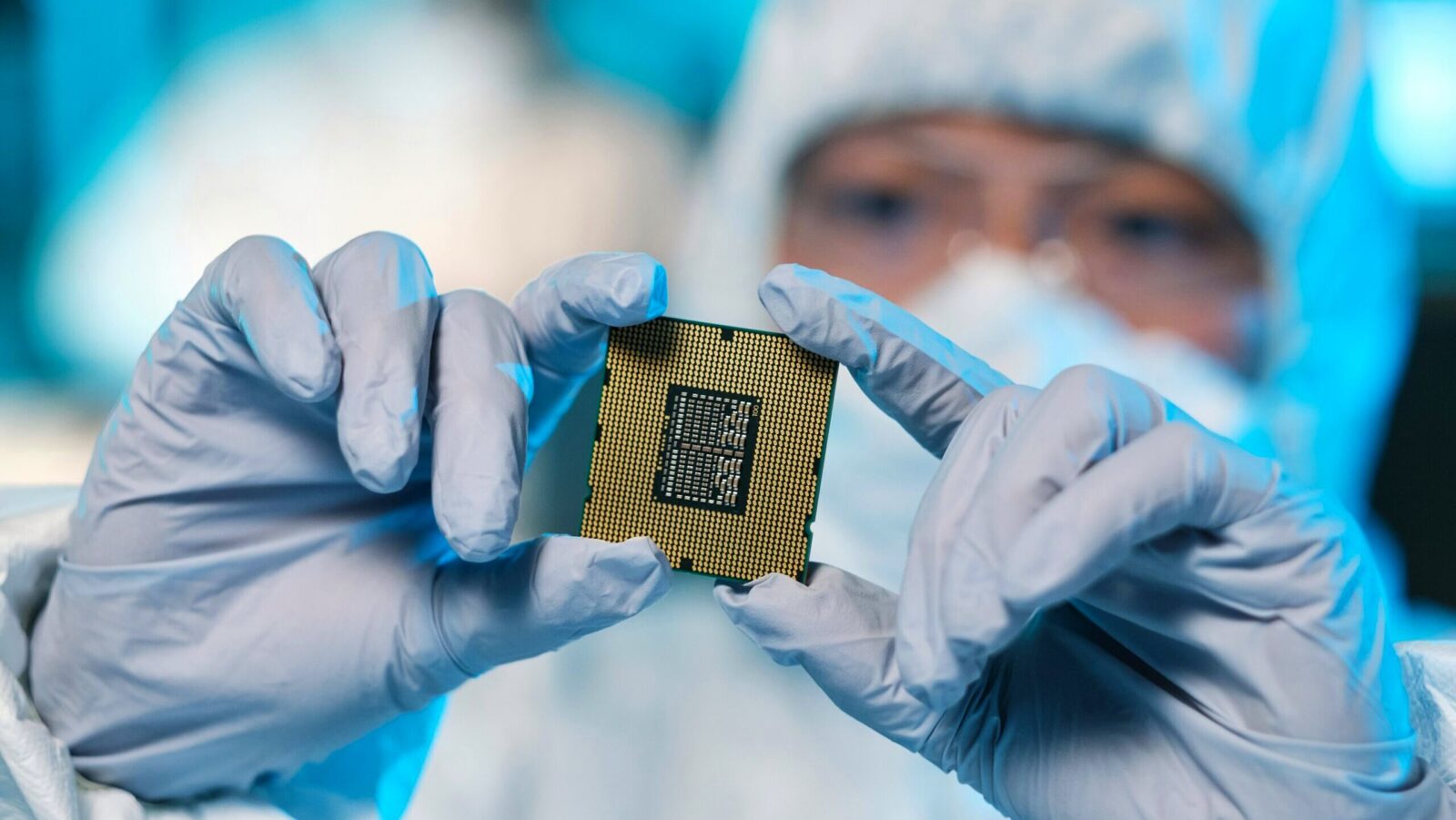
As the American tech industry shows no signs of slowing down, some fund providers are looking abroad to get even more AI and semiconductor exposure. Recent funds from EMQQ Global and xETFs have focused on tech firms abroad, specifically in countries like China and South Korea, respectively. Late last year, Defiance also brought to market a leveraged product targeting Taiwanese semiconductors. The trend may signal a shift in how US issuers are tackling the issue of overconcentration in the market, particularly given certain American products’ reliance on emerging market companies’ infrastructure and hardware.
“AI, as it has arrived and become a bigger part of the economy and stock market, has also arrived in emerging markets,” said Kevin Carter, founder of EMQQ Global, an emerging markets investment and research firm that just launched a fund focusing on Chinese large language models. “Emerging markets are relevant for a number of different AI reasons, one of those [being] that Asian hardware manufacturers are basically making all the profits coming from making data centers.”
More Themes, Please
The proliferation of new products targeting South Korean companies, in particular, points to the emergence of even more niche thematics, funds that target things like memory or photonics. Combining emerging markets with tech is just the latest way to get into a concentrated but high-performing sector, said Johnny Wu, CEO of xETFs, which recently launched a Korean semiconductor fund. Since many semiconductor strategies are “US-centric,” he said, having a Korea-specific fund can fill a gap in investors’ portfolios while offering access to potentially massive returns. (South Korea’s KOSPI index was the best-performing in the world last year.) The fervor also shows in the scale of Korea’s stock market fallout from leveraged funds, as regulations tighten on investors’ ability to trade them. Getting in on Korea now is a bet on that market’s continued success, Wu said.
“There’s a saying, the best time to plant a tree is 20 years ago. So yes, there’s competition from companies in China and other areas, but for them to catch up, that will take a better part of five to 10 years,” Wu added. Still, such products have high fees, as these things often do; EMQQ’s new fund has an expense ratio of 86 basis points.
Wait, Open-Weight? One reason a fund might exclude American AI companies is US models’ closed, as opposed to open, status, Carter said. Chinese LLMs tend to be “open-weight,” he added, meaning the systems are available publicly for anyone to download and alter.
“It’s basically a US-versus-China story, and the big difference is US models are closed models,” Carter said. “I mean, Airbnb is built on China’s open-weight models … In the development community in the United States, there’s been a lot of acceptance already of open-weight models from China.”