

Good morning and happy Friday.
It’s hard to call it quits when you’re doing what you love.
That’s what the Nitty Gritty Dirt Band did recently after decades of touring the country and delighting music fans, with its final gig in Denver capping off a 60-year run that included countless live shows and 27 studio albums. Pickin’ and grinnin’ is a very particular line of work, but the group’s enduring dedication to the craft reflects the same passion that many Americans bring to the job.
The opportunity to take a final bow in front of an adoring audience softened the blow of retirement, the group wrote on Instagram, which is something retirement planners should keep in mind. Helping clients who love their work happily transition to retirement requires more than running Monte Carlo simulations. It requires a vision for what that final day on the job will really look like.
Trump Accounts May Create Millionaire Gen-Beta Retirees

Lights! Camera! Activate Trump accounts!
Contributions are now flowing after the Treasury Department launched its much-anticipated Trump account app this week. Any child under the age of 18 with a Social Security number can participate, and US citizens born between January 2025 and December 2028 can receive a $1,000 government deposit. Maximum annual contributions are set at $5,000, with the money automatically invested in low-cost index funds. It’s a fantastic approach to savings, according to Adam Bergman, a tax attorney and founder of IRA Financial, one that will give millions of young Americans a financial head start by the time they reach adulthood. The biggest impact of the accounts, though, could actually be felt many decades down the line, when the emerging generation of Americans is ready to retire.
“These new accounts are a way for families to supercharge their kids’ retirement savings,” Bergman told Retirement Upside. “Thousands of dollars invested at a very early age could easily grow to millions by the time someone turns 60 or 65.”
Trump Accounts as Retirement Vehicles
It’s not much of a stretch to connect the accounts with retirement goals, Bergman said, considering they are technically a type of traditional IRA with some added restrictions. Withdrawals are generally prohibited before the beneficiary turns 18, for example. Otherwise, they are essentially IRAs with no earned income requirement before age 18, and withdrawals before age 59.5 are subject to standard income taxes plus a 10% early withdrawal penalty. “Again, I’m a big fan, to the point that I would have liked to see some kind of automatic enrollment feature that kicked in when people get a Social Security number,” Bergman said. “That would help ensure that kids who are eligible get the $1,000 government deposit.”
Currently, the IRS has a priority order for individuals who may open a Trump account on a child’s behalf:
- Legal guardians are first.
- Parents are second, followed by adult siblings or grandparents of the beneficiary.
Specific policies also exist as to who can open an account for foster children, orphans, emancipated minors and wards of the state.
More Than One Option. Bergman stressed that Trump accounts aren’t the only option for saving on behalf of children. One alternative is 529 accounts, which offer significant tax advantages for education expenses. In addition, up to $35,000 in a 529 plan can now be rolled into a Roth IRA.
Brokerage accounts are another option that could compete with Trump accounts, as detailed in an analysis from the Bipartisan Policy Center. Although they lack tax deferral or tax-free withdrawals, investment returns are typically taxed at the long-term capital gains rate, which is substantially lower than ordinary income tax rates. As a result, the BPC found, a brokerage account invested in a low- or no-dividend mutual fund could potentially outperform a Trump account over long time horizons.
Blending Private and Public Market Access

Your clients look to you for retirement guidance they can count on: New T. Rowe Price Goldman Sachs Retirement Blend Plus Trusts offer all-in-one strategies that fuse public markets and private equity, private credit, and private infrastructure.
Developed in conjunction with Goldman Sachs Asset Management’s private market capabilities, these trusts:
- Adjust to changing needs: Target date portfolios designed to evolve over time and deliver durable, long-term outcomes through retirement.
- Blend strategies with purpose: Meaningful allocations to active and passive strategies alongside a range of private investments.
- Diversify with a holistic lens: Globally diverse strategies selected for risk management.
What’s the Magic Retirement Number? Check Your Clients’ ZIP Code
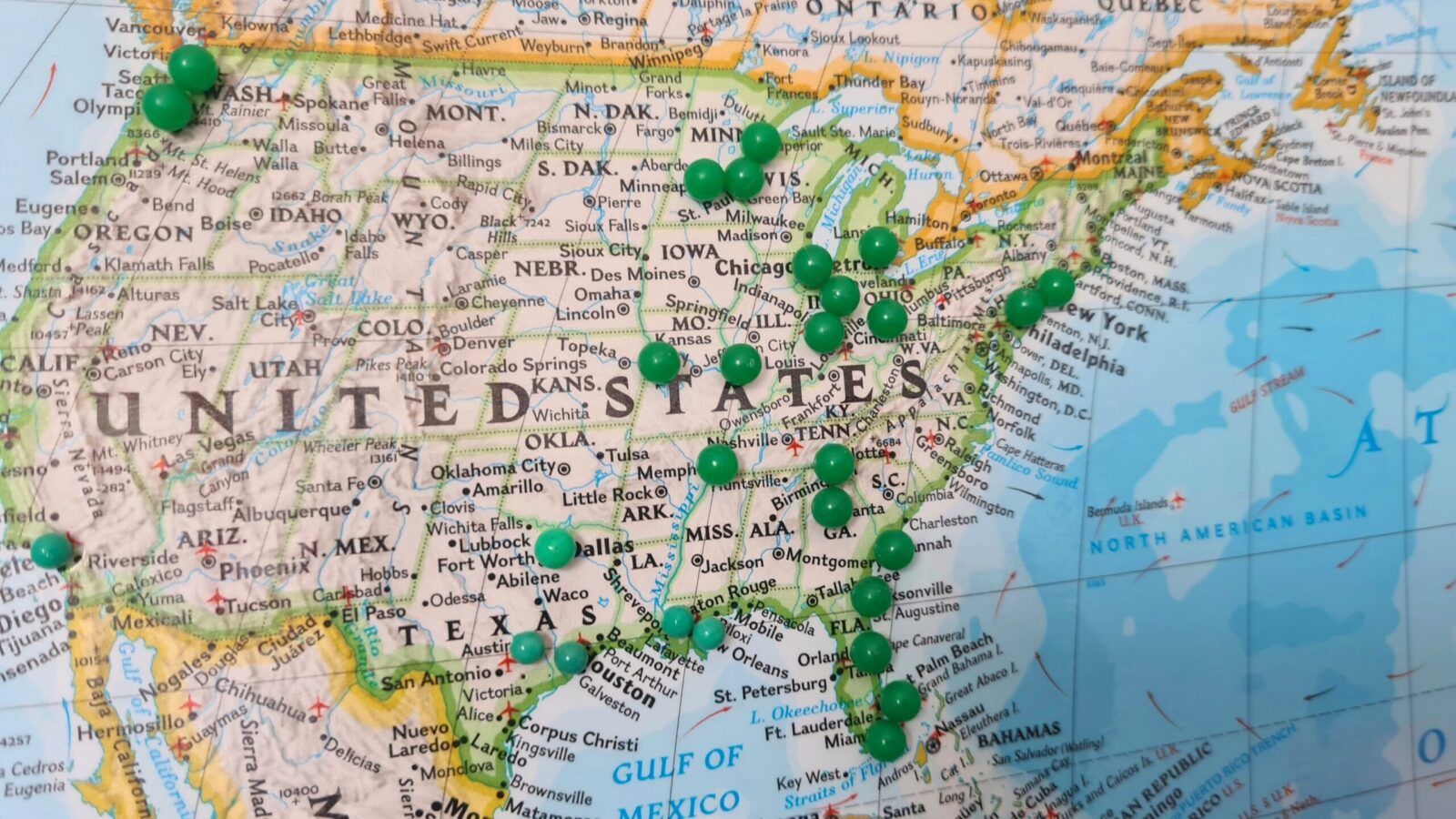
It’s not just real estate that’s all about location, location, location.
Many clients worry they won’t have enough money saved to retire comfortably, assuming they’ll need more than $1 million by the time they leave the workforce. But where they spend their golden years can make a huge difference. Required nest eggs vary by hundreds of thousands of dollars depending on the state, according to an Investopedia analysis of federal data. Assuming the traditional 4% withdrawal rule, the typical American couple needs about $1.16 million saved for retirement, below the $1.46 million that Northwestern Mutual estimated earlier this year. But maybe there is no magic number.
“Chasing one is how good savers end up anxious,” said Jim Crider, founder of Intentional Living FP. Having a target early on is helpful, he said, but eventually advisors should shift the conversation toward taxes, withdrawal sequencing and spending habits. “The number also becomes a treadmill. Someone hits it and immediately moves the goalposts because the number was never connected to a life they actually wanted.”
Cross-Country Tour
If clients prefer big cities and beach life, the most expensive places to retire are New Jersey, Hawaii, California and Washington, D.C., each requiring couples to save more than $1.3 million. But if they’re fond of mountains and prairies, North Dakota, Arkansas and Iowa require just over $800,000. The analysis takes into account the spread between annual living expenses in each state and how much a couple gets in Social Security, which is roughly $38,000 a year right now:
- Housing is one of the biggest slices of annual living expenses, accounting for about 30%.
- The prices of goods and services don’t vary too heavily across the contiguous US, but in Alaska, where nest egg requirements surpass $1 million, food and utility costs are significantly higher. Plus, clients who need specialized medical care might have to travel out of state.
Florida may be the classic retirement destination, but it’s hardly a bargain, with annual expenses topping $80,000. Some advisors say clients should consider overlooked alternatives. John Bovard, owner of Ohio-based Incline Wealth Advisors, recommends Tennessee. “There’s no income tax, and it has some great attractions like the Smoky Mountains,” he said. “It has a relatively cheap cost of living, and the winters are not as severe.”
Better Safe than Sorry. Not every client earns as little as the average American, though (the US does account for nearly half the world’s millionaires). Catherine Valega, a CFP with Green Bee Advisors, works with high-net-worth clients on the coasts and recommends they have $3 million to $4 million saved by retirement. “Gone are the days where $1 million is enough,” she told Retirement Upside.

What the 401(k) System Gets Right (and Who It Still Leaves Out). Ascensus CEO Nick Good joins Sean Allocca and John Manganaro to explain why the 401(k) system works but doesn’t reach far enough, and what it would take to close the gap for small-business workers who often have no plan at all. Plus: how British and American retirement mindsets diverge, why longer lifespans are straining retirement savings, and the succession lesson behind two clean CEO handoffs.
 Listen to this week’s episode here.