

Good morning.
Don’t look now, but a column of white smoke is rising out of Cupertino. On Monday, Apple announced the selection of its next CEO: John Ternus, a senior vice president of hardware engineering, will take over for Tim Cook in September. Cook, who filled perhaps the biggest shoes in corporate history when he replaced Steve Jobs, has left some pretty oversized footwear to fill himself.
During his 15-year tenure, California-based Apple saw its annual revenue roughly quadruple to more than $400 billion as it expanded into wearables and stormed into global markets. While Cook has been praised for his operational expertise, Ternus is a design and engineering guru. That’ll come in handy as Apple works to turn foldable phones, AI pins and smart glasses into world-beaters rather than the next Vision Pro headset bellyflop. Apple turns 50 this year. Ternus will become just the eighth CEO in company history and just the third in 30 years. If past is prelude, you’ll churn through another three or four new iPhones before his tenure comes to a close.
Blowout Earnings Reports Give Wall Street Reason to Believe the Bull Case
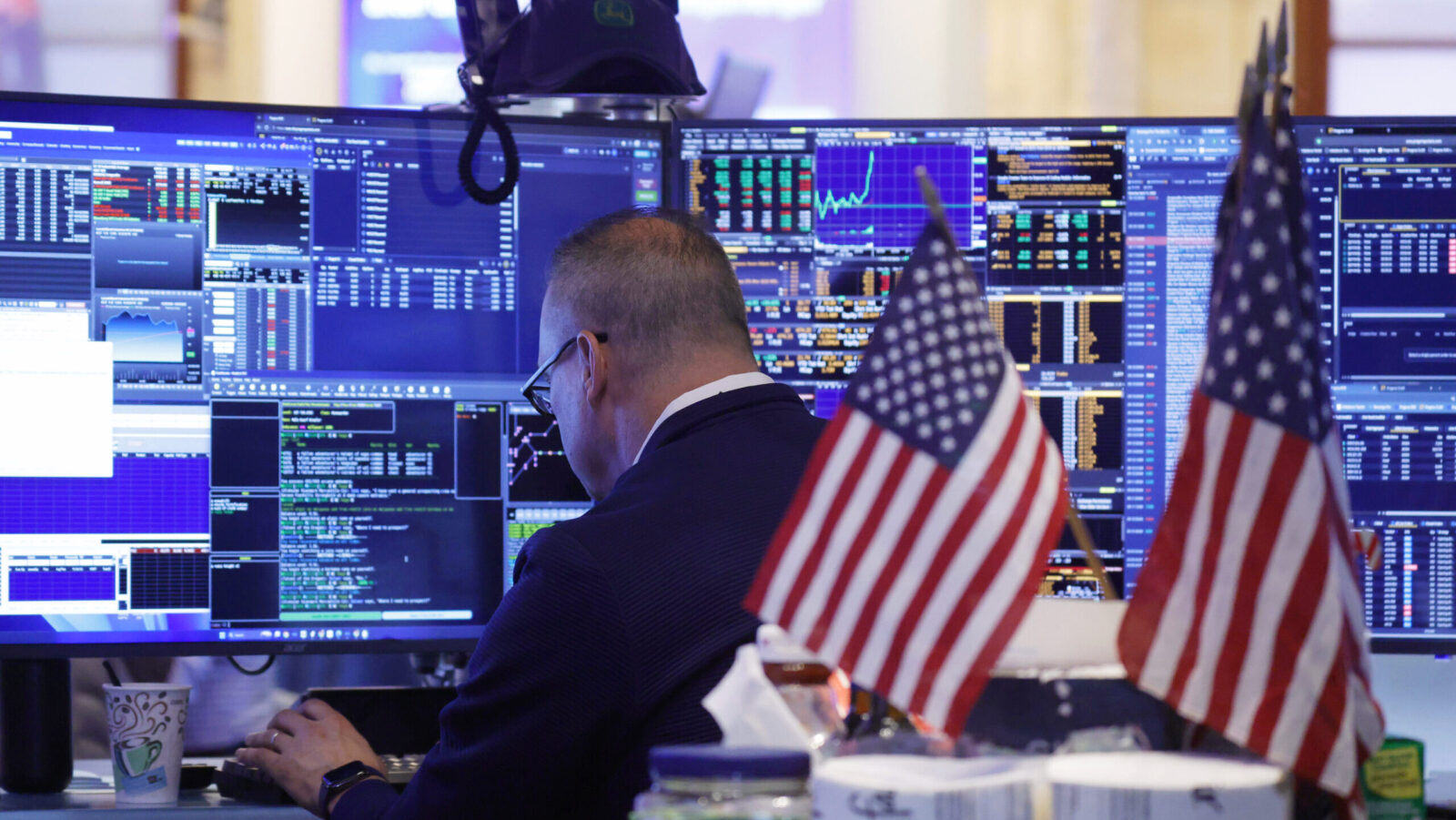
Ships are still stuck in Hormuz, but that hasn’t stopped the Wall Street bull.
While the S&P 500 ticked down 0.24% on Monday as Iran War peace talks appeared to stall, that snapped a 14-day winning streak that pushed the market to three consecutive closing records through Friday. And recent data from FactSet shows a rip-roaring start to earnings season is giving Wall Street plenty of evidence to keep believing in its bull case.
Politics, Schmolitics
So why did Wall Street shrug off a war that had the world in panic mode just a month ago? As veteran market researcher Ed Yardeni told Bloomberg last week: “History shows that geopolitical crises turn out to be great buying opportunities … investors are looking past the war.” And after looking past the war, investors found plenty of upside. Friday’s record close capped off the longest winning streak since 1971, driving the index up more than 12%.
The rally was fueled in part by Big Tech, which has returned to Wall Street’s good graces after a big-time valuation reset. The Roundhill Magnificent Seven ETF is up 18% from a March 30 low, outpacing the broader market; according to Bloomberg data analysis, more than half of the recent gains in the broader index were driven by a new Mag 7 that swaps Tesla for Broadcom. Bloomberg Intelligence data projects the standard Mag 7 cohort will deliver profit growth of 19% this year, compared with just 17% for the rest of the index. “Anytime geopolitics takes front and center, it usually means focus on fundamentals and you can make a lot of money,” Morgan Stanley senior portfolio manager Andrew Slimmon told MarketWatch.
None of the cohort has reported its latest quarterly results yet (Tesla kicks things off on Wednesday), though the FactSet report shows that the Other 493 are riding the rising tide:
- Of the 10% of S&P 500 companies that reported through Friday, FactSet found that 88% reported actual earnings per share above estimates. That beats both a five-year average of 78% and a 10-year average of 76%.
- Meanwhile, all 11 sectors had reported year-over-year revenue growth, with strong revenue figures in the financial sector pushing the overall growth rate to 9.9%. If that holds through the rest of the earnings season, it would mark the highest figure since the third quarter of 2022.
Bear With Me: Not everyone’s buying the bull case. Matt Gertken, chief geopolitical strategist at BCA Research, said on CNBC’s Squawk Box Monday that investors risk growing “complacent” with assumptions of imminent peace in the Middle East. Meanwhile, Deutsche Bank’s macro research head flagged in a note to clients on Monday that optimism over peace talks similarly sparked a market rally in the weeks following Russia’s invasion of Ukraine in 2022, which was followed by the worst selloff since 2008.
Don’t Throw Away Software with the Bath Water

The selloff in software has raised existential concerns for the industry as innovations and advancements in artificial intelligence accelerate. While the impact of AI on the software sector is undeniable, “reports of its demise are greatly exaggerated.” Software remains the DNA powering our world, from communication and collaboration to robotics and beyond. While AI can automate and optimize rote and rudimentary functions, true systems of record housing proprietary and confidential data cannot be readily replaced. Native AI companies are reshaping the tech landscape, but the impact will be uneven across the sector. Software is under attack, but do not count it out just yet.
Eli Lilly Invests Weight-Loss Windfall in Next-Gen Cancer Treatment
Eli Lilly is stocking its medicine cabinet with treatments that go beyond blockbuster GLP-1 drugs. On Monday, the pharma giant announced it’ll buy blood cancer treatment-maker Kelonia Therapeutics in a deal worth as much as $7 billion.
Lilly will pay about $3.3 billion up front under the terms of the agreement, expected to close in the back half of the year, and the rest if Kelonia hits specified regulatory and commercial milestones. Kelonia is developing a next-gen blood cancer treatment that reprograms T cells to help patients’ immune systems fight cancer.
The revolutionary aspect of Kelonia’s treatment is that it’ll reprogram its cells within the body. Current treatments extract cells, modify them outside the body, and then reintroduce them. Unlike current treatments, Kelonia’s therapy won’t require patients to undergo chemotherapy preemptively.
More than Mounjaro’s Maker
Cancer drugs made up more than $9 billion worth of Lilly’s $65 billion in revenue last year, and buying Kelonia would further boost Lilly’s position in the $240 billion cancer drug market. Johnson & Johnson’s blood cancer treatment, Carvykti, generated nearly $2 billion in sales last year. But Lilly has been on a buying spree that goes beyond cancer:
- Lilly said in late March it had agreed to buy sleep disorder drug-maker Centessa Pharmaceuticals for as much as $7.8 billion and announced in February a $2.4 billion deal for the genetic biotech company Orna Therapeutics. Lilly kicked off the year by announcing the purchase of Ventyx Biosciences, which is developing drugs to treat inflammatory diseases like Crohn’s, for more than $1 billion.
- The acquisitions are part of a wider plan for Lilly, which has been a leader in weight-loss drugs. Of the $19 billion Lilly notched in fourth-quarter revenue, more than $7 billion came from Mounjaro and $4 billion from Zepbound, both GLP-1 drugs.
Strategic Shuffle: While it feels like GLP-1 drugs and their ads are already everywhere, JPMorgan analysts predict the market still has plenty of room to run. The researchers expect about 25 million Americans to take GLP-1s by 2030, up from 10 million this year and 6 million last year. The global market could grow to $200 billion in turn. Lilly’s not giving up its leading spot in the race to supply those scripts and debuted an obesity pill, Foundayo, this month. But as the market becomes more crowded, Lilly’s investing part of its GLP-1 windfall in shoring up the rest of its portfolio.
Has Your Financial Plan Gone Stale?

Even smart investors overlook opportunities or let things lapse. Plancorp’s free financial plan analysis, now updated for 2026, delivers confidential insights and pinpoints blind spots in your plan. Built by a CNBC Top 100 firm with 40+ years of experience helping investors grow and protect their wealth. Give your plan a gut-check.*