Eli Lilly Invests Weight-Loss Windfall in Next-Gen Cancer Treatment
Kelonia is developing a next-gen blood cancer treatment that’ll reprogram T-cells to help patients’ immune systems fight cancer.
Sign up for smart news, insights, and analysis on the biggest financial stories of the day.

Eli Lilly is stocking its medicine cabinet with treatments that go beyond blockbuster GLP-1 drugs. On Monday, the pharma giant announced it’ll buy blood cancer treatment-maker Kelonia Therapeutics in a deal worth as much as $7 billion.
Lilly will pay about $3.3 billion up front under the terms of the agreement, expected to close in the back half of the year, and the rest if Kelonia hits specified regulatory and commercial milestones. Kelonia is developing a next-gen blood cancer treatment that reprograms T cells to help patients’ immune systems fight cancer.
The revolutionary aspect of Kelonia’s treatment is that it’ll reprogram its cells within the body. Current treatments extract cells, modify them outside the body, and then reintroduce them. Unlike current treatments, Kelonia’s therapy won’t require patients to undergo chemotherapy preemptively.
More than Mounjaro’s Maker
Cancer drugs made up more than $9 billion worth of Lilly’s $65 billion in revenue last year, and buying Kelonia would further boost Lilly’s position in the $240 billion cancer drug market. Johnson & Johnson’s blood cancer treatment, Carvykti, generated nearly $2 billion in sales last year. But Lilly has been on a buying spree that goes beyond cancer:
- Lilly said in late March it had agreed to buy sleep disorder drug-maker Centessa Pharmaceuticals for as much as $7.8 billion and announced in February a $2.4 billion deal for the genetic biotech company Orna Therapeutics. Lilly kicked off the year by announcing the purchase of Ventyx Biosciences, which is developing drugs to treat inflammatory diseases like Crohn’s, for more than $1 billion.
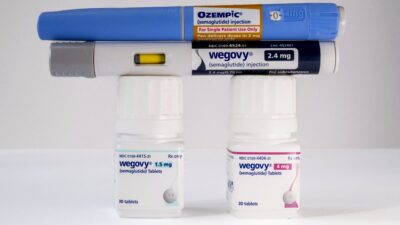
- The acquisitions are part of a wider plan for Lilly, which has been a leader in weight-loss drugs. Of the $19 billion Lilly notched in fourth-quarter revenue, more than $7 billion came from Mounjaro and $4 billion from Zepbound, both GLP-1 drugs.
Strategic Shuffle: While it feels like GLP-1 drugs and their ads are already everywhere, JPMorgan analysts predict the market still has plenty of room to run. The researchers expect about 25 million Americans to take GLP-1s by 2030, up from 10 million this year and 6 million last year. The global market could grow to $200 billion in turn. Lilly’s not giving up its leading spot in the race to supply those scripts and debuted an obesity pill, Foundayo, this month. But as the market becomes more crowded, Lilly’s investing part of its GLP-1 windfall in shoring up the rest of its portfolio.
Recent News

-
RevMed’s Life-Saving Pancreatic Cancer Drug Wins Early FDA Approval

Photo via Revolution Medicines