

Good morning.
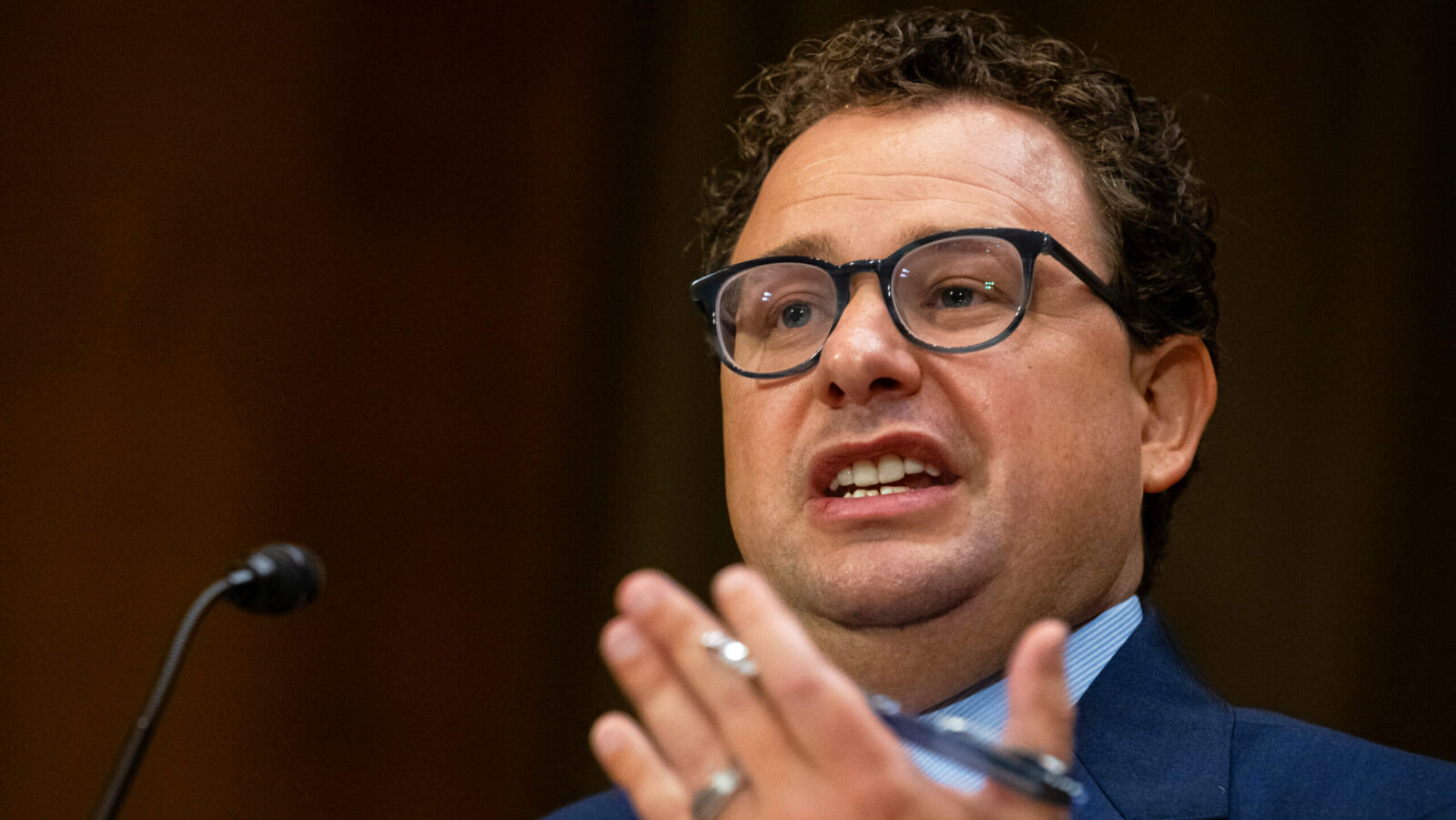
Most job interviews are an exchange of resumes; a Senate confirmation hearing is a hostage negotiation in which both sides are hostages. Case in point: the Senate Banking Committee confirmation hearing on Tuesday for Fed chair nominee Kevin Warsh, who previously served as a Federal Reserve Board governor from 2006 to 2011. Democrats accused Warsh of being a White House “sock puppet” who would set interest rates in line with partisan political preferences, while some Republicans, led by North Carolina Senator Thom Tillis, similarly used the hearing to express concerns about Fed independence. Apparently, the only rule of bipartisan consensus is to never admit it.
Still, some wonky discussion managed to eke through, including questions over Warsh’s long-held opposition to quantitative easing, which he once described as a “reverse Robin Hood” move that greatly benefits financial asset holders. We think a Reverse Robinhood sock pocket would be kind of cute.
Anthropic, White House Patch Relationship As Mythos Shakes Up Status Quo
President Trump said Tuesday his administration will get along with Anthropic “just fine,” a 180 from last month, when he hit the caps lock for a Truth Social post saying the government would cut ties with the “Radical Left AI company.”
White House officials met with Anthropic execs last week in talks that seemed to smooth over tensions that peaked earlier this year. Anthropic had refused to give the government unfettered access to its powerful AI, barring potential autonomous weapons development and mass surveillance inside the US. The Department of Defense then designated Anthropic a supply chain risk, and Anthropic sued the agency.
On Tuesday, Trump maintained that Anthropic’s execs are still radical lefties but added that they’re smart folks and that talks went well despite ideological differences. The chat could lead to a deal between the two concerning Anthropic’s new Mythos AI model, which may be too powerful for the government to dismiss.
Mythos Enters the Chat
Anthropic revealed Mythos, an AI model with advanced cybersecurity abilities, earlier this month. Among the tech’s capabilities is scouring old code for exploitable vulnerabilities. Only about 40 organizations have gained access so far to the powerful AI, whose hacking abilities could pose a serious cybersecurity risk if it were to be let out of its cage for wider use. Sources told Axios that the National Security Agency is among the organizations that have tapped into Mythos, despite the Pentagon’s previous beef with Anthropic.
Anthropic was created with a focus on the potential risks associated with AI:
- CEO Dario Amodei has warned in the past that AI could destroy humanity. The company was built by OpenAI execs who defected from the ChatGPT-maker over differences in opinion about how the company, and its AI model, should be built. Anthropic’s ethical red lines later prompted its dispute with the Pentagon.
- But Amodei isn’t anti-government, and a return to the fold seems welcome. He wrote in a blog that he sees the importance of AI’s use by the Pentagon to protect American interests and to maintain the US’s technological lead. Not to mention Anthropic’s previous contract with the Pentagon was worth up to $200 million.
Power Boost: As Anthropic’s models become more widely used, the company has struggled to handle the influx of demand. OpenAI, which saw some users defect to Anthropic last month, has criticized Anthropic’s lack of computing power. But Anthropic’s powering up: It scored another $25 billion from Amazon this week, adding to the $8 billion the e-commerce giant already poured into the AI startup. Anthropic also committed to spending $100 billion on technology from Amazon Web Services, including custom AI chips, over the next decade.
Money Moves on Monad

Monad was designed to replace legacy payment rails. Every “instant” payout your institution facilitates is built on an inconvenient truth: Someone is fronting the money. That 1.5–1.75% fee isn’t for speed; it’s interest on a short-term loan masking legacy settlement rails that haven’t fundamentally changed in decades.
Monad eliminates the workaround. With 10,000 TPS, sub-second finality, and near-zero fees, Monad is high-performance financial infrastructure enabling institutions to:
- Reduce reliance on prefunding through real-time stablecoin settlement.
- Support payment flows, including debit card use cases, enabled by fast finality.
- Streamline payroll continuously with flexible payment timing instead of batch systems.
Top Advisors Don’t Miss What’s Being Said

In meetings, client calls, or crowded rooms, clarity isn’t just comfort — it’s a competitive edge. Horizon IX uses dual-processing AI to separate speech from background noise so you hear conversations clearly in real time. Nearly invisible, rechargeable, and connects to your smartphone. Try it for 45 days, no risk. That’s better odds than most trades you’ll make this week. See if you qualify.
Getting Physical: Jeff Bezos’s Billion-Dollar Quest to Fire Up Manufacturing with AI
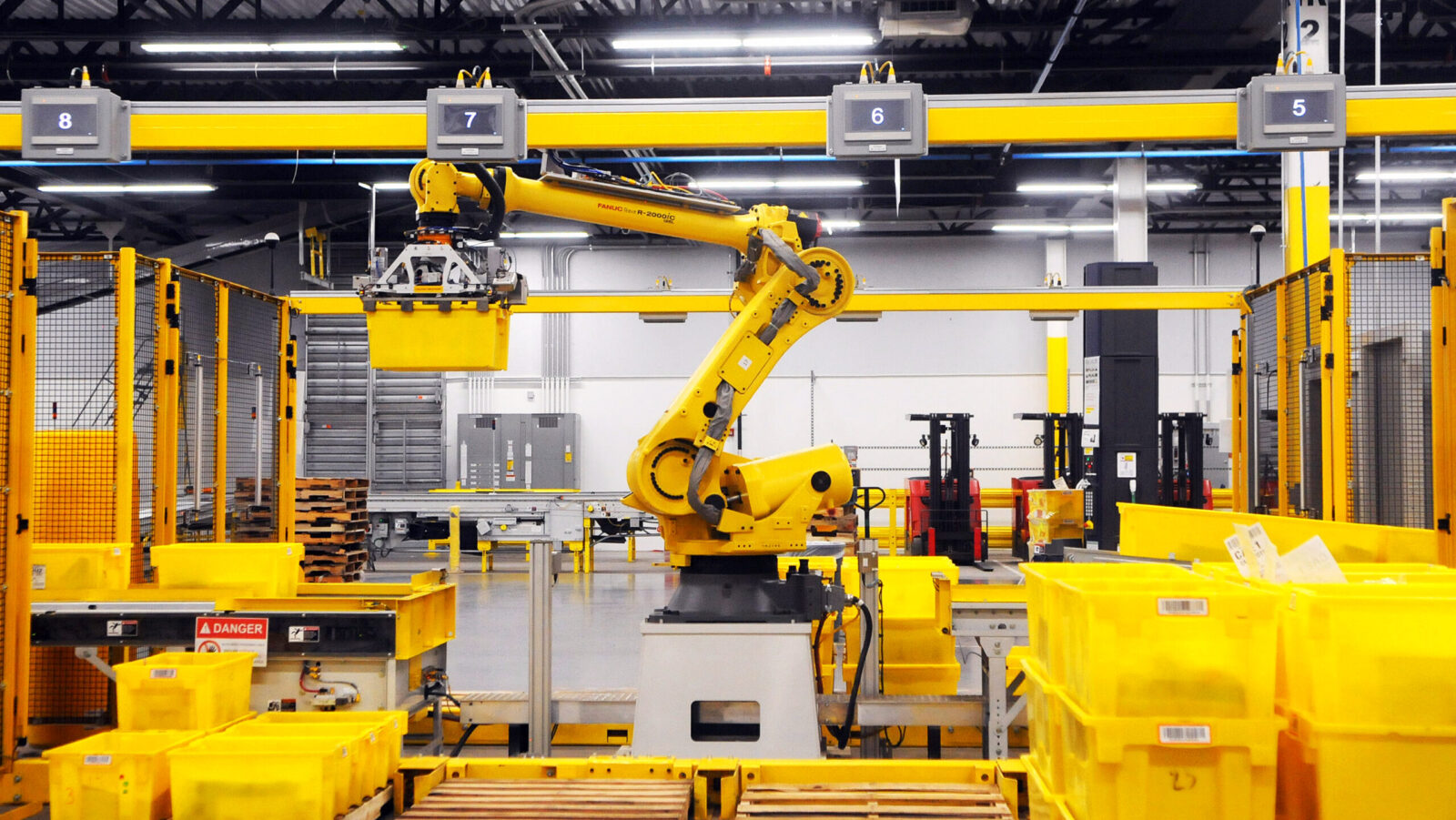
He’s not giving fire to mankind, but Jeff Bezos thinks “physical AI” could be equally transformative for industrial firms.
It’s a premise juicy enough that the Amazon founder’s latest endeavor, the aptly code-named Project Prometheus, is close to scoring a new $10 billion fundraise at a cool $38 billion valuation, according to the Financial Times. We’re just assuming for everyone’s sake that Bezos has a plan for sidestepping the “eternal torment” portion of the Greek myth he’s riffing on.
Bezos-shire Hathaway
Simply put, Prometheus seeks to do to manufacturing, design and engineering what coding agents have done to the software world. Bezos, in his first operational role since relinquishing his Amazon CEO title in 2021, is serving as co-CEO with Google veteran Vik Bajaj. The pair raised an initial $6.2 billion in November, and sources told the FT that the company has already hired hundreds of staffers to build AI models with expertise in the laws of physics that govern the real, non-digital world. The latest fundraising is backed by both JPMorgan and Blackstone, per the FT.
But that’s just half the story. Prometheus isn’t just building software; it’s building a parallel holding company with a fundraising mission all its own:
- According to the FT, the holding company aims to acquire stakes in industrial, engineering, design and manufacturing firms that could or would be disrupted by the tech getting cooked up in the AI lab.
- In March, The Wall Street Journal reported that this side of the company is seeking to raise as much as $100 billion to fund its acquisitions, effectively creating an industrials-focused version of SoftBank’s software-heavy Vision funds.
Let’s Get Physical: Of course, Bezos has plenty of experience interspersing digital into the physical realm. Over at Amazon, an army of robot warehouse workers has swelled to roughly 1 million, nearly matching its overall human headcount. In October, The New York Times reported that Amazon, the second-largest employer in the US, hopes to use robots to avoid hiring some 160,000 humans it would typically need by 2027, and as many as 600,000 by 2033; the ultimate goal is to automate 75% of its logistics operations.