Smart, actionable news trusted by millions.

Our flagship newsletter delivers smart news and analysis on finance, and investing — all for free.

Good morning.

Just like an Emmental cheese, some of the accounting standards at Swiss investment giant UBS were full of holes, at least according to the US Financial Crimes Enforcement Network. FinCEN announced Monday that it fined a UBS wealth management subsidiary $125 million for breaking money laundering rules from 2019 to 2023. It’s the highest penalty ever imposed on a US broker-dealer and follows a case in 2018 when UBS was fined $14.5 million. FinCEN said the company never honored a pledge to fix its anti-money laundering protocols and failed to monitor some 50,000 foreign currency wires worth over $10 billion combined.

In resolving the latest case, UBS admitted it “willfully violated” the Bank Secrecy Act, America’s primary anti-money laundering law. One client, FinCEN said, was linked to a Kremlin-affiliated oligarch suspected of embezzling money for politicians. UBS agreed to appoint an independent consultant to review its anti-money laundering practices and identify deficiencies, especially regarding cartels, possible narcotics trafficking, Iran, Russia and Venezuela. Between FIFA and Credit Suisse, Switzerland may need to think about burnishing its own brand.

Markets

S&P 500

7,600.50

+1.48%

DJI

53,178.41

+1.32%

AZN

$157.97

-6.88%

Stock data as of market close on August 3, 2026.

Healthcare

‘Huh?’ Markets React to AstraZeneca’s Megadeal Talks With Bristol Myers

Britannia might lose its cool over this one.

A day after the Financial Times reported $264 billion UK pharma giant AstraZeneca has held talks with $133 billion US rival Bristol Myers Squibb about a seismic $400 billion merger, investors and analysts were left puzzled, perplexed, baffled and bewildered by a major imbalance in the two firms’ pipelines and future bottom lines.

Beyond Bolt-Ons

Deal or no deal, mere talks between AstraZeneca and Bristol Myers point to one of the global pharma industry’s biggest themes. Companies are approaching a steep patent cliff, with estimates suggesting more than $300 billion in annual drug sales will face a loss of exclusivity by 2032. As executives look to plug coming revenue holes, M&A has proven a favorite tool.

In the first half of 2026, biopharma M&A value reached $130 billion, or more than 80% of last year’s total, according to health research firm IQVIA. This year is on pace to be the strongest for deals since the industry’s 2019 peak. But Big Pharma has mostly dabbled in so-called bolt-on acquisitions, when larger companies scoop up complementary businesses like Merck’s $6.7 billion takeover of oncology company Terns Pharmaceuticals or GSK’s $2.2 billion deal for immunology company RAPT Therapeutics. There has been a dearth of megadeals since Bristol Myers’ own $74 billion acquisition of Celgene in 2019 and AbbVie’s $63 billion acquisition of Allergan in 2020, and an AstraZeneca and Bristol Myers tie-up would represent a record. But, with a very big deal comes a potentially very big problem, at least as some analysts and AstraZeneca investors see it:

  • AstraZeneca, which rejected a Pfizer takeover 12 years ago, has established itself as a force among global cancer-drug makers, targeting $80 billion in revenue by 2030, up from $59 billion last year. While it’s growing, almost half of Bristol Myers’ revenue is facing loss of exclusivity by 2030.
  • “Given the strength of AZ’s growth and innovation profile, we are a bit perplexed,” Jefferies analysts wrote in a note Monday. Reflecting investor anxiety about the imbalance, AstraZeneca shares fell 7% in New York, while Bristol Myers Squibb’s shares were flat.

London Falling: Even with AstraZeneca based in Cambridge, UK, a cross-pond deal would likely trigger a great deal of anxiety in Britain. The once-mighty London Stock Exchange is mired in a years-long decline, with the venue losing out on IPOs and companies bolting. AstraZeneca has shifted its business and growth ambitions toward North America, with $50 billion in planned US investments and CEO Pascal Soriot dubbing it a “very American company.” In February, AstraZeneca listed on the New York Stock Exchange, raising fears it could leave for American shores. A Bristol Myers acquisition that massively expands its US presence won’t ease such worries.

Photo via Frontieras

One company has developed a technology that extracts valuable resources from coal without burning it. From hydrogen to diesel, fertilizer and more, Frontieras North America has the potential to address $2.1 trillion in annual markets*.

It’s similar to when John D. Rockefeller commercialized and transformed oil refining technology.

Frontieras just broke ground on its $850M flagship facility. Now, with the NASDAQ ticker “FASF” reserved and the White House favoring domestic energy, this company is positioned for valuation impact.

Become a Frontieras shareholder by 8/6 to lock in the $9.01 share price.

Industrials

Can SpaceX’s First Earnings Call Ease Pressure from Looming Lockup Expirations?
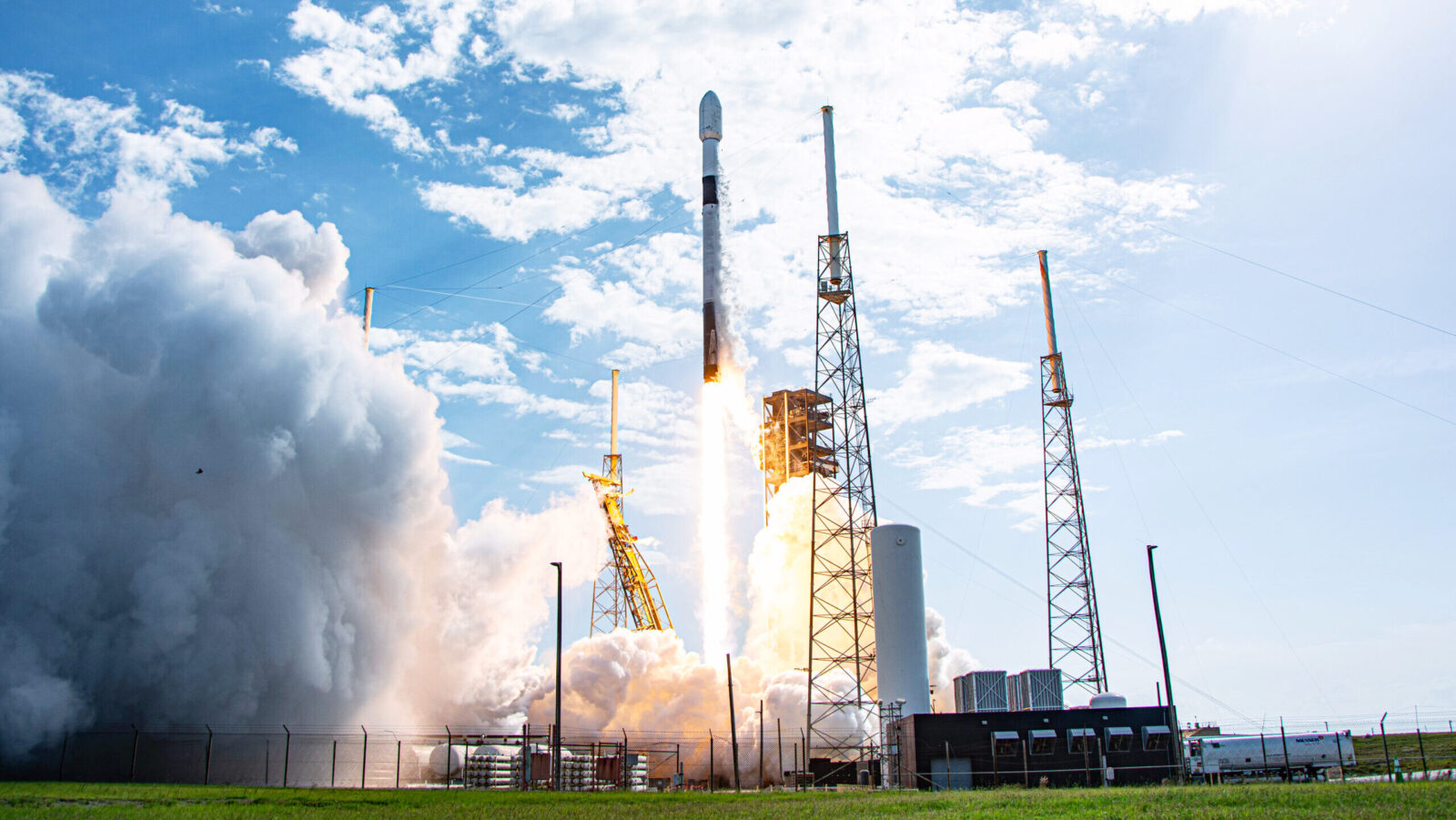
A SpaceX Falcon 9 MRV-1 launches in Cape Canaveral, Florida.
Photo via Michael Cain Jr./Sipa USA/Newscom

Even a killer earnings report may not be enough to help SpaceX stock escape the gravitational pull of lockup expiration dates. Not that sky-high financials are exactly expected at today’s inaugural quarterly earnings call for Elon Musk’s rockets and AI empire.

The real test for the newly public firm comes this Thursday, when a major tranche of insider shares exit their lockup period. The expiration could fuel a selloff that sends its share price, already down some 20% from its IPO, even lower. Rest assured, short-selling sharks are betting on it.

(Space)X-it Strategy

When SpaceX debuted at $135 per share in early June, 640 million shares, or less than 5% of total shares, were made available to the public. On Thursday, after the company has already shed hundreds of billions in value since its debut, employees and early investors will be able to sell another 911 million shares, amounting to another 12% of the company’s total.

That creates even stronger headwinds for the shares, since many of those insiders have committed that stock toward “private islands, cars, whatever,” as venture capitalist Paul Kedrosky recently and colorfully told Axios. (We imagine homes and retirement funds are slightly more likely outcomes.)

That’s been enough to draw in the short-sellers, who have already made a killing:

  • Short interest stood at about 34% of all publicly available shares as of last week, according to S3 Partners data. As of Friday, short sellers had already booked about $8.3 billion in paper profits since the company’s debut in June, S3 Partners told CNBC.
  • “It’s among the most aggressive and quickest bearish builds we have seen in a mega-cap name heading into its first earnings report post-IPO,” S3 Partners research head Matthew Unterman told CNBC. Shares of the company did pop more than 5% on Monday amid a broader tech rally.

Take the Wheel: SpaceX investors will be looking for signs of stabilization from the company today. Revenue guidance and capex projections for its AI unit will be a particular focus (sound familiar?); the company has already struck deals with Google and Anthropic to supply compute this year, and the promise of spacebound data centers still lingers. On a more terrestrial note, The Wall Street Journal last week reported that Tesla is weighing a sale or spinoff of its China business as it considers a possible merger with SpaceX. Such a merger could help fast-track the company’s inclusion in the S&P 500.

Photo via Plaid

It often starts with data, not dollars: 56% of victims lost data like email addresses or phone numbers. That stolen data can resurface in your onboarding flow, making fraudulent applicants look legitimate. This new report from Javelin and Plaid reveals the early signals that can help you spot fraud sooner. Read the report.

Energy

Zach Dell (Yes, That Dell) Charges Up a $13 Billion Backyard Battery Startup

It’s a Texas-style solution to power-grid problems if ever there was one: Just put a big battery in the backyard.

Zach Dell’s battery startup Base Power raised $1 billion in a fresh funding round, bringing his three-year-old company’s total valuation to $13 billion. Michael Dell, Zach’s famous tech-entrepreneur father, isn’t backing Base, but Ribbit, Addition and JPMorgan Chase’s Strategic Investment Group are.

Base has installed more than 23,000 batteries throughout Texas and Illinois and yesterday debuted a new battery that can store more than a day’s worth of energy. The rentable batteries aren’t just backup power sources for when grids fail. They’re meant to be used by electricity companies to make power grids more efficient, affordable and less likely to fail in the first place.

When A/C Is a Luxury

Americans are expected to spend an average of about $800 powering their homes this summer, up nearly 11% from the same time last year, the National Energy Assistance Directors Association estimated. Prices have skyrocketed as AI data-center demand strains an already-struggling system:

  • The power grid has a utilization problem, Zach Dell told Bloomberg. While grids are built to handle peak demand like the hottest days of the year, they don’t need that capacity most of the time. Base’s batteries can store extra energy during off-times that’s automatically tapped when everyone simultaneously cranks the A/C. Customers of El Paso Electric have volunteered to have Base batteries installed to put the plan to the test.
  • Base’s pick of locations is strategic. Texas, which operates its own separate power grid, has been trying to shore up its systems since the winter of 2021, when key infrastructure froze, millions of Texans lost power and hundreds died. Illinois, meanwhile, hosts a large swath of power-draining data centers.

Bringing It Home: Base batteries could help power companies handle the costs of repairing infrastructure like power lines. Because of that, El Paso Electric is covering Base battery installation and offering an additional cash incentive. Americans are increasingly looking to batteries to keep their homes powered, with home-battery installations measured by gigawatt-hours hitting a record in the first quarter. Base aims to double the 100 installations it does per day by the end of this year.

Extra Upside

  • In Their Prime: Hot off a strong earnings report last week, Amazon became the fifth publicly traded company worth $3 trillion or more on Monday.
  • Cold Shoulder: Despite a Facebook page protesting the discontinuation of Dannon Coffee Yogurt, the manufacturer says its decision is final. Nor will it cough up a recipe.
  • Final Days to Invest at $9.01/Share. Frontieras North America developed patented coal-refining technology, and the six products from its new West Virginia facility are pre-sold under 10-year agreements. With their Nasdaq ticker “FASF” secured, early-stage access remains open. Invest at $9.01/share by 8/6.*

*Partner

Disclaimer

*This is a paid advertisement for Frontieras’s Regulation A offering. Please read the offering circular at https://invest.frontieras.com/. Forward looking statements were included here that the Company believes to be accurate given the current information. They involve known and unknown risks, uncertainties and other important factors which if changed may affect the outcome(s). Reservation of the ticker symbol is not a guarantee that we will be listed on the NASDAQ. Listing on the NASDAQ is subject to approvals. Under Regulation A+, a company has the ability to change its share price by up to 20%, without requalifying the offering with the SEC.

Sources* The global market for Frontieras’ products is worth a combined value of over $2.1 trillion.

1. https://www.globenewswire.com/en/news-release/2022/03/24/2409228/0/en/Global-Diesel-Market-Size-To-Surpass-US-1269-87-Billion-By-2027-Europe-Having-Share-About-25-Leading-Players-Strategies-Covid-19-Outbreak-Growth-Opportunities-Emerging-Trends-Segme.html‍.

2. https://www.marketsandmarkets.com/Market-Reports/hydrogen-market-132975342.html#:~:text=The%20global%20hydrogen%20market%20in,7.8%25%20from%202023%20to%202030‍.

3. https://www.transparencymarketresearch.com/naphtha-market.html.

4. https://www.fortunebusinessinsights.com/industry-reports/aviation-fuel-market-100427.

5. https://www.marketresearchfuture.com/reports/anthracite-market-2742.

6. https://www.precedenceresearch.com/fertilizer-market#:~:text=According%20to%20precedence%20research%2C%20the,USD%20271.6%20billion%20by%202032.

Sign Up for The Daily Upside to Unlock This Article
Sharp news & analysis on finance, economics, and investing.