Smart, actionable news trusted by millions.

Our flagship newsletter delivers smart news and analysis on finance, and investing — all for free.

Good morning.

LIV Golf is trying to get out of an Arabian Desert-sized sand trap. Founded in 2021, the professional men’s tour exploded into the popular consciousness after poaching several high-profile stars from the rival PGA Tour, promising them hundreds of millions in guaranteed money. It was able to do this because of $5 billion in backing from Saudi Arabia’s Public Investment Fund (PIF), one of the world’s richest sovereign wealth funds. But, in April, the PIF said it will turn off the money spigot once LIV’s current season ends, following years where the tour failed to match the broadcast reach and cultural dominance of the PGA.

LIV has since been embroiled in an all-out existential crisis, with speculation it could shut down by year’s end. Former PGA pro An Byeong-hun, who defected to LIV earlier this year, even joked to the media this week that a player meeting about the tour’s future went well because “nobody was throwing fists or anything, which is good.” On Wednesday, however, the most dramatic fears were put to rest. LIV CEO Scott O’Neil announced the tour has raised enough money from an undisclosed “lead investor” to continue through 2030. It’s unclear that’ll be enough to keep things going because in business, unlike the game of golf, the objective is to stay out of the hole and in the green.

Markets

S&P 500

7,723.55

-0.17%

DJI

54,349.12

+0.49%

UBER

$68.18

-5.29%

Stock data as of market close on August 5, 2026.

Hedge Funds

Citadel’s Flagship Fund Delivers Standout Gains After Buying Situational’s Distressed Book

What’s a bigger myth: The Odyssey or a hedge fund that gets every call right? In the case of Leopold Aschenbrenner’s AI-focused Situational Awareness, overleveraging on the biggest trade of the past two years proved there are plenty of funds that guess wrong.

The firm was pushed to the edge of implosion last month before offloading most of its public equities portfolio to Ken Griffin’s $71 billion Citadel. Griffin’s firm came out on the right side of things, instantly converting the deal into one of its best months in years. Broader markets have, so far, benefited also.

Rally Around Relief

By late July, highly leveraged Situational, which at one point was up 400% this year, was feeling the sting of a sharp, monthlong selloff in AI-adjacent equities. South Korean memory chip manufacturer SK Hynix and cloud computing firm CoreWeave, two key holds, traded 50% below their peak at points. The tech-weighted Nasdaq-100, home to other important holdings, officially slipped into correction territory. Then, on July 29, Citadel approached Situational about offloading its distressed equities. In less than 24 hours, Griffin’s firm acquired the lion’s share of Situational’s $16 billion holdings in public companies at a 10% discount.

The deal proved a near-immediate coup for Citadel, according to multiple reports. Its flagship Wellington Fund was roughly flat in July before the deal but closed the month up 5.9%. That made for the best month since 2022, and Wellington is now up 12% in 2026. On top of that, Citadel’s tactical trading fund gained roughly 11% in July and its equities fund roughly 14%, a record advance for both.

Griffin’s gain may have provided just what the market needed in a moment of wavering confidence. Situational’s exposure during the AI stock rout was exacerbated by a perfect storm of heavy borrowing and short bets on traditional software equities, turning the fund into a forced seller. Citadel’s intervention put a stop to the $24 billion fund’s unraveling, substituting a more stable investor in no hurry to dump assets:

  • In the past week, Citadel’s acquisition has helped to power a significant relief rally. Several stocks that formerly made up Situational’s core positions have proven incredibly resilient in the last five trading sessions: CoreWeave is up 47%, SK Hynix 19% and SanDisk 33%.
  • The hyperscalers financing the AI buildout have also helped soothe market jitters about the trade. Amazon, Alphabet, Meta and Microsoft have reaffirmed their plans for massive AI-related capital expenditures in 2026 and beyond, much to the benefit of AI-adjacent companies.

Out of Ruins, an Empire: Griffin’s fund raided Enron for its top talent after the energy company collapsed in 2001 and bought the books of failed competitors Amaranth Advisors and Sowood Capital later in the decade. One could say, when it comes to Citadel, that the firm has mastered the alchemy of pulling the proverbial phoenix from the ashes.

Photo via Frontieras

One company has developed a technology that extracts valuable resources from coal without burning it. From hydrogen to diesel, jet fuel, fertilizer, a coal replacement fuel and more, Frontieras North America has the potential to address $2.1 trillion annual markets*.

It’s similar to when John D. Rockefeller’s Standard Oil transformed oil refining technology.

Frontieras just broke ground on their $850M flagship facility. Now, with their Nasdaq ticker ‘FASF’ reserved and the White House favoring domestic energy, this company is positioned for potential growth.

It’s the final day to lock in the current $9.01 share price.

Become a Frontieras shareholder before tonight at 11:59 p.m. PT.

Autos

Uber Promises to Spend $10 Billion On Robotaxis as Growth Disappoints Investors

Uber could be the next Blockbuster — or Kodak, Polaroid, Borders … any company that was rendered irrelevant by new tech. But the ride-hailing giant is putting the autonomous pedal to the metal to avoid that fate.

After reporting slowing growth and soft guidance, Uber saw its stock fall nearly 8% Wednesday. While Uber’s revenue rose 12% for the second quarter, that was a step down from its 14% growth the same time last year. Revenue from its delivery business jumped 28%, and riders took 3.9 billion trips, up 18%.

But that could all be in the rear-view as investors focus their attention on Uber’s place in the robotaxi race.

Hands Off the Wheel

Uber pledged yesterday to pour more than $10 billion into building its autonomous-vehicle business with a near-term goal of putting 120,000 driverless vehicles on the road. The company that flipped the taxi industry on its roof thinks its 200 million-strong customer base will help it become the long-term winner when it comes to driverless taxis.

But Uber’s starting a turn behind some of its competitors:

  • The National Highway Traffic Safety Administration last week gave Amazon’s Zoox the green light to deploy thousands of its steering wheel-less robotaxis and start charging for rides in the toaster-like vehicles. The company will start ferrying passengers, who’ll sit facing each other gondola-style, on August 10 in Las Vegas.
  • Waymo’s more traditional fleet, where riders can be comforted by seeing steering wheels spinning around on their own, has become the AV go-to in the meantime. The Alphabet-owned service said this spring it was making more than 500,000 trips a week, up from 50,000 less than two years ago. But for now, Waymo’s been a strategic partner for Uber, not a rival.

Partner Up: Uber’s partnership with Waymo in select cities lets riders order Waymos from within the Uber app. Yesterday, Uber said it expected to continue operating with Waymo in Austin and Atlanta next year, though Waymo has notified the company it intends to end the partnership’s exclusivity in those areas in 2028. At the same time, Uber has a plethora of other partners, including Zoox and UK-based Wayve. But as Uber shifts its focus to its own AV efforts, and robotaxi rides make up a larger portion of total trips, those team-ups could show cracks.

But you can now ask your ledger a question with Oracle’s Advanced Predictions tool, and AI can model the next year across multiple scenarios in a fraction of the time. Oracle Netsuite’s Tom Kelly shows how it works in a free session. Watch now.**

Media & Entertainment

Disney Embraces Fan Content in Groundbreaking TikTok Deal
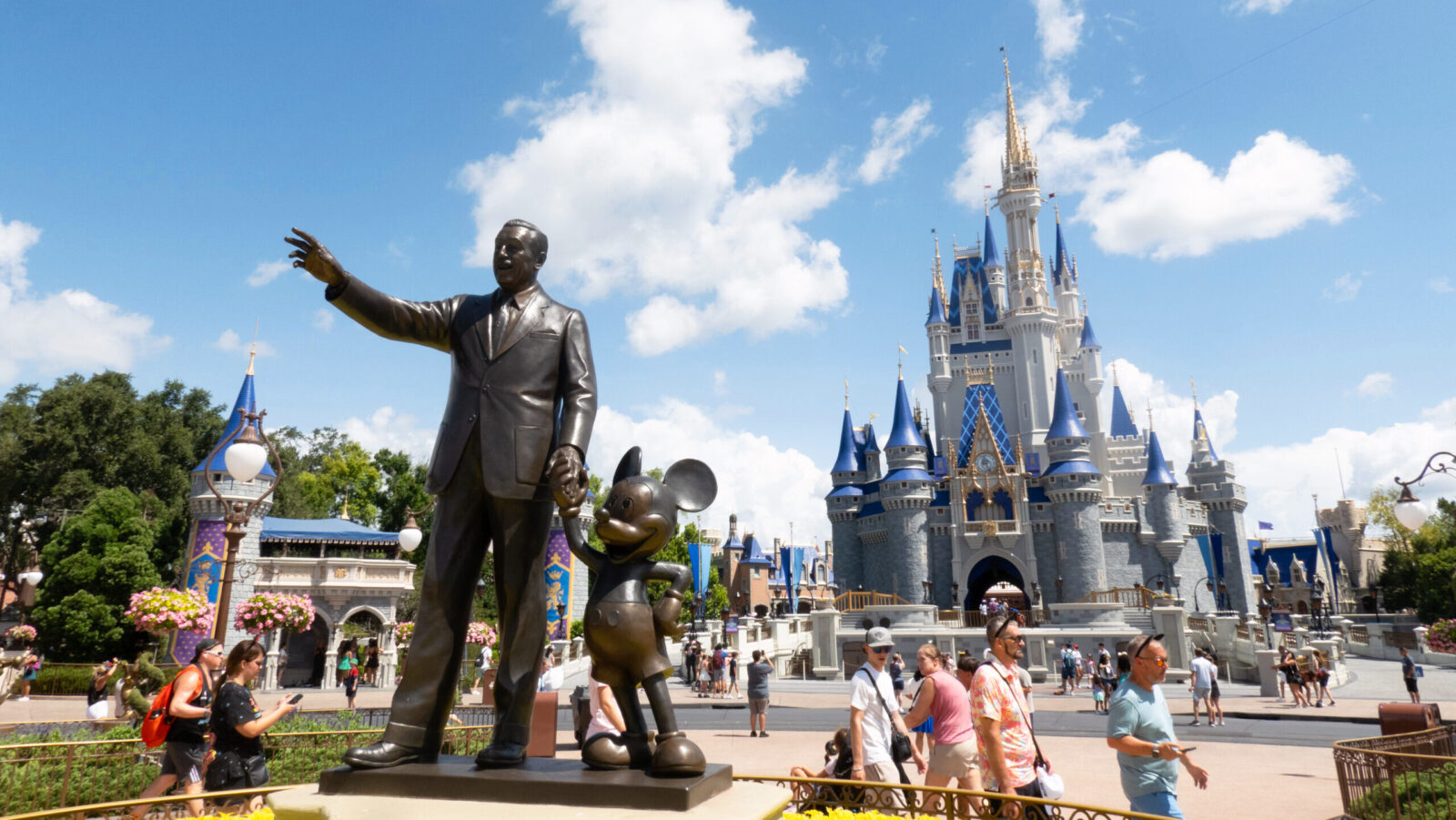
Photo of Walt Disney World.
Photo via Bryan Smith/ZUMAPRESS/Newscom

It’s a short-form video world after all.

In his first earnings report following a full quarter as CEO, Disney’s Josh D’Amaro got to claim some welcome wins for the House of Mouse: booming profits for its Experiences division, solid streaming growth and strong box office revenue, thanks to the blockbuster Toy Story 5. But that’s not to say that the Magic Kingdom is comfortable with the status quo. Separately, Disney announced a “first of its kind” content-sharing deal with TikTok, the company’s next move to find the cutting edge of culture after its ill-fated IP-licensing deal with OpenAI’s Sora video generator went kaput earlier this year.

Quibi’s Last Laugh

With subscriber growth topping out and churn on the rise, media giants are desperate to scale their advertising businesses (D’Amaro also hinted yesterday that Disney is building a Tubi and Roku Channel-esque FAST service).

Ads need eyeballs, and eyeballs, as everyone knows, can’t be peeled away from short-form video. The TikTok deal is merely an evolution of how Disney and every media giant are learning to love the power of the vertical scroll:

  • So far this year, Netflix, Peacock and HBO Max have all debuted vertical video features in their mobile apps; Disney+ actually launched its “Verts” vertical in March. The idea is that users will scroll through memorable scenes from favorite movies and TV shows, possibly spurring further engagement.
  • Disney+ “Verts” have thus far been created by an in-house team. With its new partnership, TikTok creators will now have legal access to Disney assets such as characters or movie scenes, and Disney will showcase “thoughtfully curated” TikTok content on Disney+ Verts if creators opt in to the feature.

Editor’s Note: Wall Street showed some love, with Disney shares jumping 3.6% on Wednesday. For Gen Zers, the partnership couldn’t have been more obvious. Hollywood’s biggest fans have also become its best advertisers, and studios are increasingly embracing so-called “fan edits,” or user-generated hyper-stylized short-form social media videos hyping up shows and movies. In the TikTok age, a viral montage of Ross and Rachel scenes set to a modern radio hit, for example, can rocket Friends back toward the top of streaming charts. Yesterday’s copyright violations are today’s copywriting masterpieces, and the famously litigious Disney just made it official.

Extra Upside

  • Bye-Bye, Gemini: Alphabet shares fell 4% after the head of its artificial intelligence subsidiary DeepMind stepped down to become the unit’s chair and several senior staffers left to found a new company.
  • Chief Priorities: JPMorgan CEO Jamie Dimon is working to recruit dozens of US corporate leaders to join an industry group focused on AI risks that the bank he leads helped found.
  • Final Day to Invest at $9.01/Share. Rockefeller made his fortune on oil. Now Frontieras North America is reforming coal into six commodities, tapping into a $2.1 trillion opportunity*. Their NASDAQ ticker’s reserved. Last chance: Invest at $9.01/share by tonight.*

*Partner

Disclaimers

*This is a paid advertisement for Frontieras’s Regulation A offering. Please read the offering circular at https://invest.frontieras.com/. Reservation of the ticker symbol is not a guarantee that Frontieras will be listed on the NASDAQ. Listing on the NASDAQ is subject to approvals. Under Regulation A+, a company has the ability to change its share price by up to 20%, without requalifying the offering with the SEC.

Sources* The global market for Frontieras’ products is worth a combined value of over $2.1 trillion.

1. https://www.globenewswire.com/en/news-release/2022/03/24/2409228/0/en/Global-Diesel-Market-Size-To-Surpass-US-1269-87-Billion-By-2027-Europe-Having-Share-About-25-Leading-Players-Strategies-Covid-19-Outbreak-Growth-Opportunities-Emerging-Trends-Segme.html‍.

2. https://www.marketsandmarkets.com/Market-Reports/hydrogen-market-132975342.html#:~:text=The%20global%20hydrogen%20market%20in,7.8%25%20from%202023%20to%202030‍.

3. https://www.transparencymarketresearch.com/naphtha-market.html.

4. https://www.fortunebusinessinsights.com/industry-reports/aviation-fuel-market-100427.

5. https://www.marketresearchfuture.com/reports/anthracite-market-2742.

6. https://www.precedenceresearch.com/fertilizer-market#:~:text=According%20to%20precedence%20research%2C%20the,USD%20271.6%20billion%20by%202032.

**By filling and submitting this form you understand and agree that the use of Oracle’s website is subject to the Oracle.com Terms of Use. Additional details regarding Oracle’s collection and use of your personal information, including information about access, retention, rectification, deletion, security, cross-border transfers and other topics, is available in the Oracle Privacy Policy.

Sign Up for The Daily Upside to Unlock This Article
Sharp news & analysis on finance, economics, and investing.