
Good morning,
Stopp! That’s what Swedish regulators have told the EU when it comes to adopting Tesla’s supervised full self-driving (FSD) system. Officials in Stockholm recently advised the bloc to reject the technology unless Tesla eliminates a contentious feature called Speed Offset.
What about it makes the Svenskar so het and bothered? The feature lets a user set an amount above the posted speed limit that their car’s automated driving system can then accelerate to, essentially programming it to break the law. Belgium, Denmark, Estonia, Lithuania and the Netherlands have already approved FSD at the national level, and Speed Offset wouldn’t raise any eyebrows on Germany’s motorways, where the 130/km per hour Autobahn-Richtgeschwindigkeits-Verordnung is famously just a piece of advice that one can legally ignore. But EU-wide approval, with Finland and Norway also expressing doubts, may require more buy-in. As the country that invented the three-point seatbelt, Sweden doesn’t lack for street cred in car safety circles.
Apple Joins the High-Tech Price-Hike Club
Nintendo’s price hike for the Switch 2 was the canary in the coal mine.
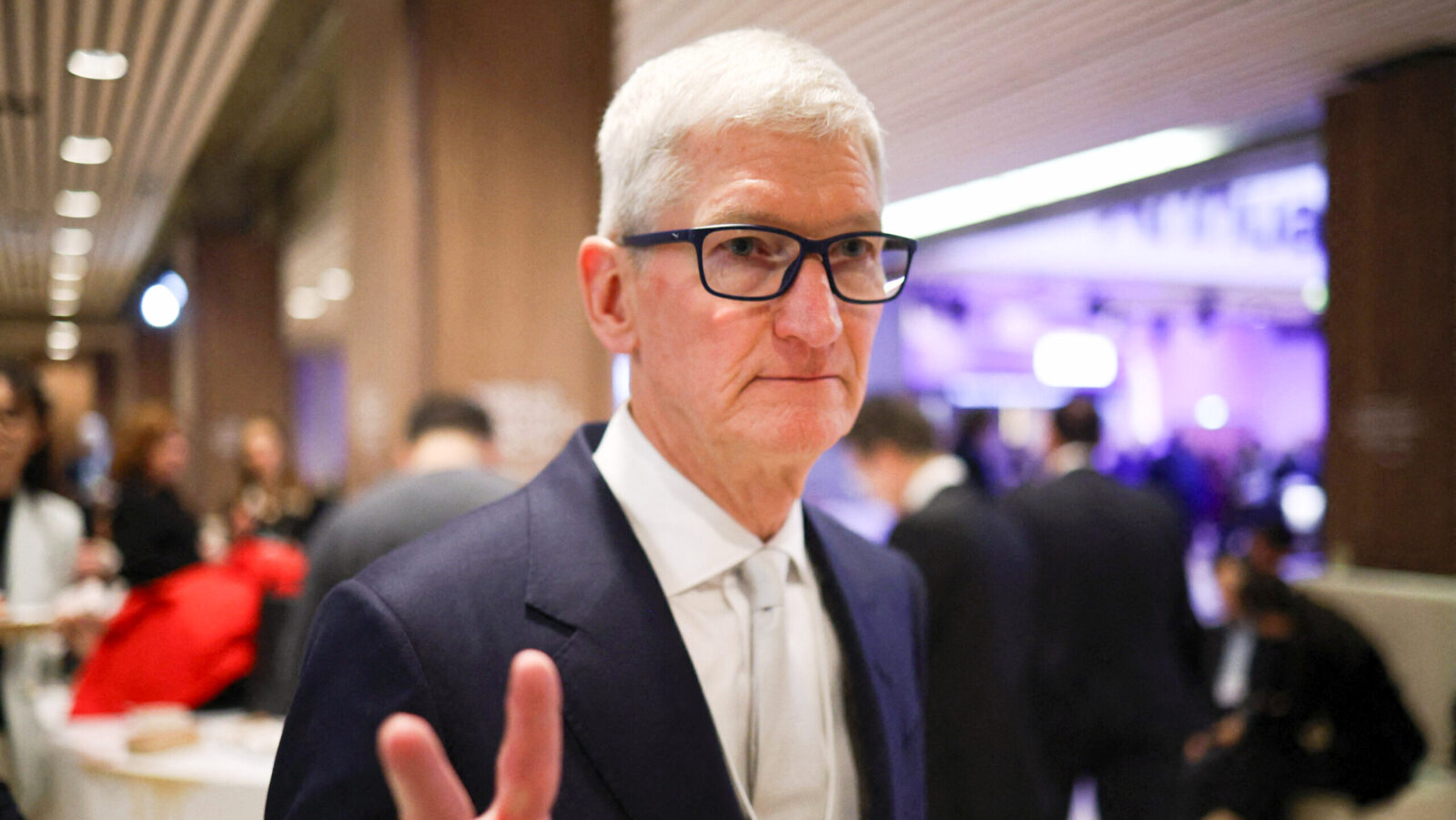
On Thursday, a somewhat apologetic Tim Cook told The Wall Street Journal that consumers should also expect to pay higher prices on Apple products in the near future. Cook didn’t give specifics, but he did call the hikes “unavoidable,” due to an “unsustainable” surge in memory costs. While nobody likes gadget-flation, we imagine at least one person is happy to see the headline: incoming Apple CEO John Ternus, likely grateful his predecessor took the price-hike PR hit on his way out.
One for the Memory Books
Anyone with decent memory recall knows Apple is actually a little late to the price-hiking club. In addition to Nintendo’s forthcoming $50 price increase for the Switch 2, Samsung, Dell, Sony and Microsoft have all begun charging more. Apple, thanks to its immense pricing power, had been able to keep costs down through massive bulk purchases of memory and storage. But stockpiles only last so long, and the gargantuan demand for computer memory in AI data center servers has trampled the consumer device side of the tech industry.
Prices of DRAM memory and NAND storage, the two key components of computer memory, will probably rise 125% and 234%, respectively, this year, according to an April report from research firm Gartner. “This is a hundred-year flood,” Cook told the WSJ. “I’ve never seen anything like it in any area in over 40 years.”
At Apple, the biblical wave is threatening to rock the core economics of selling smartphones:
- A separate WSJ analysis published this week, using projections from research firm TechInsights, estimates that the base price for the as-yet-unannounced iPhone 18 Pro, expected in September, will run $1,299, or $200 more than comparable current versions. That projection assumes Apple rounds prices down to a nice, standardized number, reducing the estimated gross profit margin per phone from 47% to 44%.
- The real killer for Apple will probably be deteriorating margins for higher-end models. The company currently charges as much as $200 more for iPhone models with extra storage, far greater than the actual production cost, per the WSJ.
Next Gen: Still, progress at the company marches ever forward. In addition to the new 18 Pro model in September, Apple is expected to launch a next-gen version of its AirPods packed with cameras and powered by AI in 2027, as well as the long-gestating foldable iPhone, according to a report this week from Bloomberg’s all-knowing Apple insider Mark Gurman. The launches would mark the start of the Ternus era, differentiated by his engineering background, which runs counter to Cook’s operations expertise. In other words, Ternus knows how to design products and knows when to fold ‘em.
Here’s to Your Teen’s Next Big Step
Growing up comes with plenty of firsts. With a Cash App card, teens have a safe way to practice saving, managing money and spending – all with their own debit card and you as their guide. Invite them to Cash App today.*
Accenture Plummets as Forecast Highlights Pressure on Consultants
For Accenture, which helps companies navigate disruptions, it’s personal this time.
The IT consulting firm’s stock nosedived 18% Thursday after Accenture reported weaker-than-expected fiscal third-quarter revenue and offered a disappointing forecast. Its shares closed at $127.98, their lowest since 2017. CEO Julie Sweet told analysts that the firm took a $400 million hit to its sales in the Middle East due to conflict in the region. The company reported revenue of $18.7 billion, just below the $18.76 billion analysts had been expecting, and predicted sales of $17.75 billion to $18.4 billion for its fiscal fourth quarter, lower than the $18.47 billion Bloomberg analysts had estimated.
Despite already heading into the earnings report on its back foot amid concerns about what artificial intelligence means for the consulting industry at large, Accenture announced it’s buying a majority stake in Dragos and acquiring runZero and NetRise to build up its cybersecurity business. Earlier this week, Morgan Stanley analysts downgraded Accenture’s stock, nodding to the company’s “product-focused” acquisition strategy. Investors didn’t seem to approve of the move either.
Struggling Onward
Corporate clients tightening their purse strings due to the conflict in the Middle East is just the latest headache for Accenture and its fellow consulting firms. Their stocks have tanked this year as investors worry that AI will take at least some of the jobs that these professional services firms do:
- Stocks of IT services and consulting companies Infosys and Capgemini have both tumbled roughly 40% this year.
- Just last week, Apollo Global Management’s co-president Scott Kleinman said on a panel at the SuperReturn conference in Berlin that consultants (alongside lawyers and accountants) are likely to be the next roles disrupted by AI.
Some Good AI News: While AI is a thorn in Accenture’s side in some ways, it also means companies need help incorporating the new technology into their strategies. Sweet said via a press release that demand for large-scale reinvention is strong, with Accenture seeing 104 quarterly client bookings of $100 million or more year-to-date, up 13%. “We are seeing more large-scale AI transformation programs, while executing our strategy to capture new areas of growth,” she added.