

Good morning.
Barry Diller saw Tilman Fertitta’s Caesar’s Palace bet and raised him a few more casinos. The media mogul’s People Inc. said Monday that it submitted a takeover bid for MGM Resorts valuing the Las Vegas giant at over $18 billion. The company already owns 26% of MGM, and its all-cash bid for the remaining shares stands at $48.30 a pop, a more than 10% premium on Friday’s closing share price.
That would give Diller control over 40% of the Vegas strip, including the Bellagio, Mandalay Bay and the eponymous MGM Grand, and casino resorts in the gambling shark-infested waters of Shanghai, Macau and Atlantic City. In a statement, Diller said his company began investing in MGM because it has “real-world assets that AI cannot easily replicate.” That’s true: AI can do a lot of things, but it can’t replicate the thrill of winning $300 in a 2-hour craps heater before losing it all in just five minutes at the adjacent blackjack table.
New Berkshire Chief’s Big Deal Gets Cool Reception from Investors

Berkshire Hathaway has lined up its first major acquisition under CEO Greg Abel, the Canadian executive who took over from Warren Buffett at the start of the year. The $1 trillion conglomerate agreed to pay $6.8 billion in cash for homebuilder Taylor Morrison.
Investor reaction could be summed up in the words of Abel’s Canuck compatriot Shania Twain, who famously sang, “that don’t impress me much.” Berkshire shares fell 1% on Monday, the first day of trading after the deal was announced on Sunday. But some analysts took a different view, noting the deal’s DNA — cash, real estate, an industry the company knows — has all the hallmarks of a classic Berkshire bargain.
A Greg-arious Offer
With the stock market chasing record after record, Berkshire has been highly selective with its massive cash stockpile in recent years. The company ended the first quarter with an unprecedented $381 billion in dry powder. January saw the close of the seemingly anomalous $9.7 billion acquisition of Occidental Petroleum’s chemical business, a deal struck under Buffett that represented Berkshire’s biggest acquisition since 2022.
The Taylor Morrison acquisition would be the first major, multibillion-dollar transaction under Abel, who pledged to maintain Buffett’s stoic commitment to value-hunting and said last month that he had a list of takeover targets he would move on at the right price. His former boss, who remains company chairman, emphasized that the latest deal is indeed his successor asserting himself. “I never talked to the CEO,” Buffett told CNBC’s Squawk Box. “He has launched.”
With that launch, Berkshire is expanding a well-established corner of its portfolio: It already owns a residential real estate brokerage as well as the Clayton Homes manufactured housing builder; Abel said he plans to unify Taylor Morrison and Clayton into a “combined platform.” While the market offered a humdrum reaction, it may be overlooking underlying value:
- Last year, Taylor Homes made $7.8 billion in revenue and completed 12,997 home closings.
- Essentially, Abel is betting the US housing market will soldier through affordability headwinds, with UBS analysts characterizing the deal as a “vote of confidence in the mid-long term outlook for the homebuilding industry.” UBS estimates the US housing market is “underbuilt” by roughly 7 million units.
Home Run: Berkshire’s braintrust is not alone in seeing an opportunity in homes. Last month, Tokyo-based Sumitomo Forestry closed a $4.5 billion cash deal for Nevada-based homebuilder Tri Pointe. Earlier this year, Dream Finders Homes tried to buy Beazer Homes for $700 million, an offer that Beazer’s board rejected, claiming it “significantly undervalued the company.”
Don’t Submit an AI Business Case Without This

When you put an AI proposal in front of the board, you’re not just staking your reputation as a finance leader; you could be staking your entire career.
The 6-Step Framework to Build an AI Business Case is how you make sure you don’t. CFO and finance author Glenn Hopper lays out how to build credible, defensible AI cases that:
- Model AI ROI beyond optimistic vendor projections.
- Evaluate (and communicate) tangible and strategic returns.
- Account for adoption risk, lifecycle costs, and governance.
Present the case that survives the meeting, the audit and the guy two seats down who wants your job.
Nvidia Introduces PCs Made for Agentic AI Power-Users
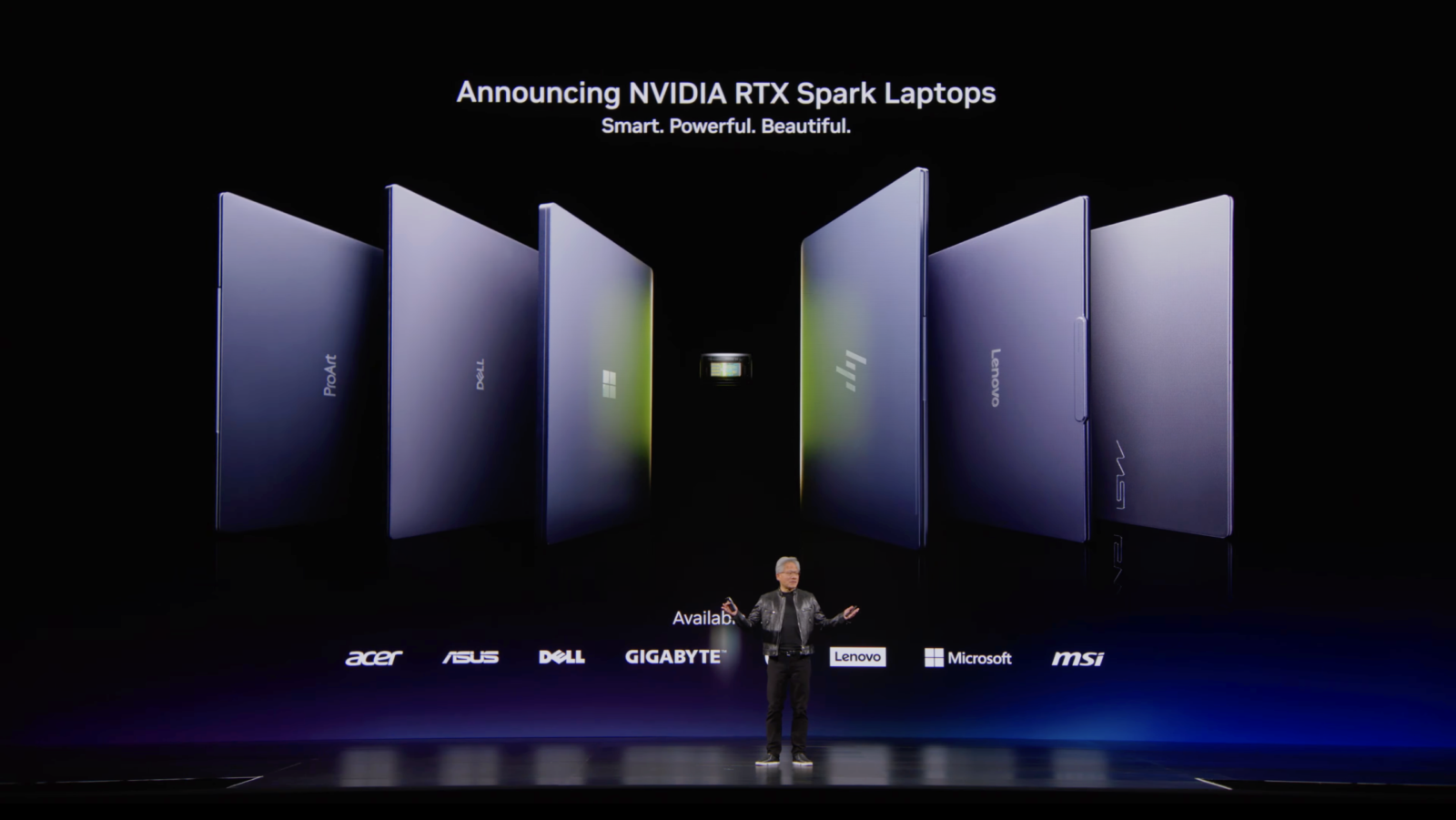
Move aside, Mac Mini. Nvidia is making PCs specifically designed for running AI agents, CEO Jensen Huang announced Monday at a tech conference in Taipei.
Nvidia is introducing a new chip, the RTX Spark, to power its small-but-mighty laptops (the smallest model weighs three pounds and measures 14 millimeters). The chip, which Nvidia called “the most efficient PC chip ever built” will eventually become the backbone for 30 laptop models and 10 desktops. And to build its new fleet, Nvidia will assemble the Avengers of the PC world: Dell, Lenovo, Microsoft, HP, Asus and MSI.
Beyond the Chat
While asking ChatGPT to rate your facial symmetry from 1 to 10 is fun, the AI use-case that could actually generate GDP happens off-chat. Huang said AI agents running on Nvidia’s laptops could be told, for instance, to monitor a software engineer’s project and automatically fix issues. They’re also often used for boring tasks like reading and replying to emails or sorting through files.
But while a workforce full of AI agents isn’t going to ask for better health insurance or unlimited soft drinks in the breakroom, they rack up costs of their own. Users are struggling to find tech that can handle workloads in a cost-effective way:
- Running AI agents around the clock can consume hundreds of millions, or even billions, of tokens (units of data) a week. When users outsource the work to cloud providers like Amazon Web Services, they quickly rack up costs. Running AI locally on a powerful PC saves tokens.
- Home users scooped up Mac Minis this year as a creative and cost-effective solution for running AI agents locally, causing stores like Best Buy to sell out of the little silver hockey puck and Apple to raise its price. Nvidia’s laptops could meet that overwhelming demand if users are willing to pay a little (potentially a lot) more.
Work From Home: Nvidia’s push into PCs gets back to the company’s consumer-electronics roots. While supplying chips to data centers now makes up the majority of the company’s revenue, putting its name on the desks of AI’s most prolific users could earn Nvidia something priceless: clout.
200+ Claude Prompts the Pros Actually Use at Work
Claude can be your analyst, editor and strategist — but most just use it to fix grammar. Sign up for Superhuman AI and get 200+ prompts that turn Claude into your most powerful work assistant, plus a 3-min daily newsletter on new AI tools, tutorials and skills to stay ahead. Claim your free prompts.