Smart, actionable news trusted by millions.

Our flagship newsletter delivers smart news and analysis on finance, and investing — all for free.

Good morning and happy Friday.

The GLP-1 craze is minting a new billion-dollar business for Hershey’s: mints.

That makes the rise of craving-crushing weight-loss drugs like Wegovy and Zepbound at least a double-edged sword for the snack giant. The candy business may suffer from GLP-1 for everyone, but among the side effects are dry mouth and “Ozempic breath,” which is driving up demand for gum and mints. In its first-quarter earnings report on Thursday, the company said Ice Breakers mint sales surged 8%, making it Hershey’s third-largest confectionery brand. CEO Kirk Tanner told The Wall Street Journal in an interview that Ice Breakers are now on the way to becoming a “billion-dollar brand.” He also said that lighter snacks in Hershey’s portfolio, including SkinnyPop and LesserEvil, are thriving due to their high “trips to mouth” rate, which is our new favorite metric.

Markets

S&P 500

7,209.01

+1.02%

DJI

49,652.14

+1.62%

CAGE

26.20

+2.10%

*Presented by Calamos Investments. Stock data as of market close on April 30, 2026.

Explore CAGE — the ETF redefining what amplified growth investing looks like.*

Finance

Berkshire’s Annual Meeting Shines Spotlight on Buffett Successor Greg Abel

The man who now leads Dairy Queen must be wondering how he wound up with such unjust desserts.

Greg Abel will helm his first-ever shareholder meeting as CEO of Berkshire Hathaway this weekend, taking the reins from Omaha’s folksy oracle, Warren Buffett, who announced his retirement almost exactly a year ago, in an event dubbed “The Legacy Continues.” But Class B shares of the company have been melting like a chocolate chip cookie dough Blizzard left on the counter too long. Relative to the S&P 500, Berkshire just clocked its worst performance since the turn of the century, lagging the index by 37 percentage points in the past 12 months. In other words, the market began pricing in the dimming glow of Buffett’s halo effect the moment he announced his retirement.

Welcome to the Show

Of course, the loss of the Buffett premium doesn’t explain the company’s entire 11% share price skid in the past year. Berkshire got dinged for conceding its big Kraft-Heinz merger bet had gone bust, while operating profit fell 6% in 2025 on roughly flat revenue. Meanwhile, operating profit from insurance underwriting slumped 54% in the most recent quarter, even as much of the rest of the industry thrived. And some investors have grown a bit antsy watching the giant holding company largely sit out the artificial intelligence boom that has lifted the S&P 500 by 25% in the past year. Abel’s only big move since taking over at the start of the year was executing a $9.5 billion acquisition of Occidental Petroleum’s chemicals business.

Consequently, at least some of the 30,000-odd attendees expected at this weekend’s event might be hoping Abel reveals some slick plans or a trick or two up his sleeve. On the other hand, doing nothing in the present moment is precisely how Buffett would act:

  • Want proof? Just observe the Buffett Indicator (the ratio of total US stock market value to GDP), which currently sits near a record high of over 220%, signaling to Buffett-esque value investors that now is definitively not the time to buy.
  • Whenever the tides turn, Abel will have a roughly $373 billion cash pile at his disposal, a near-record war chest for the company. In the meantime, Abel restarted share buybacks in March, ending a drought of more than a year.

Square Off: Abel isn’t the only man around who fancies himself Buffett’s heir apparent. Bill Ackman’s closed-end fund Pershing Square USA went public Wednesday on the New York Stock Exchange, fulfilling his long-stated goal of running a Berkshire-esque publicly traded investment vehicle. Shares plummeted 18% on the first day, and despite clawing back some ground since, are still well below their $50 IPO price. At least Abel can take solace in knowing he’s not the only one who isn’t receiving the benefit-of-the-doubt Buffett premium.

Photo via Plaid

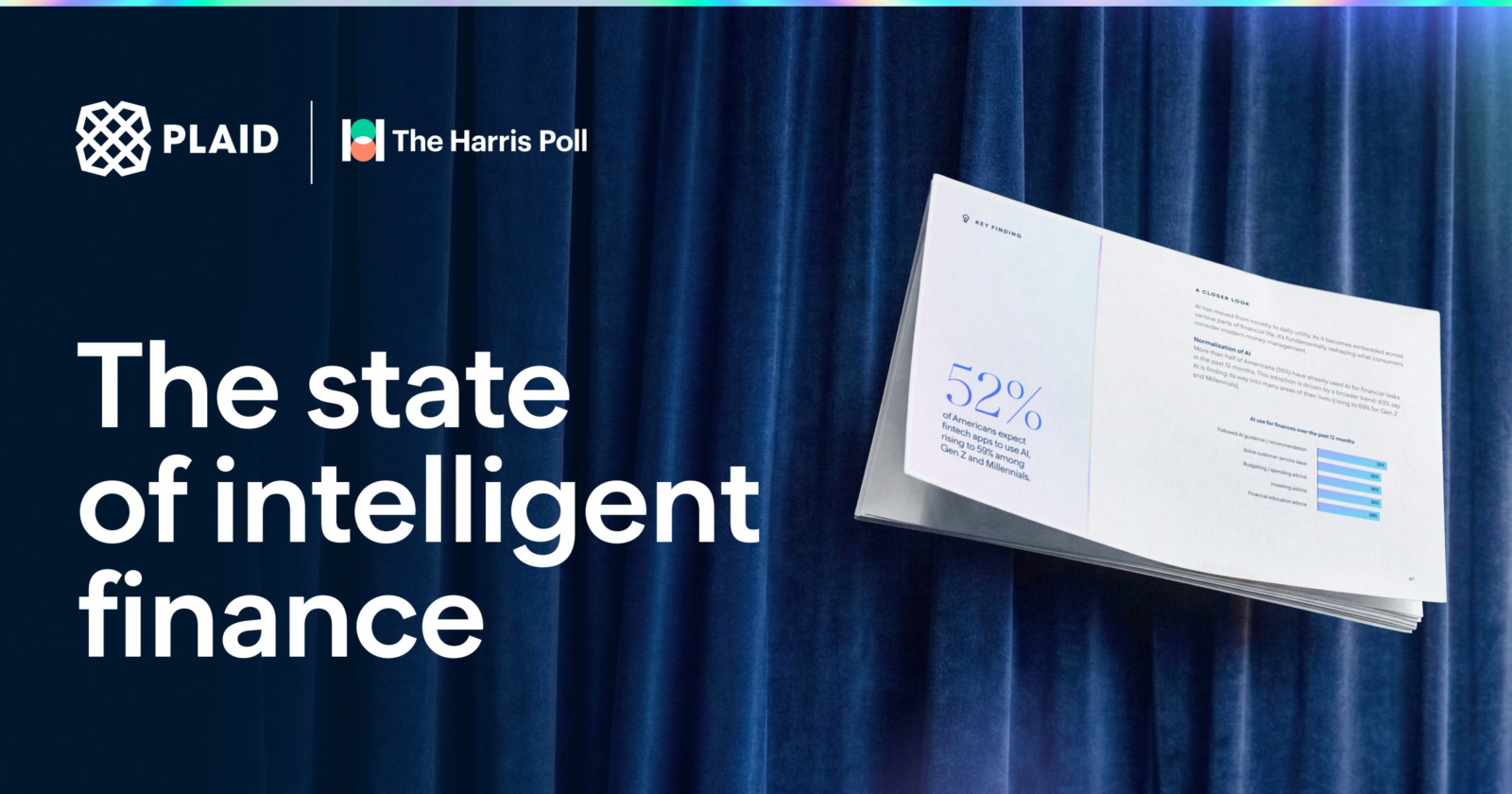
… to deeply engrained in consumer behavior. A clean majority (63%) of Americans say that AI has made its way into their day-to-day lives.

Maybe most surprising is how quickly the tech has changed how Americans think about and interact with their money:

  • 52% of consumers expect fintech apps to use AI, a number that increases to 59% for Gen Z and Millennials.
  • 64% of Americans agree that AI is making financial advice more accessible.
  • And — take a deep breath here — 50% say managing money without AI will soon feel “outdated.”

That last stat might sound scary, but it actually signals an opportunity for all sorts of financial organizations to innovate with AI.

Plaid partnered with the Harris Poll to survey 2,000+ Americans on this very topic: where people expect AI to improve their financial lives, how comfortable they are letting it act on their behalf and what it takes to earn their trust.

Find out what your customers actually want from AI with this free report.

Technology

Polymarket Polices Insider Trading as Lucrative Military Bets Raise Suspicions

Polymarket users have a 52% rate of winning long-shot wagers on military actions, a nonprofit research group recently found. That’s better than the likelihood of predicting a coin flip correctly, which, fun fact, is 51% because thumbs have a slightly biased wobble favoring the side the coin starts on.

The Anti-Corruption Data Collective found that defense-related long-shot wagers, meaning bets of more than $2,500 on odds at or below 35%, won more than half of the time. Those are oddly good odds considering that, more generally on the platform, a paper found the top 1% of traders have historically raked in three-quarters of its profits.

As scrutiny of war-related trades intensifies, Polymarket said on Thursday it’ll introduce new features to monitor its platform.

On-Chain Detective Work

Prediction markets let users bet on everything from how many EVs Tesla will deliver to whether the Rapture will happen this year. (Who’s going to pay that one out?) They’ve existed in a legal gray area since their inception. Amid a discussion about what counts as gambling that’s more tense than an election-year Thanksgiving dinner, Polymarket’s ramping up its efforts to police insider trading. Its crackdown will look different than it does for traditional financial companies, though:

  • Polymarket is teaming up with blockchain analytics firm Chainalysis to monitor platform activity and help ensure users aren’t acting on insider intel. The partnership makes sense, since Polymarket is built on a blockchain. All trades on Polymarket’s blockchain are publicly recorded, but users are anonymous, a feature that historically has attracted bad actors across the crypto world.
  • Matching suspicious trades to potential culprits typically requires collaborating with law enforcement, which Polymarket has been doing. People keeping an eye on Polymarket’s blockchain were quick to notice an account that made more than $400,000 winning wagers related to the capture of Venezuela’s ex-leader Nicolás Maduro. Polymarket handed the user’s data over to law enforcement, and prosecutors charged Gannon Van Dyke. The Army Special Forces sergeant pleaded not guilty on Tuesday.

Playing Nice: Polymarket’s the world’s largest prediction market, and as it gains users, not all of them have good intentions. The blockchain-based platform was booted from the US by regulators before making a comeback late last year. Now, it’s trying to buddy up to them, while still defending the legitimacy of its core business. It’s also facing increasing competition, including Wall Street titans like Robinhood and, possibly soon, the on-chain heavyhitter Hyperliquid.

Photo via Simon Quick Advisors

Founders and executives face complexity most advisors aren’t built for: concentrated positions, eight-figure tax decisions, and strategic planning that actually matches your scale. Simon Quick Advisors was built for exactly that. Independent, founder owned, with $11.2B in assets under advisement. Explore a conversation with Simon Quick Advisors.

Healthcare

Eli Lilly Sales Surge 56% as Booming GLP-1 Demand Eclipses Lower Prices

Eli Lilly isn’t just a pharmaceutical giant anymore; it’s a global appetite suppressant for an economy built on over-consumption. The company blew past Wall Street’s first-quarter expectations, with revenue surging 56% to $19.8 billion, well above the $17.8 billion analysts projected.

The results were driven by a 65% jump in volume amid booming demand for weight-loss drugs like Lilly’s Mounjaro and Zepbound and rival Novo Nordisk’s Wegovy. That helped offset declining prices for Lilly’s treatments, and the pharma giant raised its full-year revenue forecast by $2 billion.

Throw in the fact that sales from Lilly’s newly-approved GLP-1 pill Foundayo weren’t included in the latest earnings report and that Medicare will start offering weight-loss drugs through a bridge program in July, and it seems clear Lilly isn’t slowing its roll anytime soon. The company says it holds a 60% share of the obesity and diabetes drug market compared with Novo’s 39%.

Supplying Demand

Eli Lilly is looking a bit like a semiconductor or energy company, given how much of its performance is tied to manufacturing capacity. The drugmaker’s difficulty keeping up with demand for Mounjaro when it launched in 2022 kicked off a few years of bottlenecks and shortages. As a result, Lilly poured tens of billions of dollars into production and now may be ready to pull back a little:

  • Researchers at S&P Global said they believe the company’s heavy capital expenditures will peak at $10 billion to $11 billion in 2026 before settling down at about $8 billion annually.
  • A more normal price picture could help the stock. “What tends to derail the weight-loss drug manufacturers’ stocks every now and then are the price concessions from all-time highs of supply-constrained pricing to a more normalized supply environment,” Shams Afzal, managing director and portfolio manager at Carnegie Investment Counsel, told The Daily Upside.

Curtailing Copycats: On Thursday, the Food and Drug ⁠Administration proposed excluding the key ingredients in the popular weight-loss and obesity meds from its bulk compounding list, which could potentially limit the making of cheaper alternatives, a win for both Lilly and Novo.

Extra Upside

  • Scotch Rocks: President Trump said he would remove whiskey tariffs that affect Scotland’s ability to work with Kentucky on whiskey and bourbon following a White House visit by King Charles III.
  • Sky High: The S&P 500 and the Nasdaq closed at record highs on Thursday, capping off the best month for each index since 2020.
  • 7 Ways to Achieve a Comfortable Retirement. Retirement planning shouldn’t be complicated. The Definitive Guide to Retirement Income can help you feel confident about your financial future. Explore seven income streams to help keep a $1,000,000 portfolio growing for years to come. Learn more.**

**Partner

Disclaimer

*Before investing, carefully consider the fund’s investment objectives, risks, charges, and expenses. Please see the prospectus and summary prospectus containing this and other information which can be obtained by calling 1-866-363-9219. Read it carefully before investing.

©2026 Calamos Investments LLC. All Rights Reserved. Calamos®, Calamos Investments® and Investment strategies for your serious money® are registered trademarks of Calamos Investments LLC.

Sign Up for The Daily Upside to Unlock This Article
Sharp news & analysis on finance, economics, and investing.