

Good morning.
Amazon employees will stop at nothing to please their bosses. Their bosses aren’t happy. Earlier this year, the company set a target of having more than 80% of its developers use artificial intelligence for coding tasks at least once a week. It introduced an internal leaderboard to track employee use of AI, including its in-house MeshClaw tool, which can create AI agents to automate workplace tasks.
However, the Financial Times reported Tuesday that some Amazon staff have resorted to automating unnecessary activity using MeshClaw, with one employee telling the paper the AI usage target “creates perverse incentives.” For its part, Amazon said MeshClaw lets thousands of employees automate repetitive tasks and is “empowering teams” to use new technologies. Seems like the company is anxious to show something for the gazillions it’s putting into AI capex, even if it’s just Larry from accounting hanging out in the break room.
Navigating the Shock: The Fed, Energy Markets, and the Path Back to Easing
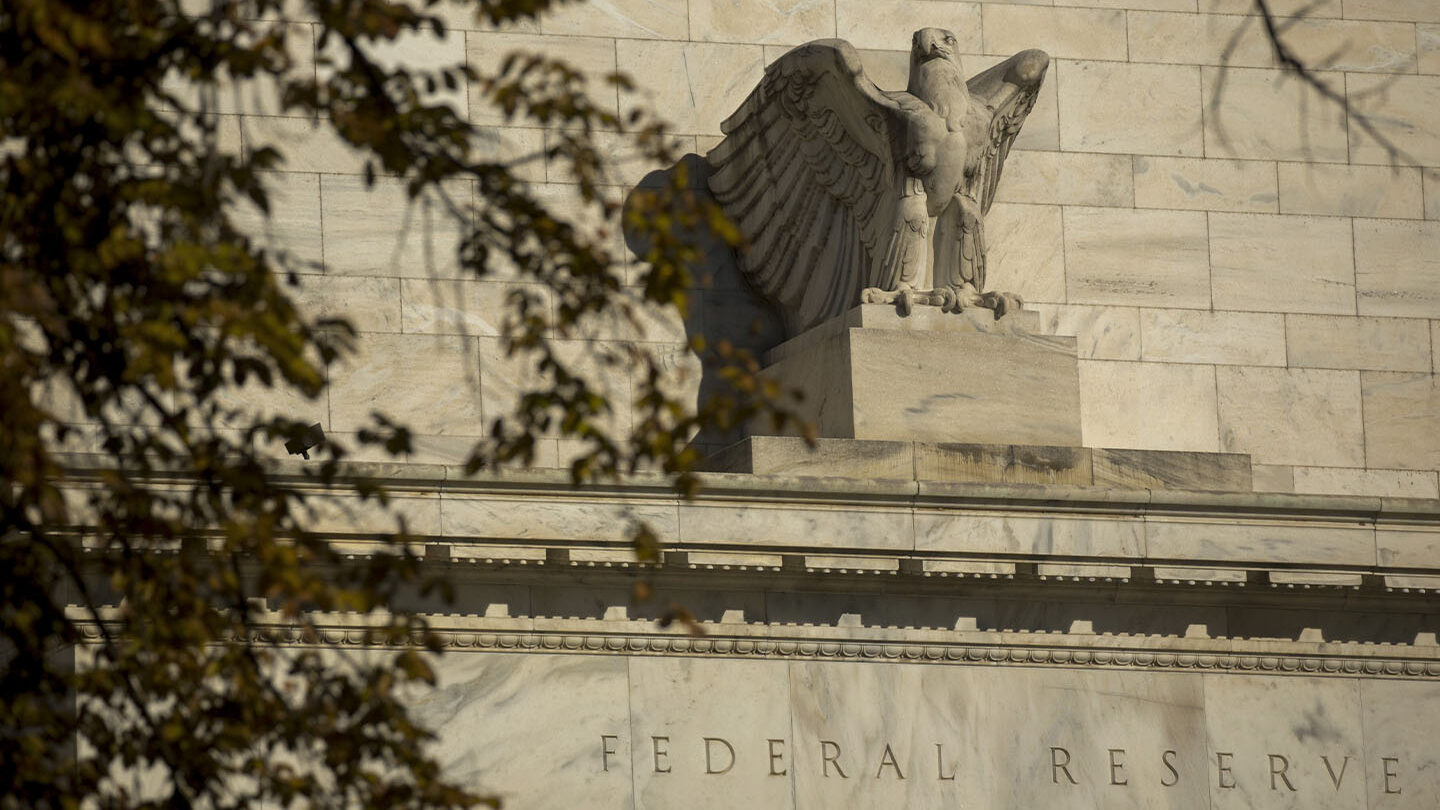
At the start of the year, investors were focused on a familiar set of questions. The timing of rate cuts, a leadership transition at the Federal Reserve, and a shift toward a more forward-looking, growth-oriented framework were expected to define the outlook. Markets were actively debating how aggressive the Fed might be in easing, with expectations tied in part to Kevin Warsh potentially succeeding Jerome Powell.
That narrative has since been disrupted. The escalation of the Iran conflict has pushed energy prices and inflation risk back to the center of the macro conversation. The closure of the Strait of Hormuz forced a broad reassessment of the growth outlook and led to a meaningful repricing across global rates markets.
Is Boeing’s Massive China Order Finally Close to Landing?

A blowout figure for April deliveries isn’t quite enough to lift Boeing, but a ceremonial gift from the Middle Kingdom might do the trick.
Shares of the aerospace giant ticked down slightly on Tuesday after it announced 136 orders in April and 47 deliveries; the former is an impressive figure nearly equal to the orders it had booked in the first three months of the year, while the latter slightly trails expectations. But CEO Kelly Ortberg joining the US delegation to a summit between President Donald Trump and China’s Xi Jinping this week could herald a massive win for the company. After all, being a critical piece on the geopolitical chessboard has its perks.
Overseas Destination
Delivering 47 planes in a single month would’ve felt like a minor miracle for Boeing not long ago: For reference, the company delivered just 24 planes in April 2024. These days, it’s a sign that the company’s turnaround isn’t reaching altitude quite fast enough. Investors were hoping that Boeing would reach 50 deliveries a month, according to FactSet data, and 662 planes total this year. Hitting that mark now will require Boeing to accelerate its deliveries to 59 planes a month through the rest of 2026.
On the other hand, demand remains incredibly strong. Boeing booked 284 net orders in the first four months of 2026, its highest total for the period since 2014. And now, it may be on the verge of landing a very, very big deal:
- Last month, Ortberg said in an interview with Reuters that the company was leaning on the White House to land a major order from China, which had been at least partially contingent on access to spare engine parts that had become ensnared in the trade war.
- Bloomberg, meanwhile, reported that the order could amount to as many as 500 737 Max aircraft, reflecting a strong desire from Chinese airlines to quickly expand their fleets.
Debt Weight: If completed, it would amount to one of the single biggest hauls in aviation history. It could reshape how Wall Street views a company that’s not only recovering from years of high-profile safety issues but also remains saddled with a mammoth $47 billion debt load, as well as tip the balance of its plane-making rivalry with Airbus, which booked about 400 orders from January through April.
Don’t Leave Your Portfolio on Autopilot

Nurturing your nest egg is far too important for a “set it and forget it” strategy. And one conversation with a financial professional can identify that hidden edge — from tax savings to capital protection — to help you compound wealth, not just manage it. Don’t let a busy schedule hinder your financial future. Take a look at how your financial plan will be tailor-made to your priorities.
Forget Eggs. Tomato Prices Swell as Inflation Hits Three-Year High

You say “to-may-to,” I say “to-mah-to,” Kevin Warsh says “higher for longer?”
Tomatoes have become the new eggs, meaning orange is the new yellow when it comes to surging prices in the grocery aisle. Prices for the fruits (or vegetables — it’s not a debate we’re wading into here) soared nearly 40% in April from a year ago, according to the latest figures from the Bureau of Labor Statistics. Cold temperatures in Florida, poor weather and diseases in Mexico, where an estimated 70% of tomatoes we eat here in the US are grown, tariffs and the rising cost of jet fuel moving through the supply chain are to blame.
Inflation Figures and the Fed
If only foregoing a BLT and ketchup were all it took to bring down bills. Groceries aside, consumer prices overall jumped 3.8% last month from April 2025, the largest increase in nearly three years. Higher energy costs due to conflict in the Middle East are among the culprits, climbing 3.8% from the previous month and roughly 18% from a year ago. But if you eliminate volatile food and energy prices, it’s still a dreary picture for our wallets: The core consumer price index (CPI) jumped 2.8% in April compared with a year ago, an uptick from 2.6% in March.
“I’m looking for anything where I can say, ‘Here’s some relief,’ and that’s not very easy to do in this report,” Michael Reid, chief US economist at RBC Capital Markets, told The New York Times. “Generally, inflation is moving in the wrong direction.”
So what’s this all mean for the Federal Reserve, whose policymakers are closely watching inflation figures for hints about where interest rates should head next?
- Eric Winograd, chief US economist at AllianceBernstein, said he expects the higher prices will keep the Fed from cutting rates further for the time being, barring a “dramatic change in thinking” spurred by Warsh, who’s expected to become the new Fed chair. “I do not expect him to push for near-term rate cuts and expect the Fed to be on hold for the foreseeable future,” Winograd added.
- Skyler Weinand, chief investment officer at Regan Capital, said that the current inflation being driven by oil prices rather than broader economic pressure doesn’t change the fact that consumers are paying the prices. “As a result, we expect the Federal Reserve to be on hold through the summer on interest rates.”
Can of Worms: Meanwhile, manufacturers of tin cans that hold everything from beans to tuna to pineapples are getting hit by tariffs when they import the steel. The result? You guessed it: higher food prices.