

Good morning.
As the co-founder and former CEO of iRobot, Colin Angle led the team that launched the Roomba in 2002, making him the Henry Ford of household robot vacuums. On Monday, he returned with a venture positioning himself as the John D. Rockefeller of robot pals.
His new company, Familiar Machines & Magic, makes a furry, dog-sized, AI-powered robot pet to provide “emotionally intelligent” companionship. Known as a Familiar, it looks like a quadruped teddy bear with obsidian eyes and sewn-on freckles. “The next era of robotics is not just about dexterity or humanoid form,” Angle said in a statement. “It’s about machines that can build and sustain human connection.”
They’re pretty cute, but they face a daunting comparison when it comes to companionship: my deliciously low-tech Labrador Retriever.
Amazon Opens Up Its Sprawling Logistics Network, Dealing Painful Blow to UPS, FedEx
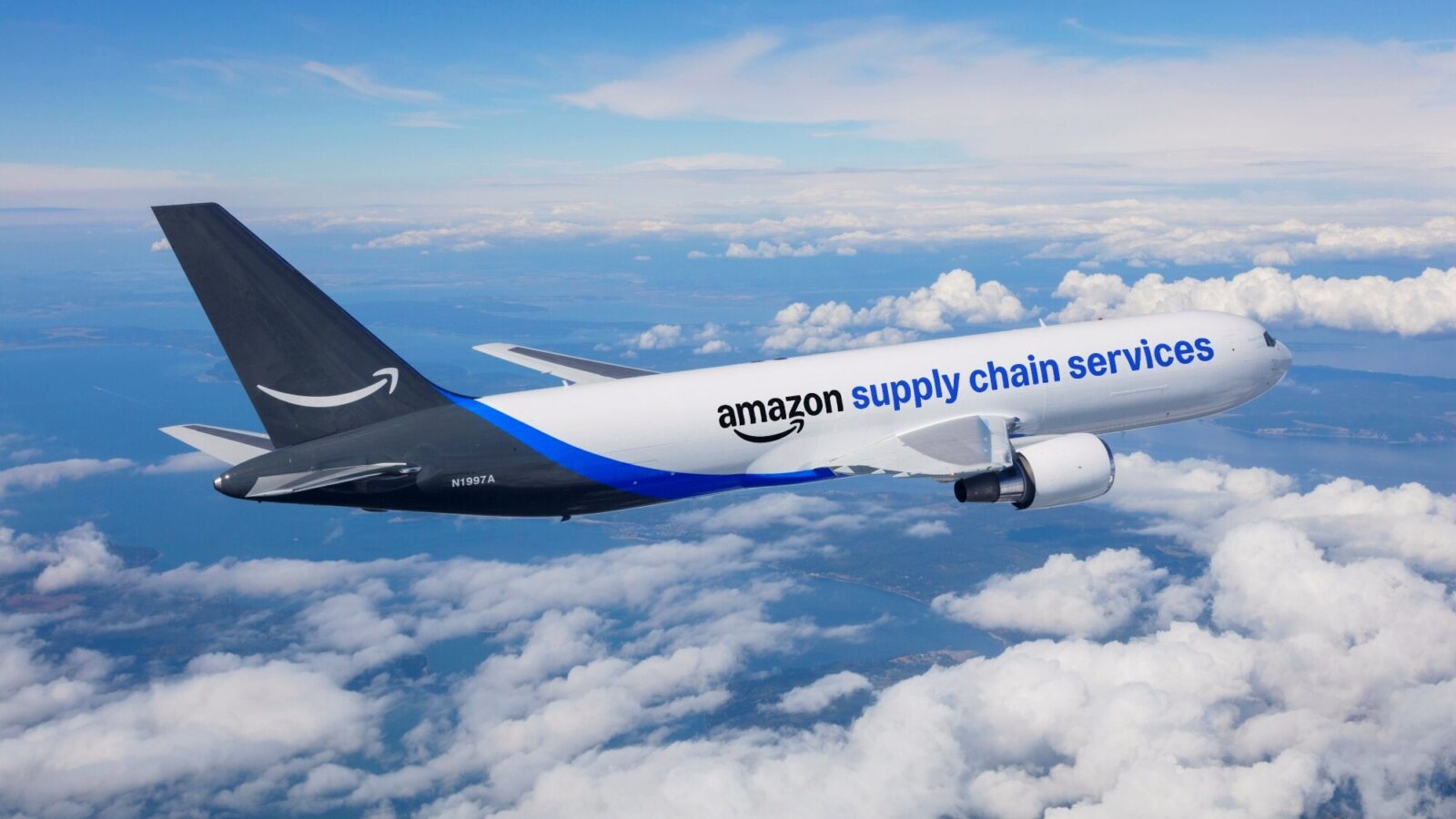
Shares in shipping giants UPS and FedEx were sent packing on Monday, falling 10% and 11%, respectively, as if the hoisting cables on their metaphorical freight elevator snapped.
The reason: E-commerce titan Amazon entered the logistics business with the force of a WWE wrestling heel, sending shivers down the spine of the competition. Unfortunately for them, this is not kayfabe.
Ready the Shipments
The new offering is called Amazon Supply Chain Services. It is available to any business, which an Amazon release fishing for corporate customers took care to emphasize includes healthcare, automotive, manufacturing and retail (“Everyone, call us,” in other words). The service: Companies get access to Amazon’s mammoth logistics network, which includes 200 fulfillment centers in the US; 80,000 trailers, 24,000 intermodal containers and a fleet of over 100 cargo planes.
That’s the network that powers Amazon’s own hyperfast two- to five-day deliveries, the one that the company and its third-party Marketplace sellers have used for years. Its prowess and reliability are not in doubt, and businesses will be able to use the network to import and store inventory close to demand the same way Amazon does. Notably, Amazon’s supply chain has a long-established lane in customs clearance from China to the US. That’s what appeals to potential customers. The benefit to Amazon is that the $2.9 trillion giant’s e-commerce unit can grow revenue for a service that already handles logistics for thousands of independent third-party sellers. Its supply chain essentially becomes a business alongside its retail, grocery and cloud computing interests. The pain felt by competitors varied, but was nigh universal:
- Evercore ISI dubbed the announcement a “direct competitive blow” to UPS and FedEx, which have traditionally dominated the space but have struggled to capture revenue from a surge in parcel shipping in recent years, partly because of the fulfillment capabilities of Amazon and Walmart. Other competitors hurt in trading Monday were DHL (down 7.3%, oof), GXO Logistics (down 18%, ouch) and Maersk (down 0.2%, not so bad).
- Much to rivals’ chagrin, Amazon already has a roster of heavyweight customers: Consumer goods giant Procter & Gamble, industrial conglomerate 3M, and apparel firms American Eagle and Lands’ End signed up for the supply chain services at launch.
Past Is Prologue: Opening up the logistics network to outside business harkens back to an old call in Amazon’s playbook. Amazon Web Services, the cloud computing unit that grew 28% year-over-year to rake in $37 billion in the first quarter of this year, began as an internal company project to address Amazon’s IT infrastructure challenges in the early 2000s. It began commercializing its cloud computing infrastructure, initially developed for its own needs, in 2006.
When to Retire: A Quick and Easy Planning Guide

Helps investors with $1,000,000 or more navigate key questions, like: What do your ideal retirement years look like? How long will you need your money to last? What income sources will you have, and what will your expenses be?
This guide is designed to help you approach your financial future with clarity and confidence. With careful preparation, you can create a strategy that not only supports your financial needs but also allows you to enjoy the lifestyle you’ve worked hard to achieve. Whether you’re just beginning to think about retirement or refining the details of your plan, this guide can help you move forward with peace of mind.
Anthropic, OpenAI Team with Private Equity to Rev Up AI Adoption
There’s been a slight snag with the AI rollout: It’s turned into a slow roll.
To speed up adoption, both Anthropic and OpenAI announced joint ventures Monday with private equity titans to help companies integrate AI into their core operations. And their new JV partners have identified the perfect clients for their new product: their own portfolio companies. A captive audience never hurts.
Forward-Deployed Thinking
While Anthropic and OpenAI are eager for every non-tech industry to have a “Claude-pilled” moment of their own, AI firms see slow adoption as a deployment problem. The result is the rise of the so-called “forward-deployed engineer,” a techie/consultant/salesperson who pitches businesses on potential avenues for AI implementation.
OpenAI’s JV, literally called The Deployment Company, is entering the world with more than $4 billion in funding at a $10 billion valuation, backed by TPG, Brookfield Asset Management, SoftBank and Bain Capital, according to Bloomberg. Anthropic’s yet-to-be-named JV has scored around $1.5 billion in commitments from the likes of Blackstone, Goldman Sachs, Hellman & Friedman, Sequoia and Singapore’s sovereign wealth fund, per the Financial Times.
The dual push comes as planned massive IPOs put adoption in the forefront:
- Last week, The Wall Street Journal reported that OpenAI recently missed key revenue and user targets, prompting CFO Sarah Friar to warn that the company may not be able to afford looming compute power contracts. The firm has been steadily losing ground to Anthropic, sources told the WSJ.
- The Deployment Company will open the doors to some 2,000 portfolio companies and clients held by its private equity partners, sources told Bloomberg.
Private equity, whose portfolios are loaded with software firms vulnerable to an AI wipeout, has plenty of ulterior motives, too. “The near-term value to our portfolio companies is substantial,” Hellman & Friedman CEO Patrick Healy told the FT.
Crunch Time: Boosting adoption may force the industry to reckon with its next great problem: compute supply. Anthropic’s Claude model has recently faced widespread allegations of performance decline after the company reduced its default “effort” level, likely due to a power crunch, and Google CEO Sundar Pichai even met with US government officials last week to discuss the capacity shortage. Meanwhile, Project Stargate, OpenAI’s $500 billion plan to build data centers, has all but petered out, according to the FT. The result is the new catch-22 for AI firms: too much adoption for its current level of compute supply, not enough adoption to fund more compute supply.
Are You Paying More than $10 a Month for Cell Service?

Do one-legged ducks swim in circles? These days, your phone bill could feed a small army. Tello is a bit different — they believe you deserve the best possible coverage (on the nation’s largest network) without taking out a second mortgage. To celebrate their 10th anniversary, all plans are just $10/month for your first 3 months. Explore Tello now (no contract, and you don’t need to change numbers!).