Amazon Opens Up Its Sprawling Logistics Network, Dealing Painful Blow to UPS, FedEx
Amazon’s supply chain has a long established lane in customs clearance from China to the US, which is very appealing for potential customers.
Sign up for smart news, insights, and analysis on the biggest financial stories of the day.

Shares in shipping giants UPS and FedEx were sent packing on Monday, falling 10% and 11%, respectively, as if the hoisting cables on their metaphorical freight elevator snapped.
The reason: E-commerce titan Amazon entered the logistics business with the force of a WWE wrestling heel, sending shivers down the spine of the competition. Unfortunately for them, this is not kayfabe.
Ready the Shipments
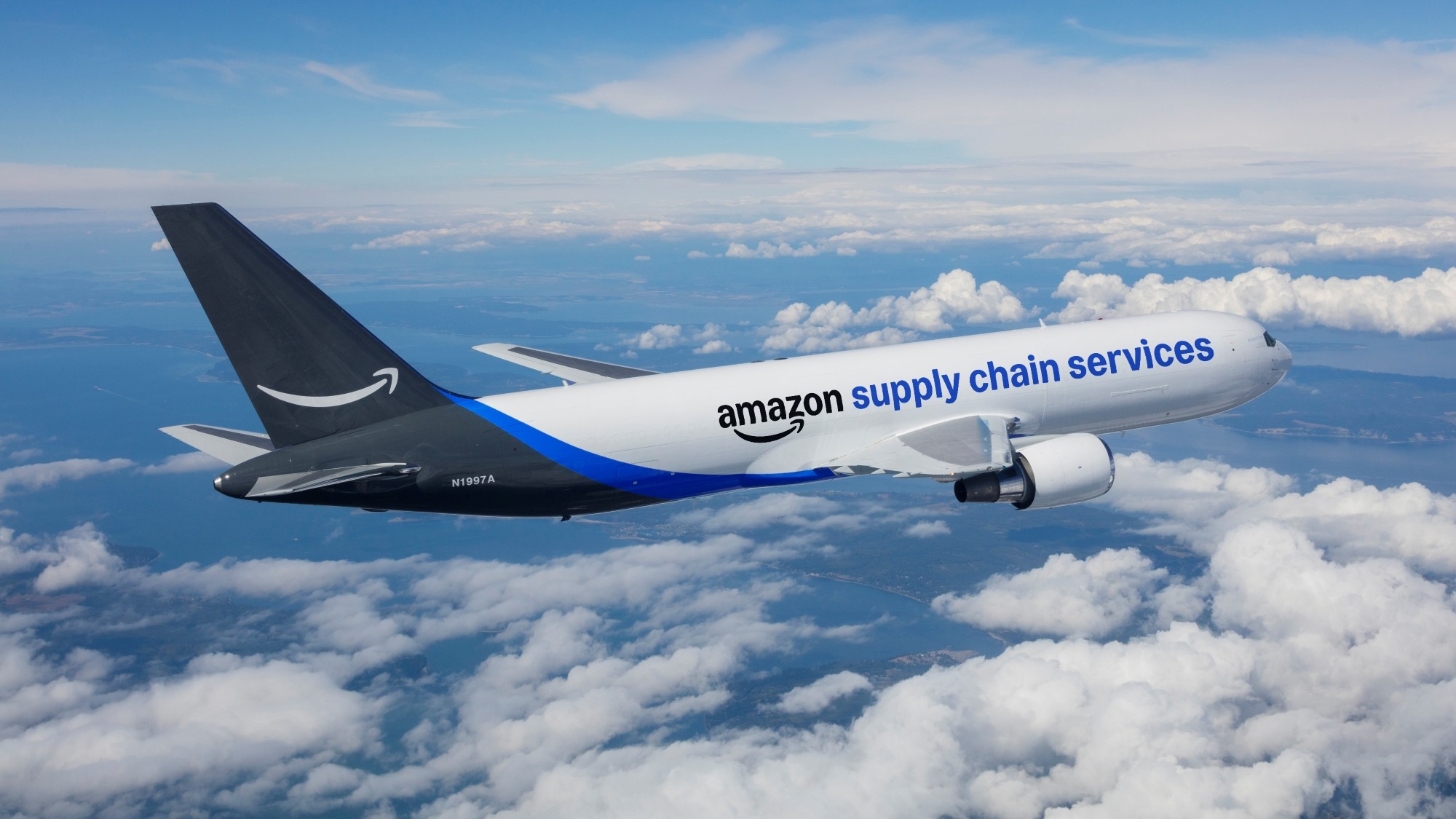
The new offering is called Amazon Supply Chain Services. It is available to any business, which an Amazon release fishing for corporate customers took care to emphasize includes healthcare, automotive, manufacturing and retail (“Everyone, call us,” in other words). The service: Companies get access to Amazon’s mammoth logistics network, which includes 200 fulfillment centers in the US; 80,000 trailers, 24,000 intermodal containers and a fleet of over 100 cargo planes.
That’s the network that powers Amazon’s own hyperfast two- to five-day deliveries, the one that the company and its third-party Marketplace sellers have used for years. Its prowess and reliability are not in doubt, and businesses will be able to use the network to import and store inventory close to demand the same way Amazon does. Notably, Amazon’s supply chain has a long-established lane in customs clearance from China to the US. That’s what appeals to potential customers. The benefit to Amazon is that the $2.9 trillion giant’s e-commerce unit can grow revenue for a service that already handles logistics for thousands of independent third-party sellers. Its supply chain essentially becomes a business alongside its retail, grocery and cloud computing interests. The pain felt by competitors varied, but was nigh universal:
- Evercore ISI dubbed the announcement a “direct competitive blow” to UPS and FedEx, which have traditionally dominated the space but have struggled to capture revenue from a surge in parcel shipping in recent years, partly because of the fulfillment capabilities of Amazon and Walmart. Other competitors hurt in trading Monday were DHL (down 7.3%, oof), GXO Logistics (down 18%, ouch) and Maersk (down 0.2%, not so bad).
- Much to rivals’ chagrin, Amazon already has a roster of heavyweight customers: Consumer goods giant Procter & Gamble, industrial conglomerate 3M, and apparel firms American Eagle and Lands’ End signed up for the supply chain services at launch.
Past Is Prologue: Opening up the logistics network to outside business harkens back to an old call in Amazon’s playbook. Amazon Web Services, the cloud computing unit that grew 28% year-over-year to rake in $37 billion in the first quarter of this year, began as an internal company project to address Amazon’s IT infrastructure challenges in the early 2000s. It began commercializing its cloud computing infrastructure, initially developed for its own needs, in 2006.
Recent News

-

Photo illustration by Connor Lin / The Daily Upside, Photo via Chelsea Blair/Sipa USA/Newscom -
Photo via Simon Shin / SOPA Images/Sipa USA/Newscom