

Good morning.
Canadian Prime Minister Mark Carney is poaching Wall Street talent to run his country’s new sovereign wealth fund. On Monday, he named Karen Karniol-Tambour, the co-chief investment officer at billionaire Ray Dalio’s Bridgewater Associates, as the first CEO of the Canada Strong Fund. A citizen of Canada, the US and Israel, she has worked for Dalio’s hedge fund, one of the world’s largest, since 2006.
With an initial capital commitment of $17.7 billion, the independently operated fund will be runt-sized next to Norway’s $2.3 trillion Government Pension Fund and Saudi Arabia’s $1.3 trillion Public Investment Fund. It will also be less broad in scope, investing only in Canadian companies and projects. That means no splashy, doomed-to-fail efforts like the PIF’s LIV Golf experiment and no big footing by virtue of owning an average 1.5% of all publicly listed companies like the Norwegian fund. It brings to mind a contest that the former New Republic editor Michael Kinsley once held to determine the most boring headline in history. The winner: “Worthwhile Canadian Initiative,” which ran in the April 10, 1986, edition of The New York Times. If you’re yawning yourself, blame Canada, not our editorial selection process.
Can Nvidia’s Huang Hold On Through a Spy Scandal?
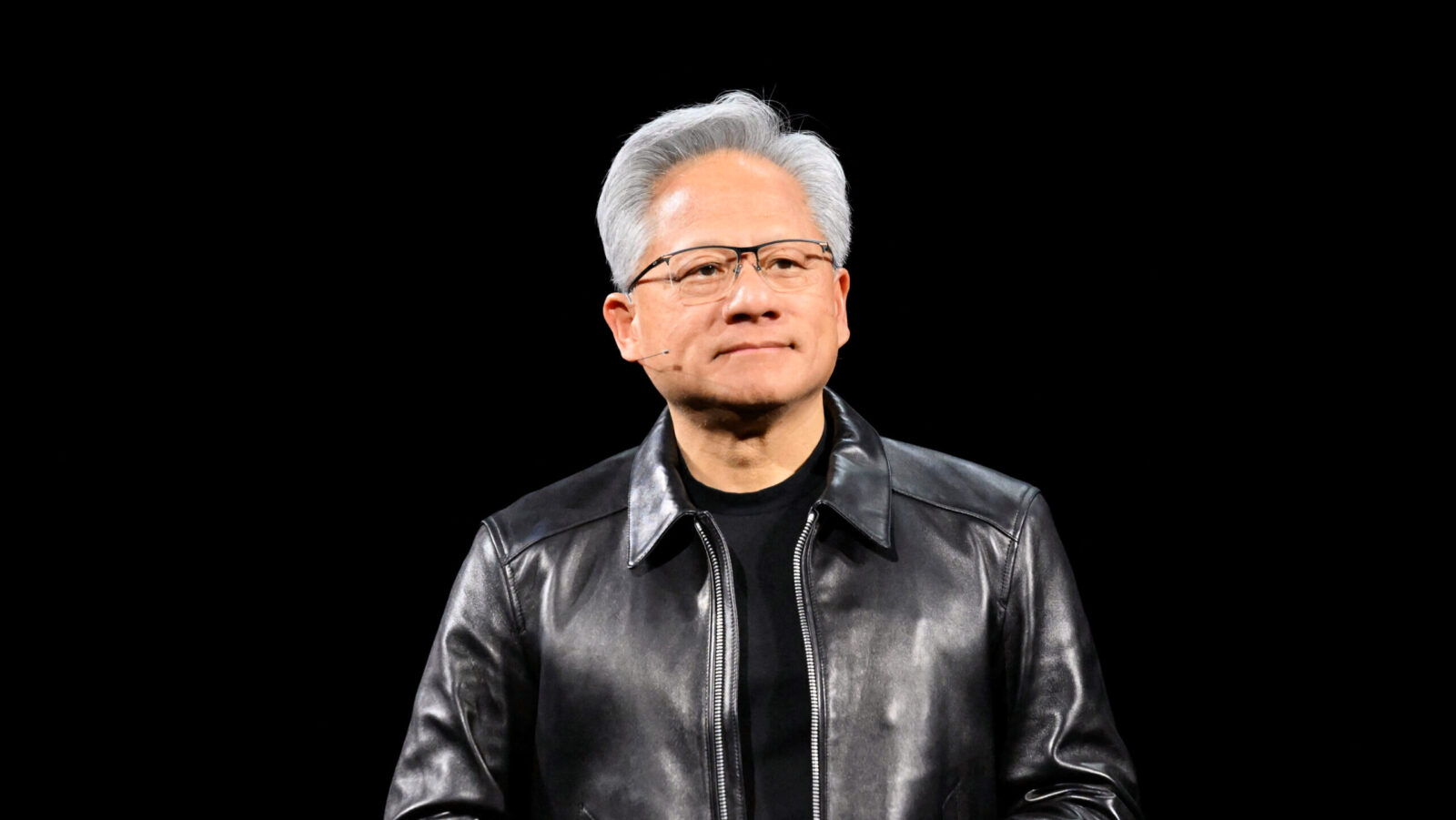
In May, Nvidia CEO Jensen Huang told Singapore news channel CNA that he puts staff under the microscope “the same way Taiwanese parents torture people,” by subjecting them to relentless criticism.
After admitting to an extramarital affair with a woman US intelligence officials suspect was a Chinese intelligence asset, Huang should expect the criticism to 180 in his direction. The news sent Nvidia’s share price tumbling 4.3% on Monday and, with the allegedly honeypotted Huang now the subject of a company investigation, markets are wondering if he can hang on (probably) and if his indiscretion will hamper business (maybe).
An Ouster in the Cards
There has never been a US corporate infidelity scandal quite like this one. The national security element has placed the world’s second largest company at the center of an IRL spy novel, and the House Committee on Foreign Affairs wants Huang to appear for a closed-door briefing on November 18. President Donald Trump confirmed the FBI is looking into the matter, too, and said he spoke with Huang, who told him he had “absolutely no idea that the person in question was a spy.”
It’s unlikely that Huang’s affair will immediately impact Nvidia’s order book. In August, executives forecast a massive 70% revenue growth next year and financing demand for artificial intelligence, which relies heavily on Nvidia’s GPU chips, remains relatively robust. But Citi’s Atif Malik, while maintaining a buy rating on Nvidia’s stock, said investors should be mindful of “likely potential governance implications, increased regulatory scrutiny and export-control compliance of the flow of H200 chips into China (<1% of DC sales) and routed through other intermediaries, and long-term impact on leadership stability.”
Huang, who has led Nvidia since he cofounded it in 1993, is a human avatar for the company and arguably the most famous face of the AI boom. While making clear it’s currently unlikely, Morningstar analysts said the investigation and affair “may lead to Jensen Huang’s ouster.” They cautioned that “his departure could lead to less AI dealmaking and financing, greater regulation and more political backlash around artificial intelligence.” For now at least, the market is treating this as an isolated incident:
- The tech-heavy Nasdaq 100 rebounded 2.7% Monday after an up-and-down week following the midterm elections. Google debuted new variants of its own AI chips Monday, a sign of confidence in compute demand and that the AI race is proceeding undeterred.
- “It signals strong dip-buying investor appetite across the sector, coupled with market optimism that Nvidia’s issues remain contained,” said Mohamed A. El-Erian, an economist at the University of Pennsylvania’s Wharton School.
It Can Get Worse: New information is dropping fast, most of it bad for Huang. The New York Times reported that the US Commerce Department halted an investigation into Megaspeed, the Singapore-based firm where the woman he had an affair with was a director, after Nvidia intervened. The Financial Times reported she boasted to China-based investors of having access to Nvidia chips. Congressional hearings come with subpoena powers. Chris Coons, the Democratic Senator for Delaware set to chair the upper chamber’s Foreign Relations Committee told NPR investigating Huang is one of his top priorities. “This is a dynamic situation, and new information is much likelier to break against Jensen than in his favor,” said Alec Stapp, the co-CEO of the Institute for Progress, a D.C. public policy think tank. “Expect it to keep getting worse.”
Move Up the Blockchain

Ripple is rewiring the global financial system.
With over 85 licenses and a compliance-first approach, their blockchain solutions are built to exceed institutional standards.
Let your assets move with purpose, speed and control.
It’s happening with Ripple.
Anthropic Can Now Start Its Roadshow. The Traffic’s Bad.

Let’s get this IPO show on the road … just check Google Maps for AI potholes before choosing your route. Anthropic is expected to start formally marketing its planned debut today, 15 days after it filed to go public with the SEC. The Claude-maker is said to have meetings with investors on its calendar starting this week.
That would put it on track to debut on the Nasdaq next week, before Thanksgiving. But it could be a difficult time to convince investors to sit around the AI table and hold hands.
Time to Talk Turkey
Anthropic hasn’t set a price yet, but investors think its IPO could fetch a valuation from $1.1 trillion to $1.3 trillion. That’s down from $1.4 trillion to $1.5 trillion before that and as much as $2 trillion in early October. Those price tags were built on first-half revenue that grew about fourteenfold from a year earlier to $16.3 billion, per Anthropic’s S-1 filing — driven by big business customers asking Claude to help vibe code dashboards.
But as AI sentiment takes a sour turn, Anthropic’s roadshow will need to convince investors that its business model won’t be upended by recent events:
- While the wave in DC was blue, AI stocks turned red last week as investors anticipated an anti-data center policy shift. The Nasdaq’s (relatable) post-Halloween hangover started to let up Friday and Monday as the Nasdaq ticked back up. But the volatility may’ve taken a toll on confidence — and Nvidia’s You Only Live Twice scandal that unfolded over the weekend won’t help rebuild it.
- Nvidia has billions tied up with Anthropic. The chipmaker agreed last November to invest up to $10 billion in the AI lab, which in turn committed to using an initial gigawatt of computing power on Nvidia’s chips. Nvidia’s considering pouring up to another $10 billion into Anthropic’s IPO, Reuters reported in September.
Timing Is Everything: Anthropic isn’t locked into an IPO timeline, but delaying could cost it more than money. Rival OpenAI, freshly valued at $1.25 trillion in a private funding round, has already filed confidentially to go public as soon as next year. Anthropic may want to capitalize on investors’ remaining AI-ppetite well before the ChatGPT-maker arrives. And a lower starting price could set the stock up for a more successful narrative over time.