

Good morning.
Treasury Secretary Scott Bessent has invoked the Shaggy defense: It wasn’t me. On Friday, he appeared to lay the blame for the political fallout of former Nvidia CEO Jensen Huang’s resignation at the doorstep of Howard Lutnick’s Commerce Department. Multiple reports have said Lutnick opted not to impose export controls on Nvidia chips to Singapore-based Megaspeed, which is suspected of diverting them to China in violation of trade rules.
In a TV interview with CNBC, Bessent said his department and the Departments of State and Defense wanted to put Megaspeed on a blacklist for months. It is Lutnick’s office, however, that “has the pen … and you will have to ask them about their internal processes,” he added. Congress will learn more about Nvidia’s internal processes later this week, too, with closed-door hearings set to begin this Wednesday. Lutnick, for his part, agreed to testify before the Senate Banking Committee next month. He won’t have the pen then, but if his fellow cabinet member’s ire is any indication, he’d be better off with an actual sword anyway.
Microsoft’s Big Annual Event Comes Just in Time
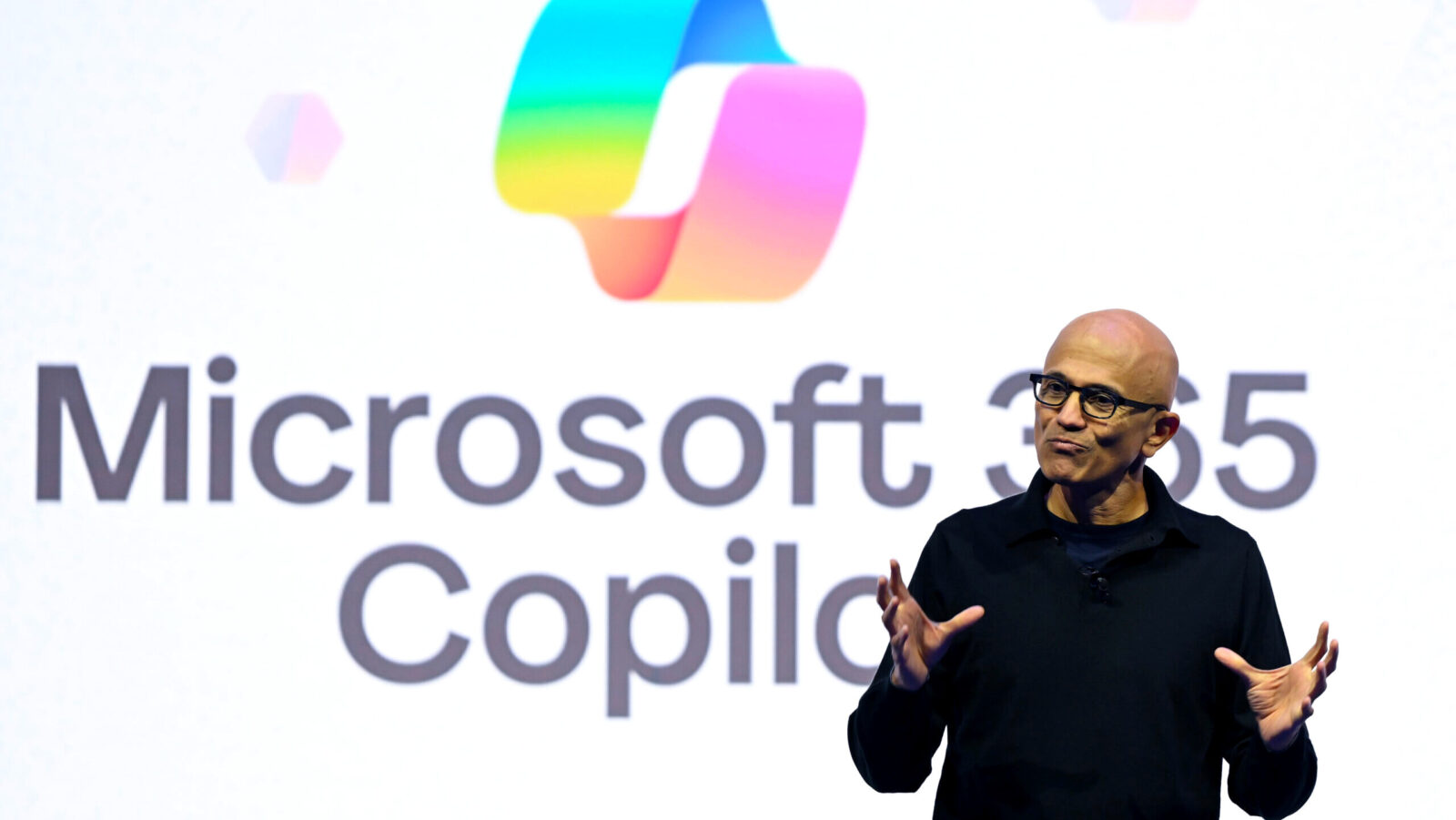
Last week’s massive Outlook outage was a gift to office workers everywhere hoping for a bare-minimum Friday. For Microsoft, the timing was hardly ideal.
Shares of the tech giant had already taken a bit of a beating last week after Anthropic debuted a suite of new AI-powered office tools seemingly designed to challenge Microsoft’s bread-and-butter products. Then came the outage that impacted more than 430 million users around the world. The good news for Microsoft? Its annual Ignite conference in San Francisco this week is the perfect time to prove to investors that it’s still a top beneficiary of the AI movement. Here’s hoping the outage didn’t derail any last-minute event planning.
Long Day’s Journey to Ignite
As gleeful as the average office drone may have been to dodge answering Teams messages and emails for a day or two, the Outlook outage caused some serious damage. Communications went down at several National Health Service hospitals in the UK. Ditto at shipping giant Maersk. For once, members of the US House of Representatives’ inability to communicate with one another was due to literal complications. DownDetector counted problems among users in more than 70 countries. An estimate from credit ratings firm Morningstar DBRS said insurance payments to impacted organizations could total $500 million. Microsoft said the outage was a technical issue and not due to a hack or other malicious cyber behavior.
But the ill-timed blemish won’t shake Microsoft’s reputation as a favorite among Wall Street’s bulls. Shares of the company climbed to a record high earlier this month in the days after an encouraging earnings report, with its massive cloud business representing the “cleanest demand proxy for enterprise AI,” Yorkville Ives analyst Dan Ives wrote last month. Last week, two more Wall Street analysts chimed in predicting the Ignite conference will spark even more momentum:
- “Microsoft is back in favor with investors following another better-than-expected quarter, with accelerating growth and strong operating leverage providing incremental confidence in its ability to monetize the ongoing AI investment cycle,” Morgan Stanley analyst Adam Wood wrote in a note.
- “Ignite provides an opportunity to reinforce conviction in the durability and breadth of [accelerating] growth,” Wood added. That echoed the sentiment of Citi analyst Tyler Radke, who wrote the event will likely reinforce confidence in Microsoft’s AI growth narrative.
Tip of the Cap: The momentum did help Microsoft briefly surpass Nvidia to become the world’s second-largest company by market cap (comfortably in the Number One spot, for now, remains Apple). Of course, that has just as much to do with Nvidia’s epic $1.6 trillion valuation wipeout, which began even before its CEO became embroiled in one of the decade’s most eye-catching scandals.
The Q3 IPO Report Shows: Mega Deals Are Stealing the Show

DFIN’s Q3 2026 IPO and Public Listing Report underscored some telling trends:
Sixteen $100M+ IPOs generated approximately $32.3B in Q3, but three companies — SK hynix, Csquare, and Jersey Mike’s Subs — accounted for roughly 90% of the proceeds (SK hynix accounted for 82% alone).
Translation: The IPO market is highly concentrated, with large caps receiving most of the capital.
What else the Q3 IPO report covers:
- Healthcare represented more than half of $100M+ IPOs.
- 258 SPACs remain in search of acquisition targets.
- Headline figures can overstate the market’s strength when broader issuance remains limited.
Your Next Ski Trip Could Come With Free Flights

Winter travel season is here, and the points you’ve racked up on everyday spending like gas and groceries could already cover your flights to the mountains. But a bill making its way through Congress could cut the card fees that fund those rewards. See how you can protect your points.
Fewer Tugs on White Collars During Atkins First Year at the SEC as Enforcement Hits Decade-Plus Low
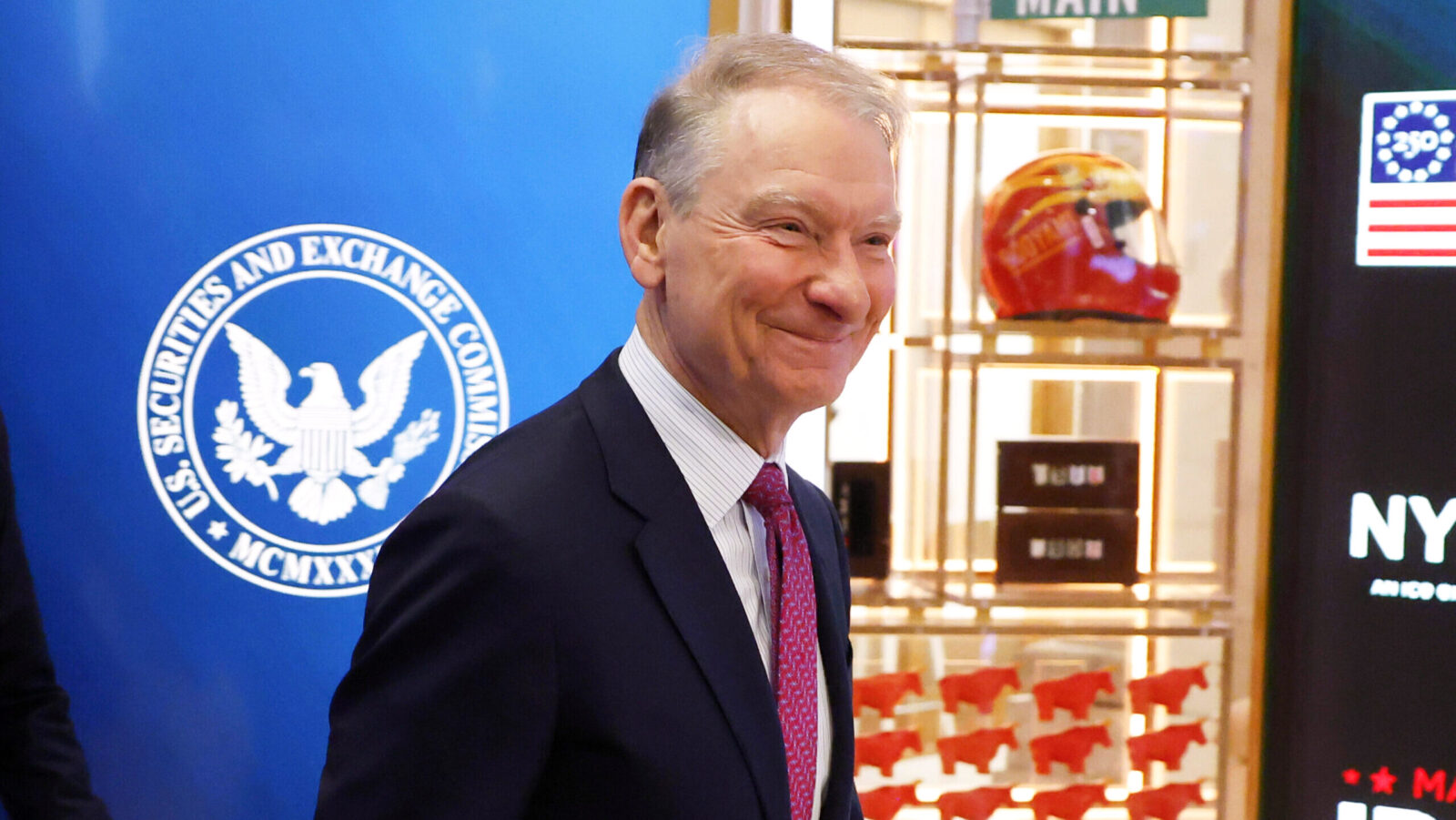
If Wall Street white collars are feeling a tad less tight lately, it must be the absence of regulatory heat.
The Securities and Exchange Commission, the financial industry’s top regulator, took the fewest actions against public companies in at least a decade and a half in the most recent fiscal year, according to new data.
Lights, Camera, Less Enforcement Action!
SEC Chair Paul Atkins was nominated by President Donald Trump last year on the expectation that he would take a light-touch approach to enforcement and regulation. Since being confirmed by the Senate in April 2025, he has moved to do away with quarterly reporting requirements, expand 24/7 trading and make it easier for crypto firms to raise money through token sales.
His latest move came Friday, when the SEC announced it wants to relax executive compensation disclosure requirements for publicly traded companies. Under proposed new rules, most companies would have to disclose the pay packages of just two executives, down from five, and wouldn’t have to report workplace perks totaling less than $150,000, compared to the current $10,000 threshold. Atkins said these changes “are central tenets of my agenda and focus on transforming the SEC’s public company disclosure regime to one rooted in materiality.”
In addition to favorable rule changes, the latest annual analysis of SEC enforcement activity by Cornerstone Research and the NYU Pollack Center for Law and Business shows the Wall Street watchdog has been more puppy-like when it comes to enforcement under Atkins:
- The SEC brought just 16 actions against public companies and subsidiaries in the fiscal year ended Sept. 30, the fewest since Cornerstone and NYU began tracking data in 2010 and a 71% decline from FY 2025. The $184 million in penalties obtained from these actions also marked the lowest level since at least 2010, more than $600 million less than in the 2025 fiscal year.
- Not one defendant had an admission of guilt for the first time since 2021, compared to an average of 21 from 2022 to 2025. “The decline in both enforcement actions and monetary settlements was broad and significant,” Stephen Choi, the NYU law and business professor who co-authored the report, said. “But based on Chair Atkins’s statement that the SEC will emphasize quality enforcement over quantity, these results are not entirely surprising.”
The SEC published its own enforcement data last week, which includes actions against private companies and individuals. The 348 enforcement actions it filed were about half the SEC average of the last decade, and the $1.1 billion in penalties obtained was the least since 2008.
Under the Microscope: The SEC may have to alter its Atkins diet when Democrats take control of Congress next year. Massachusetts Sen. Elizabeth Warren, who is set to chair the upper chamber’s Banking Committee, said she is concerned about a “precipitous drop in SEC enforcement against Wall Street crooks” and that “the new Democratic majority in Congress will closely scrutinize whether the Atkins SEC is protecting the American people.”