

Good morning and happy Monday.
“Father Time always wins,” Warren Buffett wrote in a letter announcing he stepped down as chairman of Berkshire Hathaway on Friday. The investing world’s north will assume the title of chairman emeritus at the $1 trillion conglomerate that he led for 55 years as CEO before handing the reins to Greg Abel at the start of the year. Buffett’s son Howard will take over as chair.
“Recently, I celebrated my 96th birthday with family and friends, including one of my great-grandchildren, who had just turned 1,” Buffett added, before joking: “He’s moving a bit faster than I am these days.” But you could call that humble self-deprecation. A separate announcement from Berkshire said the nonagenarian will remain on the company’s board of directors, and Abel mentioned earlier this year that Buffett was still coming into the office almost every day. The great-grandchild may have toy trains, but we’re not sure he’s ready to pull off an acquisition that rivals BNSF Railway.
What to Expect from the Trump-Xi Summit
CNN reported Friday that the US military “almost started a war” with China because an intelligence report drafted with artificial intelligence included an “entirely false” hallucination claiming a Chinese ship in the Middle East was carrying nuclear weapons components. (Was this some diabolical Skynet attempt to trick us into self-annihilation?)
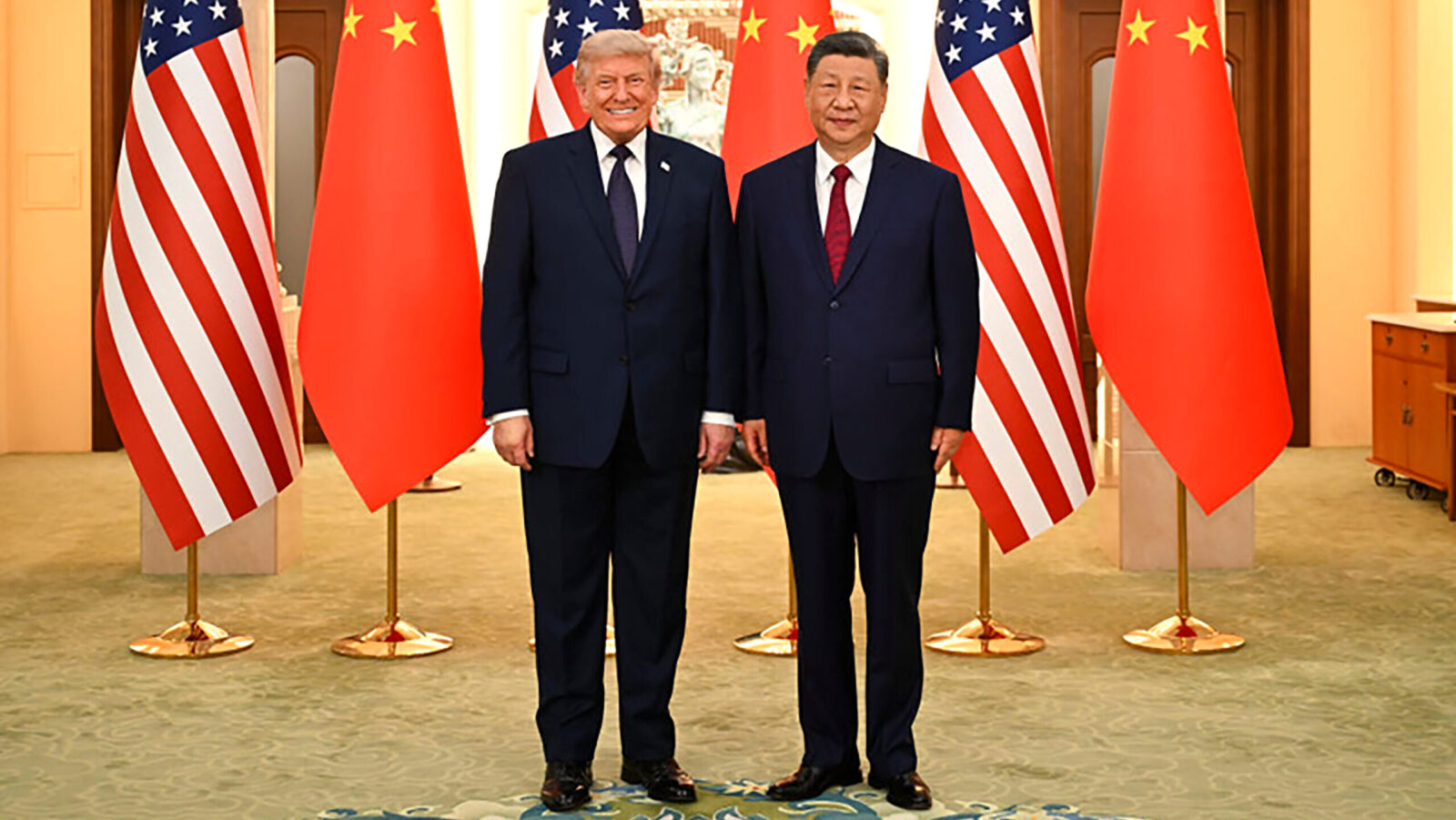
Chinese President Xi Jinping is scheduled to arrive in Washington on Wednesday, where he will take part in a summit with US President Donald Trump before departing Friday. They’ll have lots to talk about.
Guess Who’s Coming to Dinner
When Trump hosts a state dinner for Xi on Wednesday, the elephant in the room won’t be a hallucination. Following a couple of weeks of fever-pitch AI anxiety, mostly on this side of the Pacific, executives of firms crucial to the AI trade, including OpenAI’s Sam Altman, Nvidia’s Jensen Huang, Qualcomm’s Cristiano Amon and Apple’s Tim Cook, are expected to be there. The White House is reportedly considering holding AI-focused sideline meetings during the summit. Altman, perhaps looking to stroke some egos via the press, told Fortune he thinks Trump and Xi could win a Nobel Peace Prize if they strike an AI deal.
Most observers, however, don’t expect more than what has already been telegraphed. Last week, China’s commerce ministry said the countries are in talks to slash reciprocal tariffs on roughly $30 billion worth of goods on both sides. Both countries are also keen to extend a one-year agreement reached last October under which Washington suspended export controls blocking Chinese firms from accessing US tech in exchange for Beijing approving rare earth and critical mineral exports.
China, meanwhile, remains saddled with domestic problems that critics say it’s mollifying at the world’s expense. The country has a massive debt pile, a struggling real estate sector, chronic unemployment issues, weakening retail sales growth, slowing GDP growth, and contracting fixed-asset investment. To offset these, Beijing has encouraged manufacturers with state subsidies to produce excess goods for mass export:
- Excess production policies have resulted in 30% of Chinese industrial firms operating at a loss, up from 20% before the pandemic, according to the country’s National Bureau of Statistics.
- “The political appetite for accepting the deindustrialization and critical dependencies that come with the flood of Chinese imports is finite and shrinking,” former US Trade Representative Michael Froman wrote in the September issue of Foreign Affairs, noting Trump’s tariffs as well as a more aggressive trade posture against Beijing from the EU. He warned that if Beijing refuses to reorient towards a more sustainable economic model and the world is unable or unwilling to absorb its excess production, “the consequence could be a global economic crisis.”
The Undercut: Hyundai’s CEO warned Friday that Chinese cars undercut competitors by 30% to 40% in some markets, and could soon erode market share of domestic carmakers in the US, having already done so in Europe.
Build an AI Pitch the Board Can’t Poke Holes In

Standing in front of the board, over a table littered with coffee and croissants, you’ve just finished presenting a new AI use case with serious numbers behind it. The pilot worked, and even that executive who never approves even mustered a smirk.
Then someone asks: “How do these savings hold up once you account for how many people actually use the tool?” Uh oh. Your prep didn’t stretch that far.
Solid answers to that question decide whether an AI pitch shines or stalls. CFO and finance author Glenn Hopper built a six-step framework for building AI business cases that hold up under exactly this kind of scrutiny, from the first budget meeting to the year-end audit.
Download NetSuite’s guide and build your next AI pitch to survive the boardroom.
Humanoid Robots Are Racing Ahead at Top Speed
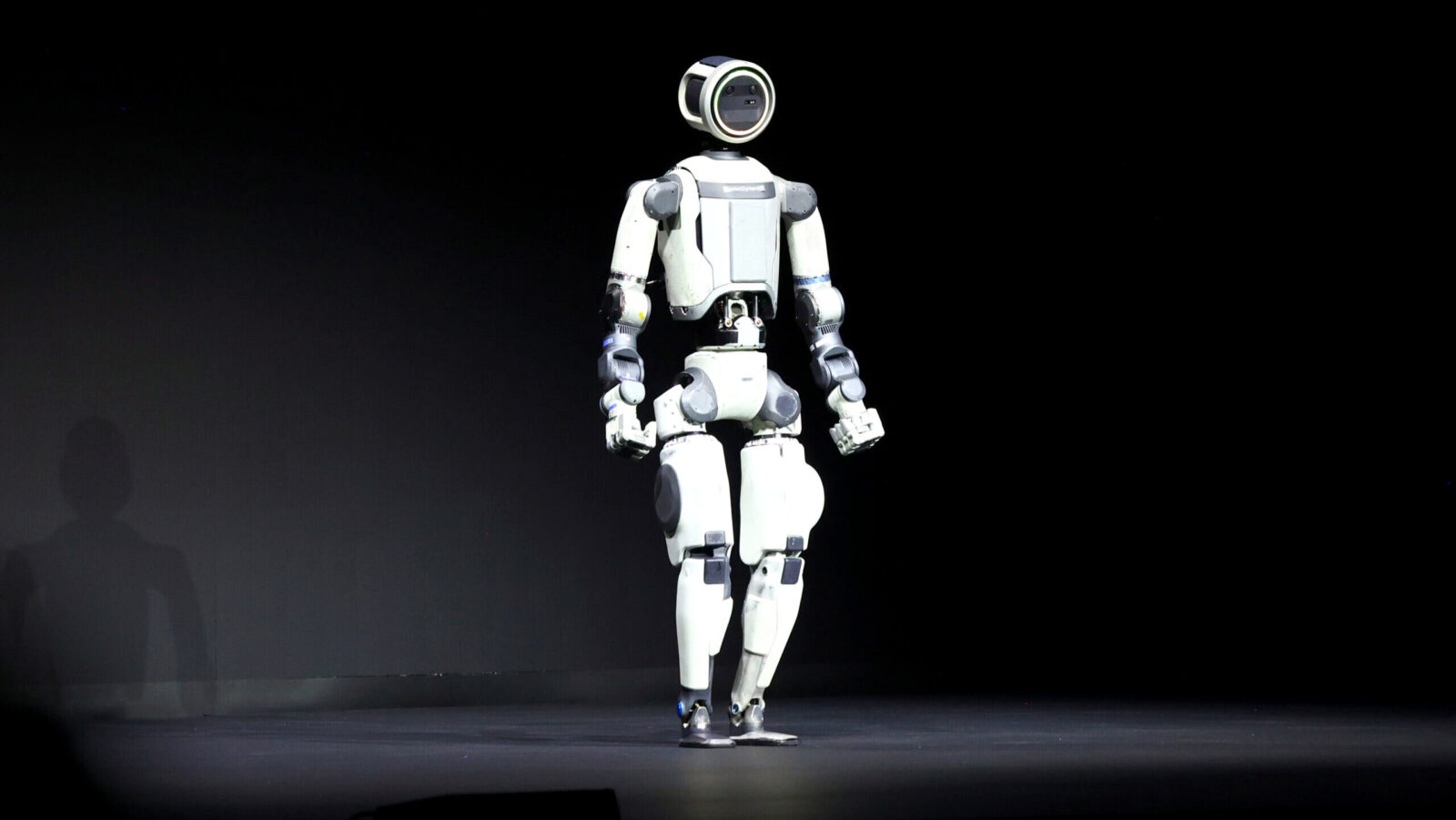
A humanoid robot beat Usain Bolt’s 100-meter sprint record last month at the World Humanoid Games in Beijing (call it “Usain Bot”). But while robots running, jumping and breakdancing have become impressive spectacles, their actual utility hasn’t been as clear.
Citrini Research released a report this week saying onlookers scoff at their own risk because robots are learning complex tasks increasingly quickly. At the same time, Citrini doesn’t think robotics is headed for a single “ChatGPT moment.” Instead, the tipping point will come from multiple sources not a single breakthrough — a theory that reflects the wide variety of tasks robots are being trained to do.
The Gears Are Turning
Humanoid robots have basic movements down: They can get around and, as recently shown at China’s games, dominate sports. But for robots, beating Usain Bolt in a race is in many ways easier than folding laundry or working a factory line. They’re starting to show progress with those tasks, however, which require complex hand movements and a brain that comprehends what they’re doing (instead of blindly sprinting forward until they crash into a wall, like robots did at the Humanoid Games). Recent advancements have led analysts including Citrini to raise their expectations:
- Generalist last month showed off a bot (basically two arms with pincers) trained on its GEN-1.5 AI model that could learn simple tasks like stacking cups or folding paper by watching short video demos. Not long after, Skild posted a video of its similar-looking robot learning via demo to flip pancakes.
- Figure’s progress update in May had more commercial utility: Its humanoid team sorted through 250,000 packages. The co-founder of Spirit AI, a Chinese startup whose wheeled robots have started rolling around battery-maker CATL’s facilities, expects robots could be put to work in commercial settings within a year or two.
Optimus Price: Once humanoid robots can handle the tasks that make them useful, they face another barrier to going mainstream. They’re expensive. JPMorgan recently estimated that robots ready to speed up the supply chain will cost about $120,000 each. Elon Musk set a distant price target of between $20,000 and $30,000 for Tesla’s Optimus bots, but Chinese startups, most notably XPeng, could beat Musk to the punch.