

Good morning and happy Monday.
Steve Ballmer’s got nothing on Sheikh Mansour. Earlier this month, the former Microsoft CEO and $174 billion man was suspended from the National Basketball Association for one year after an independent probe found his Los Angeles Clippers surreptitiously funneled millions of dollars to a star player. Well, Mansour and his Manchester City say, “Hold my overpriced arena beer.”
On Friday, England’s Premier League found the club acquired by the billionaire Emirati royal in 2008 guilty of all but one of 115 financial misconduct claims. Allegations include hiding losses by disguising money injected into the club by ownership as sponsorships and making off-book payments to staff through Abu Dhabi-based entities. Sanctions are pending, but City, which won nine major trophies during the period of suspected misconduct (from 2009 to 2018), could still appeal. Meanwhile, the Clippers could spend the equivalent of the US federal budget and would still lose in the Conference Semifinals.
High-Volume Semi Production, Souped-Up Roadster Offer Jolt for Tesla Investors
The car is back in the driver’s seat at Tesla. After over six years of delays, the Elon Musk-led automaker is set to reveal its second-generation Roadster on Thursday at SpaceX’s McGregor, Texas, test site.
Tesla shares could use the jolt. They entered this week down 17% in 2026 and vehicle sales are slipping in the world’s two largest car markets. But analysts at Morningstar, who rate the stock undervalued, say vehicles at Tesla could find themselves in the fast lane starting next year.
On the Roadster Again
Last month, Tesla’s vehicle sales fell 12.4% in China. US sales have been even worse, dropping 14.6% in the first half of 2026. Still, the company has not lost its core loyalists, with superfans and car enthusiasts who haven’t even seen the final version of the new Roadster yet depositing $50,000 just to get in the queue to buy one. Patent filings show the new Roadster’s aerodynamic design could include a Porsche 911-like wing and rumored features include sub-two-second zero-to-60 mph acceleration, over 250 mph top speed, and a 620-mile battery life. Musk said last year that production would be capped at 10,000 units per year, though there may also be a limited edition version with James Bond-like cold-gas thrusters co-developed by SpaceX for anyone who wants to get side-eye on the freeway.
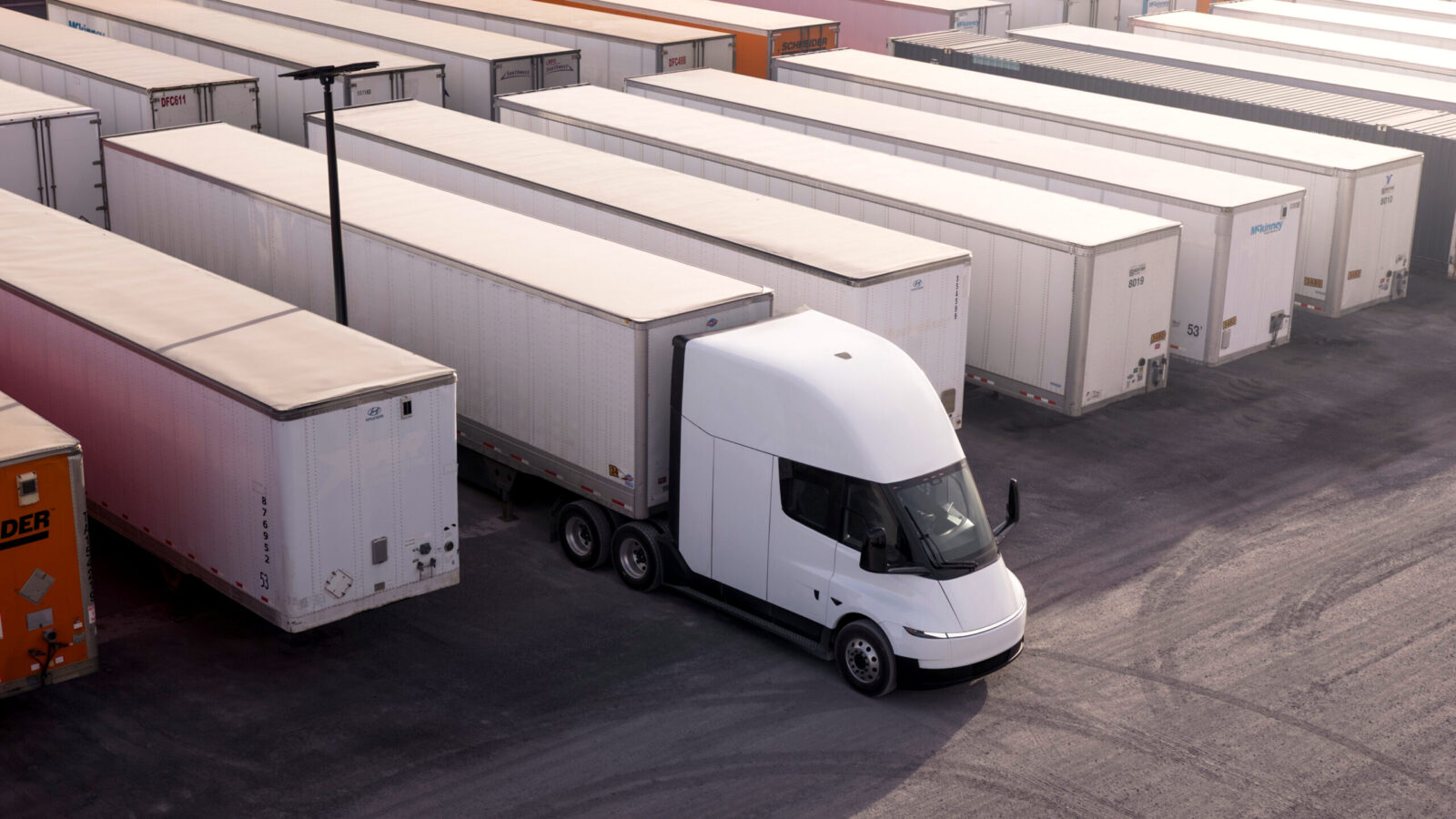
Making good on the long-delayed Roadster isn’t the only way in which Tesla’s auto division is gearing up. Last week, the company launched high-volume production of its electric semi-trailer truck, the Tesla Semi. A dedicated factory in Nevada will produce up to 50,000 units per year, putting the Semi on the road after it also suffered years of delays, with production originally slated for 2019. But the days when new vehicle rollouts were Tesla’s most promising venture may already be a thing of the past, with Morningstar’s view bolstered by the company’s plans for AI, clean energy and humanoid robots, not a 007 Roadster:
- Morningstar estimates Tesla’s energy revenue will grow 30% annually from 2027 to 2031 compared with 17% for automotive revenue.
- They also project 30% annual growth at the “Services and Other” segment, a onetime money-loser that includes vehicle repairs, used car sales, Tesla’s charging network, insurance and software. It grew revenue 19% last year to $12.5 billion.
Hail Fail: According to Zacks Investment Research, the average Wall Street price target on Tesla, at $406.30, is not quite as bullish as Morningstar, but still implies a 9.2% upside. In fact, the people on Wall Street who might end up the most worried are the cab drivers: Morningstar estimates Tesla’s autonomous Cybercab will ultimately be 25% cheaper than human-driven rides for hire.
That Unused Software Is Still Billing You

Only 31% of software buyers feel completely confident in their purchases, per Capterra’s 2025 Tech Trends Survey. Confidence that thin can get expensive fast, as your new software sits in your stack unused while the invoices clear and your budget drains.
After every product demo, asking the right questions of the vendor can be crucial in helping you decide whether the investment holds up.
Things like:
- How long the rollout takes, from signed contract to your team actually using it.
- How the price changes if you add seats next year.
- What support looks like once onboarding ends.
For more insights to help you buy software your team will actually use, check out Capterra’s free guide, 5 Tips for Buying Software With Confidence.
Copper-tunity Awaits

Copper’s price hit an all-time high last month, as grid investment, AI data centers and defense programs build demand against a thinning supply. Miners delivered stronger gains on that leverage, and now you can access it without cherry-picking individual mines. Get pure-play1 exposure to the red metal’s rally with Sprott’s Copper ETFs.*
What Will Latest Jobs Data Reveal About AI’s Effects on Labor Market?

Bots may be everywhere from freeways to sidewalks and skies, but the one place they’ve been hard to find is in employment data.
Artificial intelligence or superintelligence or whatever you want to call it will be top of mind ahead of Friday’s September jobs report from the Bureau of Labor Statistics. It’s the last monthly employment summary from the BLS before the Federal Reserve decides what’s next for interest rates at the end of October. On Tuesday, we’ll also get figures on job openings, and on Wednesday, ADP will release its monthly look at private-sector employment.
Robot Got Your Job?
AI is upending work as we know it, from taking on menial tasks to creating digital doubles so your boss can skip a meeting. But despite Anthropic’s CEO saying last year that the technology could eliminate half of all entry-level white-collar roles, recent reports signal that robots may not actually be stealing our jobs (at least, not yet):
- In July, researchers at Stanford’s Institute for Economic Policy Research pointed out that while unemployment is rising for workers with jobs most exposed to AI-driven disruption, it’s not doing so any faster than for the least exposed occupations.
- Some studies suggest that AI could actually boost employment for certain jobs. A report from Ramp and Revelio Labs found that companies making the largest investments in AI grow employment by roughly 10% following adoption. Another report published by the National Bureau of Economic Research found that when AI has an impact on just a few tasks for a role, employment growth can actually increase for that role since workers can focus on other things, like idea generation and critical thinking.
Positive Forecast: Friday’s report is expected to show the addition of 100,000 jobs and an unemployment rate of 4.2%, according to a Reuters poll of economists. “Expectations are the labor market has improved in recent months,” James Ragan, co-chief investment officer at D.A. Davidson, told the outlet.