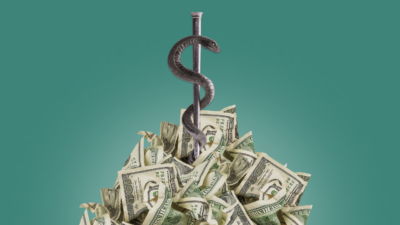
401(k) Withdrawals Are Rising. Here’s Why
Hardship withdrawals are considered last-resort financial decisions, so why are so many people making them?

Sign up for smart news and actionable insights on the strategies, products, and policy shifts shaping retirement outcomes.

Saving for retirement is hard, and many Americans are struggling.
More employees are turning to their 401(k)s to pay necessary expenses despite the tax losses, according to a recent Vanguard report. The percentage of 401(k) participants who took money out has ticked up by about 1% since 2021, with the figure hitting 6% last year. So-called “hardship withdrawals” can be financially disastrous, since they sap important retirement savings, not to mention undermining the tax benefits of employer-sponsored retirement plans. The trend is something advisors should understand to better prepare both current clients and the general public, said Fred Barstein, CEO of The Retirement Advisor University.
“I don’t think there’s any real magic, like something happened,” he said. “The market went up, but that doesn’t help you to buy food, or pay your rent or your mortgage.”
Hard Times
One reason Americans are taking money out of retirement funds is that federal rules preventing them from doing so have relaxed, such as one law, eliminated in 2018, that used to require people to take out a 401(k) loan first. But the primary factor is the rising cost of living, Barstein said, with the price of necessities like housing and healthcare more expensive than ever. “I think it’s really just a function of rising costs, the cost of living: gas prices, food prices, pretty much everything,” he said.
According to the Vanguard report:
- The most common hardship withdrawal scenario is a worker making less than $50,000 who is unable to meet their monthly housing bills.
- Housing accounted for 40% of withdrawals for those making less than $50,000.
- Those in the highest income bracket, who made $150,000 or more, accounted for just 1% of the hardship withdrawals and were most likely to use that money for tuition payments.
Education can help in the near term, Barstein added. “The advisor should be more available, and they should do more education,” he said. “What I would be doing is on-demand webinars. Do a 12-minute video on, ‘Hey, if you’re having trouble and you’re thinking of doing a hardship, I understand. Here are some other options.’”
PLESA and Thank You. One underappreciated financial instrument is the PLESA, or pension-linked emergency savings account, Barstein said. PLESAs are short-term savings accounts that let workers who aren’t highly compensated make Roth, or after-tax, contributions. “Those should be funded first before people put money in their 401(k),” he said. “It’s sort of a sidecar, and when people are told to do this, and it’s part of the payroll, and it comes out of the payroll, they’re more likely to do it than if they’re doing it on their own.”
Recent News

-

Photo illustration by Connor Lin / The Daily Upside, Photos by Paul Campbell and Vovashevchuk via iStock