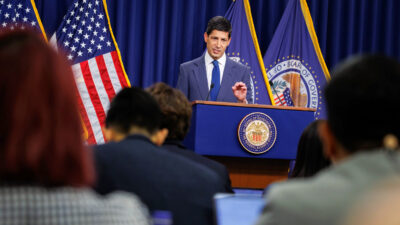
During his confirmation hearing last week, Warsh hinted at an out-with-the-old-in-with-the-new approach to monetary policy.
Our daily email brings you smart and engaging news and analysis on the biggest stories in business and finance. For free.

A record year for Wall Street bonuses is driving real estate investment, from luxury coastal property to workforce housing in the heartland.
Just 28% of workers say it’s a good time to find a quality job, down from 70% in mid-2022, according to data from Gallup.
The Bureau of Labor Statistics said Wednesday that the producer price index rose 0.7% month-over-month in February, higher than expected.
Markets are pricing in practically no chance of a rate cut when officials meet later this month, according to the CME Fedwatch.
Job gains are heavily concentrated in healthcare and social assistance, which added 125,000 jobs last month for the lion’s share of new gigs.
Hiring in January was not just slower than expected, according to ADP. It was way, way, way slower than expected.
Planners and investors are sticking to portfolio targets and rebalancing after years of strong stock market gains, according to Vanguard research.
Credit card issuers are enticing big spenders with luxurious perks and prestige brands, funded in part by fees that are higher than ever.
2026 presents a catch-22 for the Fed. It normally cuts rates to buoy hiring, which tightened last year, but that could drive up inflation.
No reason to chase yield as advisors stick to quality fixed income.
Loans in Wells Fargo’s corporate and investment banking business climbed 14% in the three months through December.
Despite some minor risks, the American economy and markets are far from being in decline, according to the investment bank.
Loan loss provisions — the allowance banks set aside to cover bad debt — is a key data point to watch regarding consumer health.
In recent days the spread between the 10-year and two-year yields has been hovering near the highest levels since April.
Come January 28, the Federal Reserve has to decide what the state of the labor market means for monetary policy.