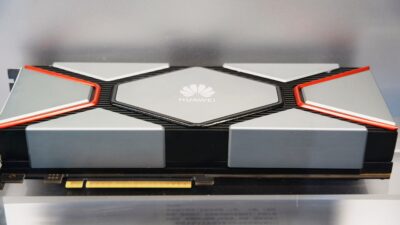
Cerebras says its chips can perform inference work faster than Nvidia’s GPUs, which are less specialized for inference work.
Our daily email brings you smart and engaging news and analysis on the biggest stories in business and finance. For free.
Corning, the company that invented Pyrex, is commanding Wall Street’s attention as a supplier of fiber optics for AI.
Apple’s supply chain and manufacturing dependencies have turned problematic in the age of tariffs and friend-shoring.
The firm is investing in the plumbing that makes AI innovations possible, such as data centers and energy and digital infrastructure.
The Roundhill Magnificent Seven ETF, which tracks Alphabet, Amazon, Apple, Meta, Microsoft, Nvidia and Tesla, has slid roughly 11% this year.
The 35-year-old company previously made money mostly by licensing its designs to other players in the chip ecosystem.
Samsung’s foundry revenue recently fell 3.9% to $12.6 billion, and its market share dipped 2.2 percentage points to 7.2%.
The agentic AI platform has gone viral since its initial launch as users scooped up Mac Minis en masse to run the open-source tech 24/7.
Like phones and laptops, artificial intelligence data centers have to be kept below a certain temperature to keep running.
Can Nvidia respond to the rapid rise of agentic AI, which has its own hardware needs, relying heavily on the general computing power of CPUs.
Change is the universal constant and even the Magnificent 7, being reshaped by AI upheaval, isn’t immune. Here’s what you should know.
The startup struck a “multiyear strategic partnership” with Nvidia, which also made a “significant investment,” the two announced Tuesday.
Backing from Nvidia and Amazon made it the latest circular deal, in which money-losing AI startups are being financed by their own customers.
Nvidia’s performance underlines the key questions facing seemingly the entire stock market right now, both inside and outside the AI trade.
Transactions like these, where the interests of suppliers, customers and investors all seem to become one big loop, raise plenty of eyebrows.
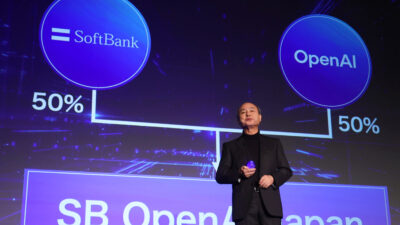
Boosted by OpenAI returns, SoftBank swung to a $1.6 billion profit last quarter after losing $2.4 billion in the same quarter last year.