Here Are the Top ETFs Holding Oracle after Its Nosedive
There are 11 ETFs with over 5% of assets allocated to the stock. But most assets are held in gigantic funds with small exposures.
Sign up for exclusive news and analysis of the rapidly evolving ETF landscape.

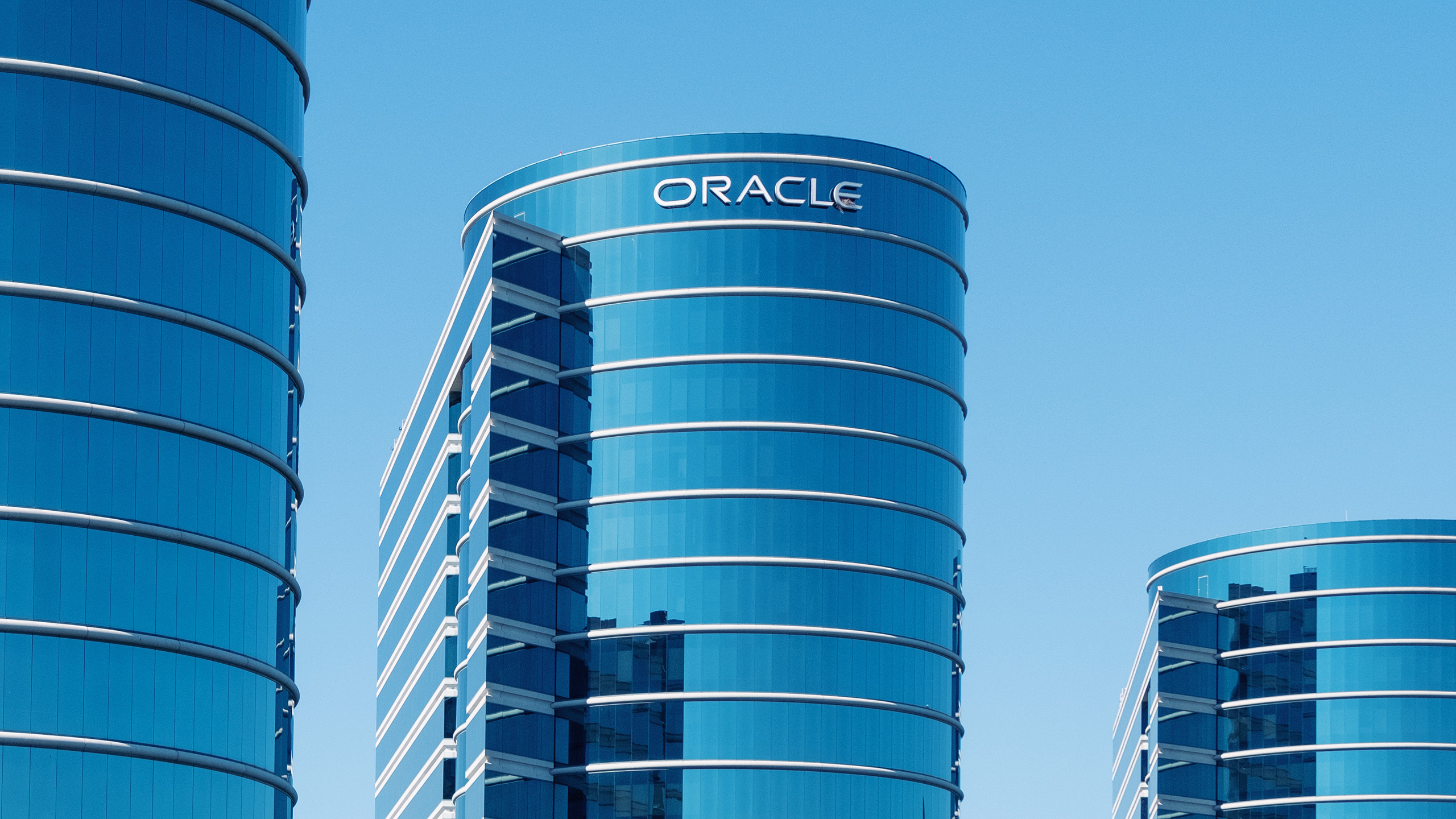
Is Oracle’s recent stock plunge a prophecy about the dreaded AI bubble? A couple of observers say no, even if its stock is hardly a buying opportunity right now.
After it hit a record high of over $328 per share in September, the stock has been declining, falling to about $178 by the middle of last week before rebounding to $192 by Friday. That happened as Blue Owl Capital, the biggest partner in its data centers buildout, reportedly opted against backing a new center in Michigan, prompting an exodus by investors who have grown anxious about the monumental capital expenditures around artificial intelligence. Amid an ongoing AI fever, many ETFs hold Oracle, especially because of the stock’s high placement in the S&P 500 and other large-cap indexes.
“We had some exposure. We no longer have exposure, but we’re unique in that our processes are just systematic,” said Ryan Kirlin, president of Alpha Architect, citing the firm’s US Quantitative Momentum ETF (QMOM), which sold its Oracle holdings after the stock’s peak and the decline in momentum. “There’s no human element.”
Heading for the Exit
There are 11 US ETFs with 5% or more of their assets in Oracle stock, and well over 100 with 1% or more in it, according to Morningstar Direct. QMOM was the second-biggest seller of Oracle recently, having offloaded over $5 million of stock, representing about 1.5% of the ETF’s assets. The biggest exit, by volume of stock, came from the $18 billion Capital Group Growth ETF (CGGR), which sold nearly $59 million in Oracle, though only representing a small proportion of the fund’s assets, at less than a third of a percent.
The stock’s down, but that doesn’t automatically make it a buying opportunity. “Our fair-value estimate is at $277 (per share) now. We think the stock is undervalued, but we wouldn’t necessarily say it’s an attractive buying opportunity now, because there can be a very wide range of outcomes with Oracle’s data-center buildout,” said Luke Yang, equity analyst at Morningstar. “Only for investors who have very high risk tolerance or have very strong conviction on the future development of AI would I recommend they look at Oracle stock.”
Here’s a look at who’s holding, per the Morningstar Direct data:
- WisdomTree’s US Quality Growth ETF (QGRW) was the biggest buyer recently, at about $48 million, or 2.3% of its portfolio.
- The Pacer Data and Digital Revolution ETF (TRFK) has the largest allocation as a percentage of its assets, at nearly 8.9%, followed by the Direxion Daily Technology Top 5 Bull 2X ETF (TTXU), at 8.7%.
- The big index funds, such as iShares Core S&P 500 ETF (IVV) and SPDR S&P 500 ETF (SPY), own the most stock, at $3.8 billion and $3.6 billion, respectively.
Not Exactly Value Territory: The Oracle stock price changes are more of a story about that company rather than AI widely, Kirlin and Yang said. There are plenty of cases of tech stocks trading at extremely high price-to-sales ratios, with Palantir being the prime example, Kirlin said. For momentum strategies, “it’s good to chase into bubbles,” he said. “You can make a lot of money, but you’ve got to get out before they go the other way.”
Recent News




-
What’s at Stake for BlackRock’s Ethereum ETFs?

Photo via Richard B. Levine/Newscom



-
ETF Use by RIAs Keeps Climbing

Photo by Jamie Street via Unsplash