What’s Next for Oil Tankers Stranded in the Persian Gulf?
The Strait of Hormuz is supposed to be opening for business under a new ceasefire agreement. So far, that doesn’t seem to be happening.
Sign up for smart news, insights, and analysis on the biggest financial stories of the day.

Going into the weekend, Iran had agreed to end its de facto blockade of the Strait of Hormuz as part of a tentative two-week ceasefire with the United States.
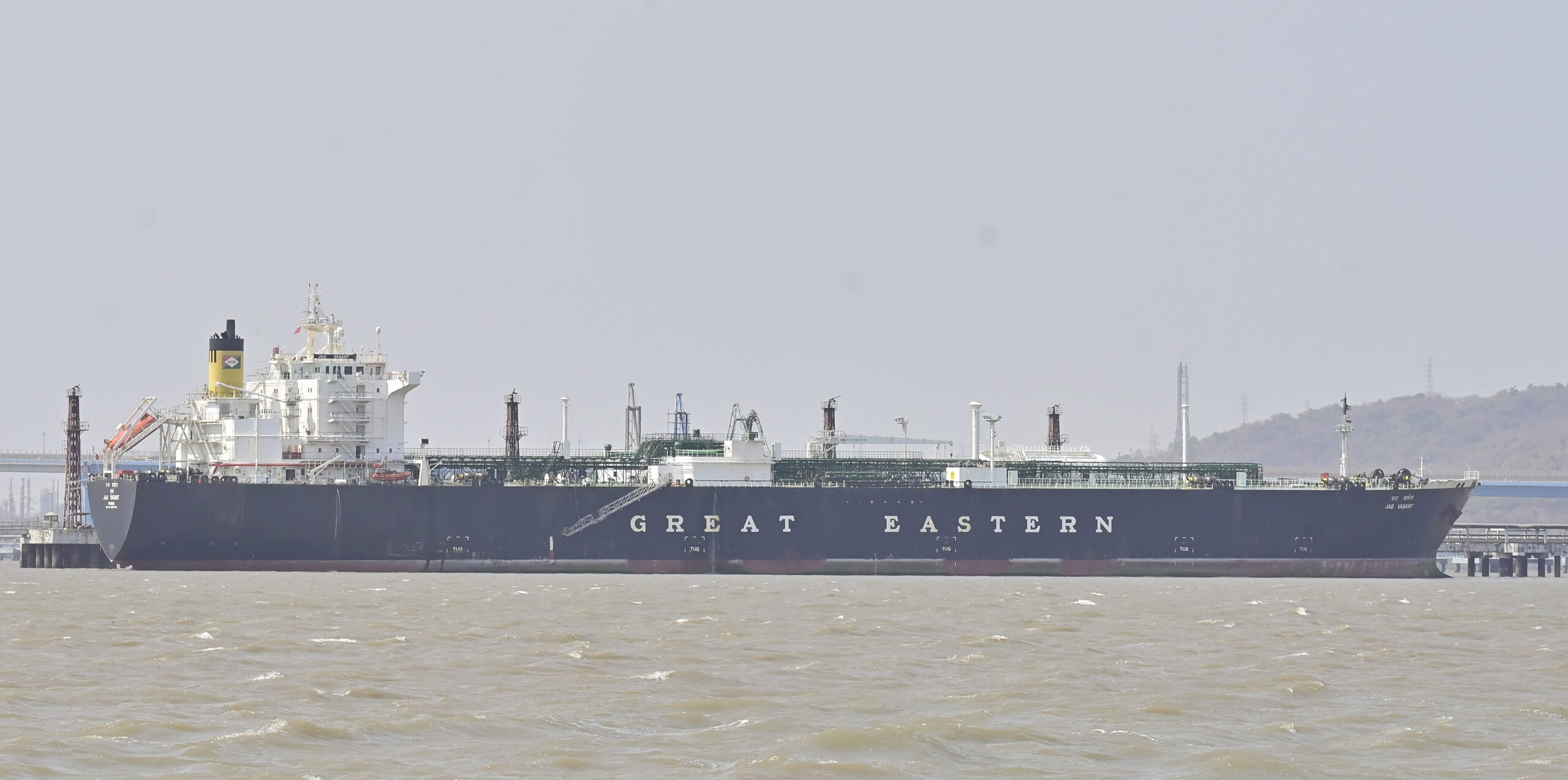
By Sunday, when the Strait remained essentially closed after talks led by Vice President J.D. Vance failed to yield an agreement, the US was threatening to impose its own blockade. The rapid escalation leaves the immediate future unclear for not only oil markets but also roughly 800 ships and 20,000 sailors stranded in the Persian Gulf.
The Strait Talk Express
The UN Conference on Trade and Development said traffic through the Strait fell 95% after the US-Iran conflict began in late February. The tiny number of ships that have tried to cross the Strait in the meantime took on an immense risk. Since the conflict began, the United Kingdom Maritime Trade Operations (UKMTO) Centre has tallied 30 security-related incidents involving vessels in the region, including 18 attacks. The war risk became too much for many insurers, a critical pillar of the shipping economy: JPMorgan estimated that $352 billion in private-market insurance was canceled faster than a dinner reservation at a Manhattan restaurant that just received a dismal health department rating. Insurers who did offer coverage hiked premiums by multiples. Governments have since begun to backstop war insurance, like India moving last week to establish $1.5 billion in sovereign guarantees and the US partnering with major US firms on a $40 billion reinsurance facility. But, without Tehran holding up its end of the bargain, it could all be for naught:
- Lloyd’s List reported last week that, even after the ceasefire agreement was announced, tankers in the Gulf region were warned via radio broadcast that they would be “destroyed” by military strikes if they tried to navigate the Strait without clearance from Iran. Only 17 vessels transited the waterway in the 24 hours through Sunday evening, according to aggregated data, a fraction of the roughly 140 in normal times.
- Iran began charging tankers up to $2 million each to cross the Strait last week, something tanker groups and UN officials said is illegal under the UN Convention on the Law of the Sea, which forbids tolling peaceful ships for “innocent passage” on an international strait. In announcing the “immediate” US blockade on the Strait on Sunday, President Donald Trump said it was necessary to prevent Tehran from profiting “off this illegal act of extortion.”
Optimistic Notes: Iranian President Masoud Pezeshkian tweeted that an agreement could still be reached, and US officials including Vance suggested the weekend talks were productive, though the two sides remain at an impasse over Iran’s nuclear ambitions. On the other hand, hope alone won’t take the pressure off energy markets: S&P Global said the combined production of OPEC+ fell 8.1 million barrels per day last month to 34.8 million amid the Strait blockade.
Recent News
-
Daring Iran War Rescue Highlights Small But Crucial Military Tech

Photo via Polaris/Newscom


-

Photo via Chen Mengtong/China News Service/VCG/Newscom