

Good morning.
Let there be light.
One of the main concerns advisors and clients have regarding private markets is their opacity. Public equities and bonds are priced daily, but private assets’ values are typically updated only a few times a year. Well, Apollo says, not anymore.
The alternative asset manager with $1 trillion in AUM plans to price more than $830 billion of its credit assets daily by the end of September. “That essentially means the totality of our credit business will be 100% daily pricing,” CEO Marc Rowan said on an earnings call this week. The move could prompt other alternatives firms to do the same.
This reminds us of that Johnny Nash song: I can see clearly now the rain is gone.
Yesterday’s Retirement Advice Doesn’t Age Well
Tax rules shift. Policy changes. New products emerge. SECURE 2.0 rewrote the RMD conversation entirely. The retirement landscape moves faster than any one advisor can track alone — and the pace isn’t slowing down.
The most trusted advisors know this. They don’t wait for clients to ask the hard questions before researching. They arrive with the answers already in hand.
That’s why we launched Retirement Upside. Every week: the strategies, products, and policy shifts shaping retirement outcomes. Actionable insights sent to your inbox that you can bring straight to your clients.
Show up to every retirement conversation like you wrote the rulebook.
This Week’s Highlights
Inside the Anthropic, OpenAI Deals That Are Reshaping Wall Street
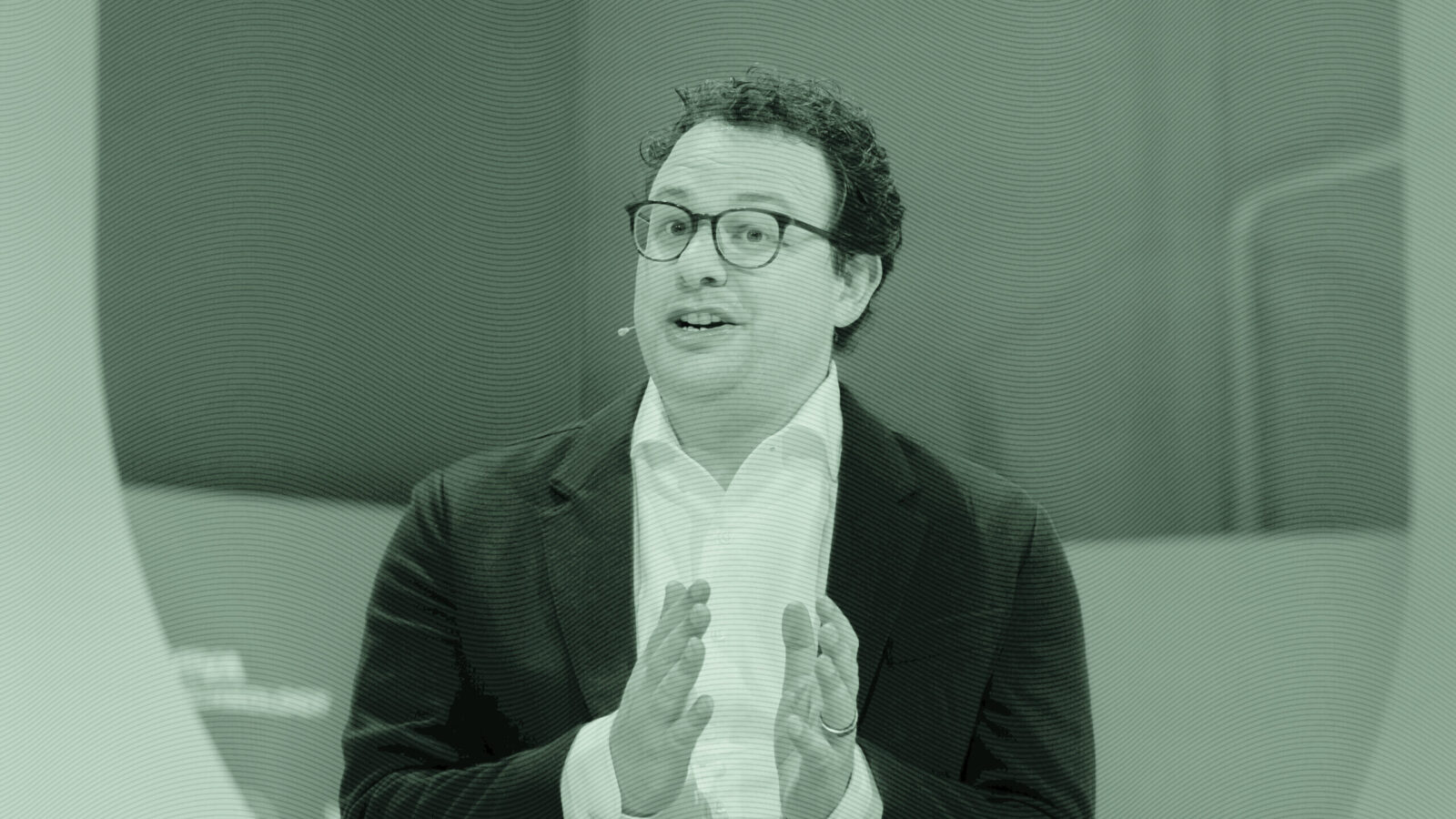
The lines between Silicon Valley and Wall Street are blurring fast.
Both Anthropic and OpenAI, the makers of Claude and ChatGPT, made massive inroads with Wall Street and traditional financial systems this week.
Anthropic announced a $1.5 billion joint venture Monday with Goldman Sachs, Blackstone and Hellman & Friedman to help enterprises adopt AI more effectively. The deal landed Anthropic direct access to hundreds of portfolio companies across PE firms, said Will Trout, Datos Insights’ director of securities and investments. “That’s a distribution moat most [software-as-a-service] vendors would kill for.”
That same day, OpenAI announced raising more than $4 billion from firms including Brookfield Asset Management, Advent and Bain Capital to launch a similar enterprise-focused effort. The premise for both deals is that you can’t wait for enterprises to adopt AI, Trout added. “Goldman Sachs as an anchor investor [is] signaling Wall Street credibility, not just capital.”
Partnership Play
During an Anthropic event Tuesday, CEO Dario Amodei argued that Wall Street’s AI buildout is essential and that SaaS companies that don’t embrace generative tech might not survive. He was accompanied on stage by none other than Jamie Dimon, a huge tell, Trout said. “When the CEO of JPMorgan is publicly excited about a tool, it signals confidence, not just in Claude’s capability, but in the business relationship,” he said. “That’s what these announcements telegraph.”
Other tech companies like Microsoft and Google are also making noise, but they’re not anchoring ventures with PE firms at the same scale. “You need to embed engineers and deployment muscles inside their operations,” Trout said.
Anthropic also announced another partnership this week, alongside new tech rollouts, highlighting the firm’s growing influence on Wall Street:
- On Monday, it revealed a partnership with Fidelity National Information Services that will include building AI tools to investigate money laundering and fraud.
- Anthropic also launched 10 AI agents Tuesday designed to automate routine work across financial services. The tools are aimed at banks, asset managers, and insurers, but could end up benefitting advisors as well.
“Client meeting prep, financial planning, tax-aware rebalancing, tax-loss harvesting, investment proposals, client reports; that is the day-to-day reality of running a wealth practice,” said Jack Morgan, vice president at Rise Growth Partners.
Explain It Like I’m 5. Wealth.com co-founder Danny Lohrfink said AI is “moving from novelty to infrastructure,” noting the potential for more integrated planning. Those insights, however, will need to be easy to explain, govern and use in client conversations. “Faster isn’t enough,” he told Advisor Upside.
Why Prediction-Market ETFs Got Stuck in an SEC ‘Rain Delay’

Thankfully, we didn’t take out that event contract on the launch of the first prediction-market ETFs this week.
Prediction markets have surged in popularity, thanks to event contract trading platforms such as Kalshi and Polymarket that allow “yes” or “no” bets on everything from when traffic at the Strait of Hormuz will return to normal to who will win American Idol. While there’s also been a surge of ETFs that offer exposure to potentially complex corners of the financial markets in the easy-to-trade wrapper, prediction-market ETFs would come with their own unique set of risks, including the fact that they could essentially go to zero should an event not happen.
As we previously reported, exchange-traded funds from GraniteShares, Roundhill and Bitwise filed in February with the Securities and Exchange Commission were expected to come to fruition this week. (The SEC’s rule stipulates that ETFs automatically become effective 75 days after filing unless the agency intervenes.) No dice. Wall Street’s watchdog is reportedly delaying the launches and seeking more information about the funds’ mechanics and disclosures.
“This sounds like a rain delay,” said Bloomberg analyst Eric Balchunas. “It doesn’t sound like some permanent problem.”
Green Light: Yes or No?
The SEC has moved away from the regulation-by-enforcement approach implemented with Gary Gensler at the helm. Under current Chair Paul Atkins and the Trump administration, the agency has adopted a more relaxed handling of product approvals. Last year, for instance, it began allowing in-kind creations and redemptions for spot crypto ETFs, meaning the funds were no longer limited to just cash transactions. When it comes to the prediction-market ETFs, Balchunas said it’s likely the SEC is making sure T’s are crossed and I’s are dotted regarding disclosures, since this is a very disclosure-oriented SEC:
- He said the agency is probably asking the issuers to further explain the disclosures and how mechanics around exposure and a yes-no market will work.
- When ETFs are simply following in the footsteps of others in a category, you’d be less likely to see a delay like this. But “these are groundbreaking products,” Balchunas said.
The SEC and Bitwise declined to comment, while Roundhill and GraniteShares did not respond to requests for comment.
Déjà Vu: The delays may have some issuers feeling like it’s pre-2024, when firms were lining up to launch spot bitcoin ETFs. But while the journey to an approved spot crypto ETF took roughly a decade, Balchunas expects a much shorter process this time around. “The SEC just really wants to make sure they’re comfortable because once you’re in an ETF wrapper, you’re ready for middle America,” he said.
The Annuity Sales Tactic That’s Backfiring on Advisors

You know that leading advisors regularly read Retirement Upside, right?
While that’s true, it’s also an example of a persuasion technique that behavioral psychologists call “social proof” or “herd mentality” in action. Social proof is a documented psychological phenomenon in which people mirror the actions of others to behave more appropriately in uncertain situations. Driven by the assumption that others possess more knowledge, individuals tend to conform to group dynamics to fit in or make faster, validated decisions. While research suggests social proof is useful in some financial planning contexts, such as when suggesting clients switch from mutual funds to exchange-traded funds for their greater tax efficiency, it’s not universally helpful. In fact, a new study conducted by the AI company Jump, in collaboration with retirement researcher Eric Ludwig, suggests social proof is actually counterproductive when promoting annuities, so much so that advisors should probably avoid it.
“This was a surprising and very interesting finding,” said Liam Hanlon, head of insights at Jump. “If you didn’t actually look at the dataset, you would just assume that social proof would work for annuities. Not so.”
Mind Those Assumptions
Probably the most famous example of the social proof effect was documented in a 2008 study by Robert Cialdini and colleagues, who found that telling hotel guests that “the majority of guests in this room hang up and reuse their towels” meaningfully increased towel reuse compared with standard environmental messages about saving water. That result led researchers to ask whether social proof works in other contexts, and the answer was a clear (but not universal) yes.
Given his focus on retirement income planning, Ludwig wondered whether social proof would work for promoting annuities. Answering the question required constructing a large dataset based on anonymized client-advisor conversations captured by Jump’s notetaking and automation platform. The results were clear:
- Utilization of social proof framing reduced the acceptance rate of annuity purchase recommendations by nearly 18%.
- The only greater negative effect occurred with framing annuities as a solution to long-term inflation, which reduced acceptance by about 19%.
“The inflation framing turning out to be negative was also pretty surprising,” Ludwig said. “We can’t say for sure why these two techniques are counterproductive, but we can point to approaches that seem to work better.”
What Actually Works. The first of those, default bias framing, involves suggesting to people that a certain course of action is the normal or expected course. This strategy increased annuity purchase recommendation acceptance by nearly 27%. The second, consistency framing, involves reminding people of repeated receptive conversations about a given action or decision. That approach increased acceptance by over 20%.
Edited by Emile Hallez. Written by Griffin Kelly, John Manganaro, Lilly Riddle, and Quinn Waller.
Advisor Upside is a publication of The Daily Upside. For any questions or comments, feel free to contact us at advisor@thedailyupside.com.