

Good morning and happy Monday.
New Jerseyans love to boast that they’re only a quick train ride away from the big city. They just don’t mention the price tag, which will be particularly high for World Cup fans this summer.
On Friday, officials for the transit authority announced that it will charge riders $150 for a roundtrip ticket from New York City’s Penn Station to MetLife Stadium for the eight World Cup games there. Of course, that’s still peanuts compared to the actual games, where tickets have surged into the thousands of dollars thanks to FIFA’s dynamic pricing tool. New Jersey’s transit authority also offered a piece of advice for regular commuters thinking about using the service on game days: Don’t. Think of it this way: Even with surge pricing, Uber will be a relative bargain.
US Automakers Poised to Benefit from Pentagon’s Request for Manufacturing Support
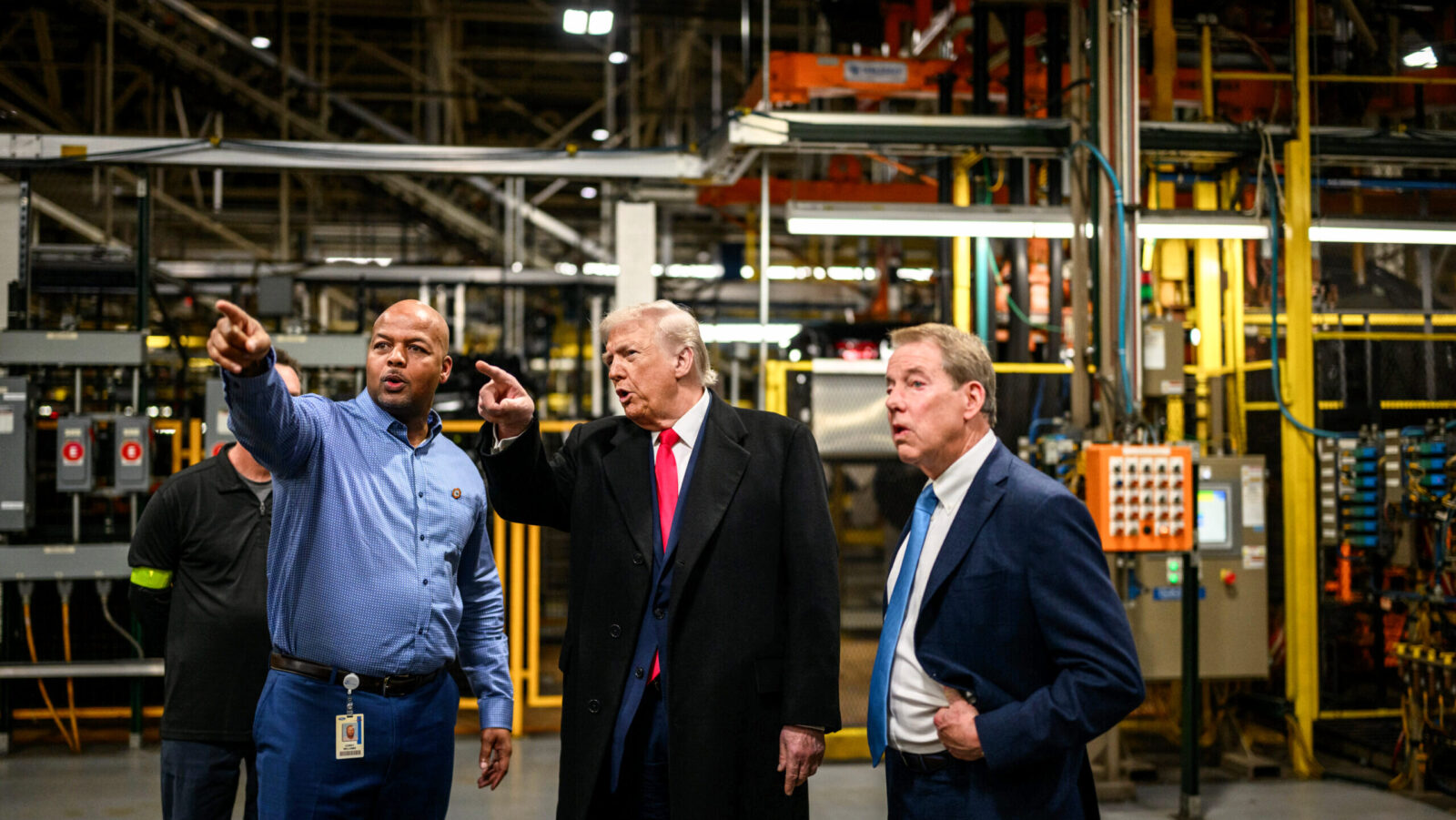
The Pentagon is calling up its industrial reserves.
Senior defense officials in the Trump administration have met with auto and manufacturing execs including General Motors CEO Mary Barra and Ford Motor CEO Jim Farley to discuss the companies producing weapons and military supplies, The Wall Street Journal reported last week, citing people familiar with the discussions. Oshkosh and GE Aerospace were also involved.
As the wars in Ukraine and Iran drag on, the government is seeking to take advantage of the auto industry’s mastery of modular assembly to solve a critical shortfall in drone and missile stockpiles.
In a statement shared with the Journal, a Pentagon official said that the Defense Department “is committed to rapidly expanding the defense industrial base by leveraging all available commercial solutions and technologies to ensure our warfighters maintain a decisive advantage.”
Upside for Autos
The auto industry doesn’t have it easy right now. High interest rates and prices (an average of $49,275 for new cars in March, per Kelley Blue Book data) have kept buyers from the market. Gas prices have also soared in recent months due to the conflict in the Middle East, right when many car companies were pulling back on electric vehicles to double down on gas-powered ones. Getting mobilized by the federal government could help.
“It’s probably more positive than negative for the automakers, unless the government refused to pay or not pay a market price,” David Whiston, senior equity analyst at Morningstar covering US autos, told The Daily Upside. “The government is not asking for a complete shutdown of light vehicle production like what the auto industry did for World War II, so if there’s some excess capacity somewhere, maybe it can be used.”
General Motors, which reentered military work with GM Defense in 2017, is well-positioned to benefit:
- The company already has contracts to build military vehicles at a North Carolina plant, which could potentially get capital to expand, Whiston said.
- GM’s Orion plant in Michigan “is also already getting a huge investment for pickup and SUV production, so maybe they could add defense capacity there, too, if they want to spend the money,” he added.
Sales Drop: Earlier this month, General Motors reported that sales had dropped roughly 10% during the first quarter from a year earlier, and said it expects a similar decline for the industry as a whole. The company, along with its fellow “Big Three” US automakers, Ford and Stellantis, will report first-quarter earnings at the end of the month.
White Castle Is Now Expanding at .001% the Cost
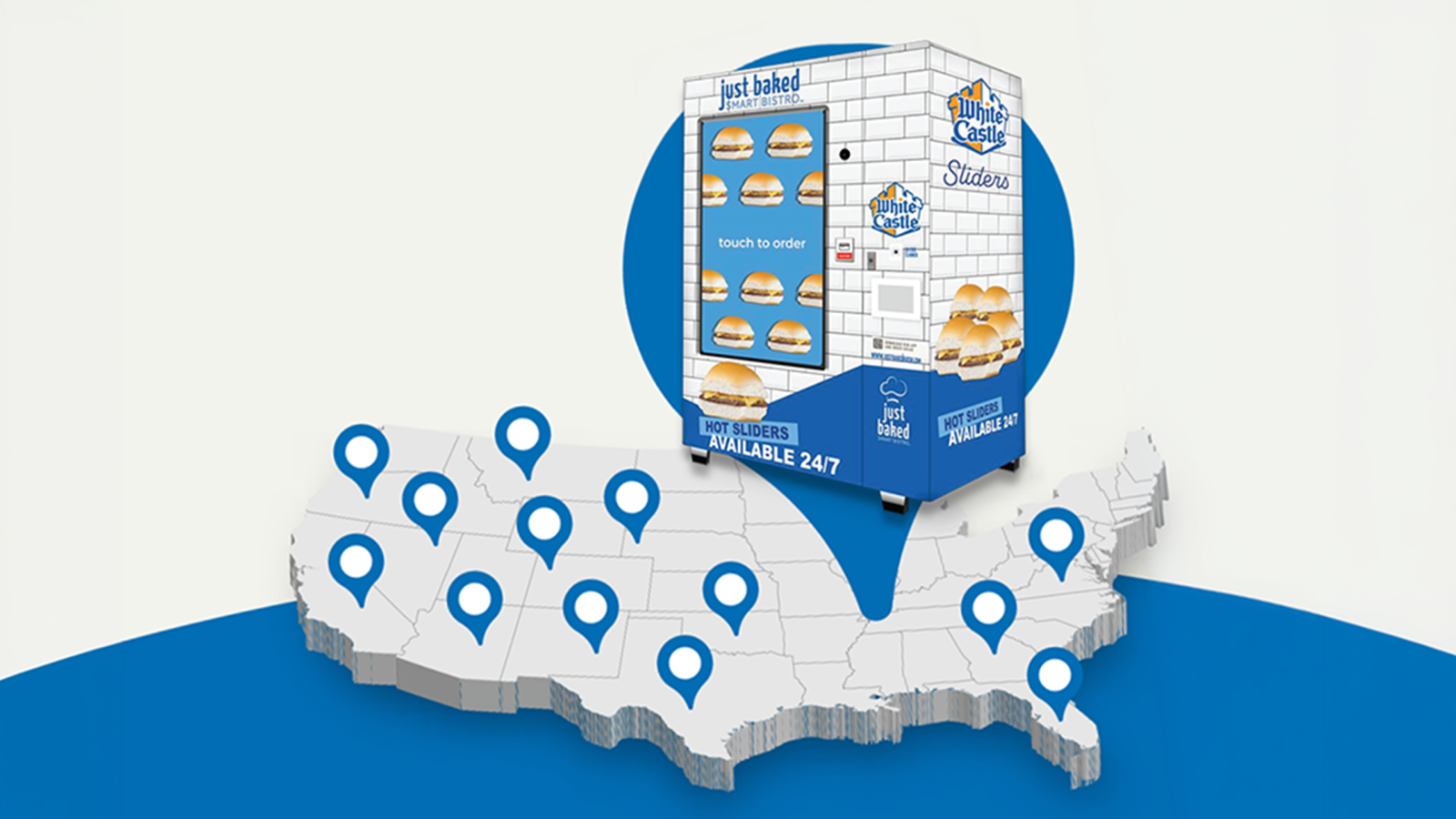
No, not with new brick-and-mortar stores. With robotic kiosks from ART.
ART, aka Automated Retail Technologies, makes serving food 24/7 possible for brands like White Castle at .001% the cost of a new brick-and-mortar.
Their robotic kiosks dish out customers’ favorite dishes, like White Castle sliders, on demand in seconds.
That makes entering new markets a three-step process. Plug it in. Stock it. Turn it on. And it isn’t just White Castle benefitting. Big-name food brands like Nestlé and Macaroni Grill partnered too, and foodservice behemoths like Sysco and Aramark also use it.
Amazon’s $11B Globalstar Deal Fuels Project Leo’s Pursuit of Starlink’s Contrails
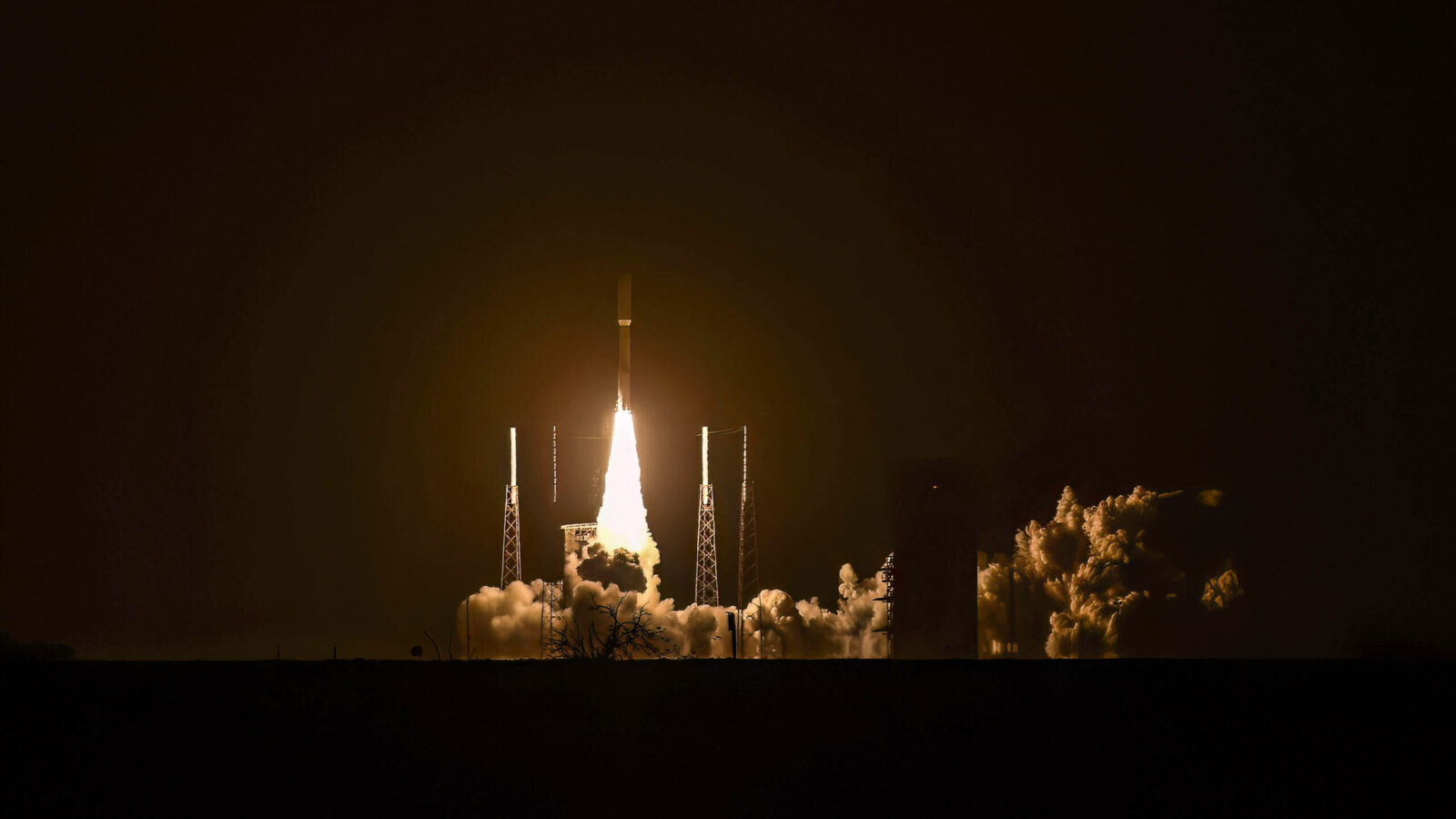
The billionaires are at it again, as Elon Musk’s Starlink and Jeff Bezos-owned Amazon Leo battle for satellite dominance in the stars.
Starlink is light-years ahead of Amazon’s Project Leo (an acronym for low Earth orbit), previously Project Kuiper. But Leo’s preparing to pounce, last week announcing an agreement to buy Globalstar for a whopping $11.6 billion. The transaction’s expected to close next year.
Globalstar has only 24 satellites in orbit, but what it lacks in metal it makes up for with GPS tracking tech and global licenses that allow its satellites to connect directly to devices. Those licenses could help Amazon race toward actually launching its satellite internet service, slated to go live later this year.
The Race to Fill Space
Project Leo is barely a Padawan compared to Jedi Master Starlink, which serves more than 10 million customers with about 10,000 operational satellites. Starlink is valued at $1 trillion, making up the bulk of SpaceX’s reported IPO goal of $1.75 trillion.
Leo, meanwhile, has only 242 satellites in orbit and plans to start rolling out its service to some customers this year. But Leo’s service could grow rapidly if it taps into Amazon’s 200 million Prime members.
And the rival billionaire-led companies have ambitions that go beyond rural cell reception. They’re also exploring how their spacecraft can be used as AI data centers:
- As data centers tap massive amounts of energy and land down on Earth, a growing number of companies are exploring how to shoot them into the sky. Musk has said upgraded Starlink satellites could take on AI computing needs, while The Wall Street Journal reported late last year that Bezos-owned Blue Origin has quietly been working on the tech to put its own AI data centers into orbit.
- Planet Labs, a company in which Google has invested and a collaborator in one of its moonshots, aims to launch two satellites next year that’ll process AI while in orbit. OpenAI and IBM have also explored similar satellite technology.
Space Real Estate: The infrastructure that connects Americans is still mostly cell towers poorly disguised as trees and underground cables contending with real trees’ roots. Eight in 10 US households have access to cable for their internet service, and most calls are routed through towers. That won’t change in a single satellite orbit around the Earth. Data centers, on the other hand, are being built at a rapid clip and actively uglifying their neighborhoods, which could slow if some computing is outsourced to space.