

Good morning.
JPMorgan is making a foray into a different sort of gold market. On Tuesday, the megabank announced that it will serve as “the first Global Banking Partner in Olympic history” for the 2028 Los Angeles Summer and 2030 French Alps Winter Olympic and Paralympic games. The news adds JPMorgan to a team of exclusive corporate sponsors that includes Starbucks, Intuit, Delta, Google and Comcast. As “Global Banking Partner,” Chase will host financial health workshops for athletes among other unspecified “local investments in host cities.” Next thing you know, there’ll be an ATM on Mount Olympus.
*Presented by Calamos Investments. Stock data as of market close on April 28, 2026.
CAGE is built for compounding wealth in a tax-efficient structure.*
GM Revels in Gas-Engine Renaissance While Detroit Loses Ground to Beijing
In 1953, Charles Wilson famously told a Senate committee that he believed “what was good for our country was good for General Motors, and vice versa.” It’s the vice versa part that’s less clear today.
The automaker posted first-quarter earnings before interest and taxes of $4.3 billion, easily beating analysts’ expectations, and raised its guidance by $500 million, thanks to an expected tariff refund of that amount after the Supreme Court struck down some of President Trump’s tariffs. GM also benefited from a pullback from the challenging electric vehicle market and continued demand for gas-powered trucks and SUVs.
While the company still warned of commodity and logistics costs rising due to the war in Iran, it’s clear there’s still interest in GM’s key offerings. But halfway around the world, the Beijing auto show makes clear that times are changing and Detroit has fallen behind the technology curve.
EV Evolution
Chinese automakers, which lagged behind their Western counterparts in the traditional car market, have quickly become the ones to beat in the EV market, developing drivetrains and batteries that the Big Three automakers (GM, Ford and Stellantis) aren’t matching.
Rivals may say those Chinese companies are “learning” from the best: Bloomberg reports that Xiaomi’s YU7 sport utility vehicle is designed similarly to Ferrari’s Purosangue, and Great Wall Motor’s headlights resemble those of the Volkswagen Beetle. Others look like Porsches and Land Rovers.
But if Chinese automakers are able to make EVs that are significantly cheaper than their Western competitors, does that matter? Carmakers in Asia are also hitting the gas pedal on EV development, just as many US companies have retreated. Shenzhen-based BYD overtook Tesla as the global leader in EV sales after President Trump’s “One Big Beautiful Bill” ended federal EV tax credits. Then, there’s the AI of it all:
- Chinese EV makers are now focused on what’s next: embedding artificial intelligence systems into their cars (with Chinese chips and software, of course). Meanwhile, US autos are having to contend with the uncertainty that comes with self-driving taxi companies such as Waymo whipping around.
- “It’s not impossible that in 10 years, we wake up and see that we actually don’t have a domestic industry in the sense of something that does significant research and development,” Susan Helper, a professor at Case Western Reserve University who was chief economist at the Commerce Department under President Barack Obama, told The New York Times last month. “Maybe Ford and GM exist as nameplates, but the powertrains and their cars are all Chinese.”
Wary Washington: Meanwhile, a group of lawmakers is pushing Trump to block Chinese automakers from building cars in the US, The Wall Street Journal reported. “This must remain a firm and non-negotiable priority,” the letter said. “We must not cede the American auto industry to a strategic competitor intent on global dominance.”
Dollars Are Falling out of a Hole in Your Wallet

Every month, money that could be compounding in your portfolio is quietly disappearing into your overpriced phone bill. Tello changes that.
The reality is, on most traditional phone plans, you are likely 1) overpaying for the same service you could get elsewhere 2) locked into unwieldy contracts 3) charged fees you never asked for.
Build the plan you want, bring your own phone, keep your number and pay just $25/month for unlimited talk, text and data with 10GB of hotspot included, all on America’s largest 5G network.
Best of all, if you have a question or issue, a real person picks up. Fancy that.
UAE Kicks OPEC to the Curb as Iran War Strains Oil Market
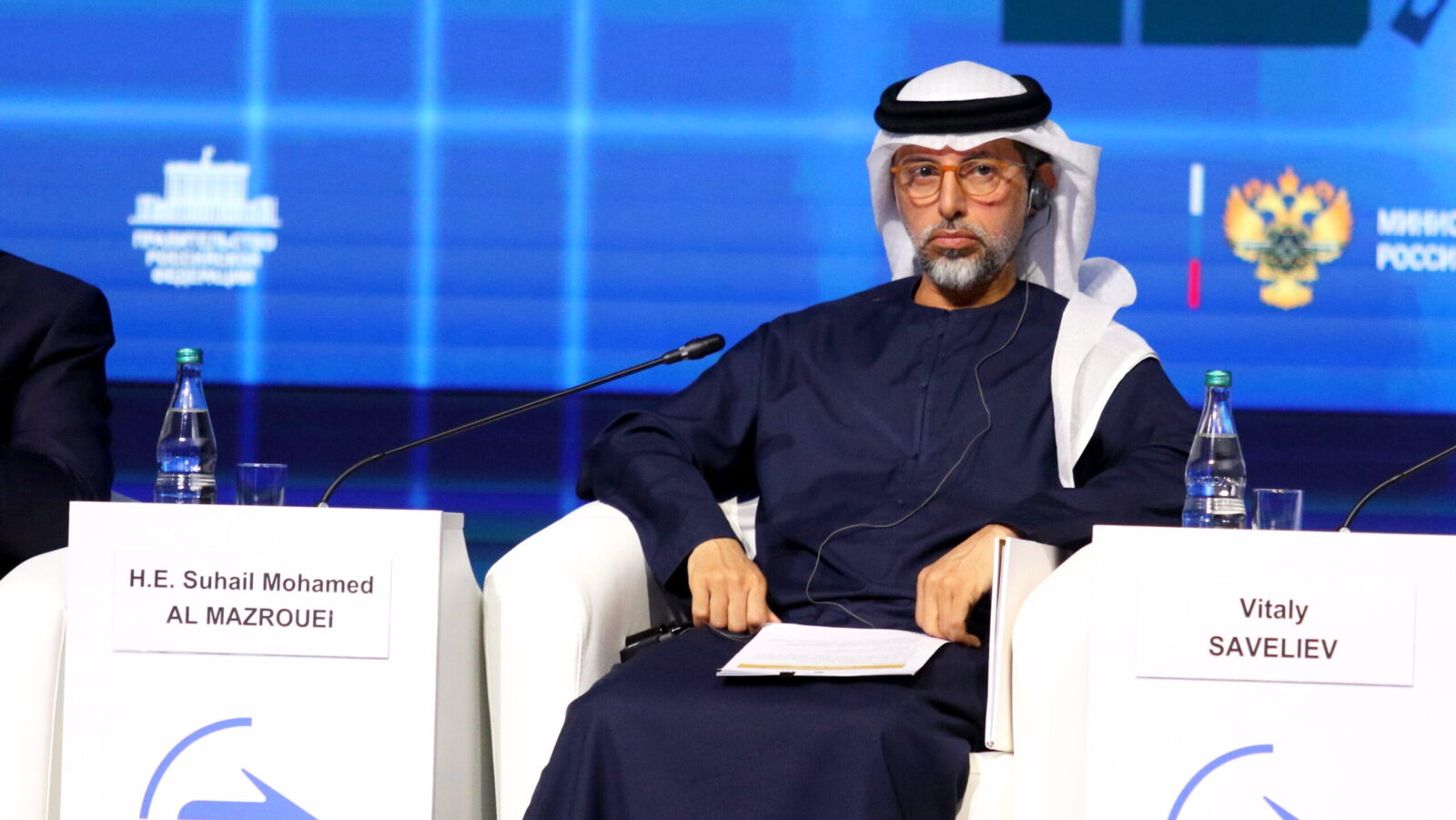
OPECxit is happening.
On Tuesday, the United Arab Emirates announced that it will bolt OPEC as well as OPEC+ on May 1, rattling the oil cartel that has defined the energy market for decades. The move comes just as the Iran War’s impact on oil prices is becoming inescapable.
Leaving the Club
It’s a devastating blow for an oil cartel that had been slowly fracturing for years amid the US shale oil boom. OPEC produces about 40% of the world’s oil and, according to the International Energy Agency, the UAE represents about 13% of OPEC’s production capacity, behind only Saudi Arabia and Iraq and just a touch ahead of Iran. Iran has fired more than 2,800 drones and missiles at the UAE amid the military conflict, more than at any other target.
And while the war complicates the economic alliance, the UAE’s real grievance appears to be with Saudi Arabia, an ostensible military ally that nonetheless exerts too much sway over OPEC for the UAE’s comfort:
- Leaving OPEC allows the UAE to break free from rigid production quotas … and pump far more oil. The country has the capacity to produce 4.8 million barrels of oil per day, but has been producing only about 3.6 million under OPEC’s current quota, according to a Bloomberg survey of sector analysts and traders.
- The country will now pursue a goal of producing 5 million barrels per day by 2027, and will begin developing alternatives to the Strait of Hormuz shipping route. “The world needs more energy, the world needs more resources, and UAE wanted to be unconstrained by any groups,” UAE energy minister Suhail Al Mazrouei told The New York Times.
Get Pumped: What does this mean for oil prices, which have spiked more than 50% since the start of the Iran War? Well, nothing, for now. Traders told Bloomberg that it will take years to patch over the roughly a billion barrels of lost supply so far, regardless of production increases. That’s too long for many companies, which have already been reporting the impacts of the war and subsequent oil shock this earnings season. Honeywell last week said the war has dented its sales, while Sonoco said it pushed up input costs. “Those are the canaries in the coal mine,” Mark Malek, chief investment officer at Siebert Financial, told Bloomberg.
Your Retirement May Last Longer than You Think…

… and inflation can diminish your savings over time. It’s crucial to have a strategy that addresses these risks. The 15-Minute Retirement Plan can help you prepare. If you have $1 million or more saved, download your free guide for important insights.
IAC Rebrands as People Inc. in Prep for SEO Doomsday
Media holding company IAC admitted to having a favorite child with an announcement that it will rename itself People Inc.
The IAC family tree currently has People Inc., formerly known as DotDash Meredith, beneath it and publications like People and Entertainment Weekly branching off of that. The name change reflects the company’s growing focus on its People biz, which will involve laying off 77 actual people, among other cost-cutting measures it expects will save around $40 million annually.
The overhaul represents the company’s attempt to adapt to an age in which people read results straight from ChatGPT instead of searching for news and clicking on an article.
Diller’s Not Dilly-Dallying
Billionaire Barry Diller formed IAC more than 20 years ago as a vehicle to build, grow and profit from early internet platforms. IAC has owned more than 200 companies and bought Meredith about five years ago for $2.7 billion (Dotdash was a separate deal). Having spun off companies like Expedia, HSN and Ticketmaster, it now has a 26% stake in MGM Resorts, which new People Inc. will spotlight as Diller bets search traffic will fall to zero:
- IAC is trying to bring in audiences from a variety of sources instead. Part of that strategy involves what Diller calls inversion, or turning its already popular brands into new products and services. Those then form a larger ecosystem that bounces audiences around within its walls.
- The company has also built its own AI ad-targeting tools as it tries to protect its publications from dwindling search traffic. The People division supplies more than 70% of its parent company’s revenue, and Diller is counting on audiences continuing to be drawn to the publication’s name cred.
Media Molting: Diller basically told NYT’s DealBook this isn’t his first rodeo and that he’s not winding down the company. Instead, he’s relying on a playbook that has worked in the past: “getting smaller to get bigger.” The company has slowed down its acquisition efforts since scooping up People and has actively spun off big businesses including Care.com and Angi. Diller hopes that smaller equals more agile and able to take advantage of opportunities in a rapidly AI-fying digital landscape.
Extra Upside
- Antidepressant Content: Data collected by the Conference Board showed consumer sentiment improved in April, easing the impact of gloomier data for the month from the University of Michigan.
- Disney Dilemma: The FCC announced an early review of Disney’s broadcast TV licenses over diversity policies, following criticism of late-night host Jimmy Kimmel from the White House.
- Missed Connections: OpenAI reportedly missed key revenue and user goals as it marches toward an IPO, and CFO Sarah Friar is warning the company may not be able to afford future compute contracts.
Just For Fun
Disclaimer
*Before investing, carefully consider the fund’s investment objectives, risks, charges, and expenses. Please see the prospectus and summary prospectus containing this and other information which can be obtained by calling 1-866-363-9219. Read it carefully before investing.
©2026 Calamos Investments LLC. All Rights Reserved. Calamos®, Calamos Investments® and Investment strategies for your serious money® are registered trademarks of Calamos Investments LLC.

