GM Revels in Gas-Engine Renaissance While Detroit Loses Ground to Beijing
The automaker posted first-quarter earnings before interest and taxes of $4.3 billion, easily beating analysts’ expectations.
Sign up for smart news, insights, and analysis on the biggest financial stories of the day.

In 1953, Charles Wilson famously told a Senate committee that he believed “what was good for our country was good for General Motors, and vice versa.” It’s the vice versa part that’s less clear today.
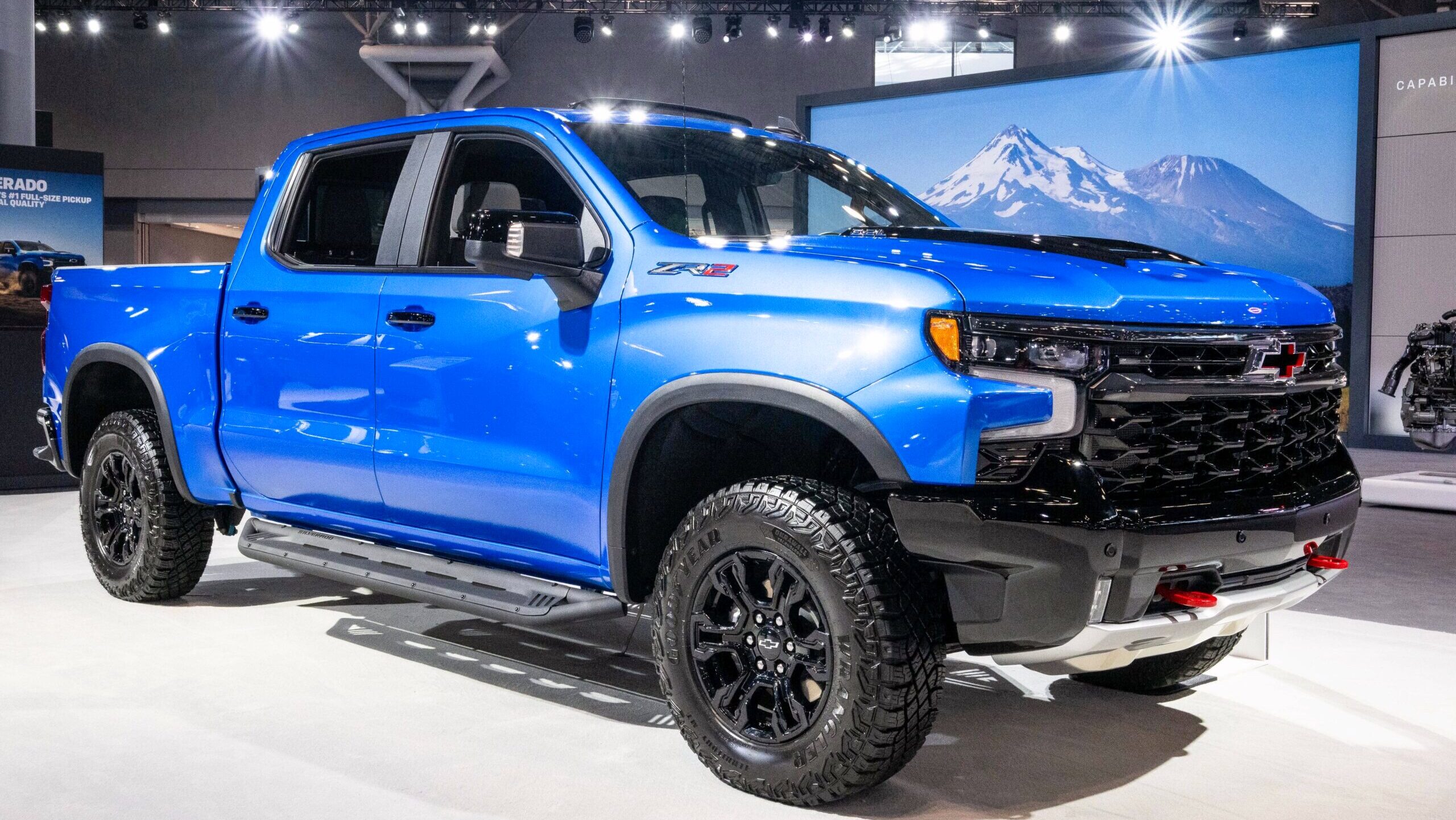
The automaker posted first-quarter earnings before interest and taxes of $4.3 billion, easily beating analysts’ expectations, and raised its guidance by $500 million, thanks to an expected tariff refund of that amount after the Supreme Court struck down some of President Trump’s tariffs. GM also benefited from a pullback from the challenging electric vehicle market and continued demand for gas-powered trucks and SUVs.
While the company still warned of commodity and logistics costs rising due to the war in Iran, it’s clear there’s still interest in GM’s key offerings. But halfway around the world, the Beijing auto show makes clear that times are changing and Detroit has fallen behind the technology curve.
EV Evolution
Chinese automakers, which lagged behind their Western counterparts in the traditional car market, have quickly become the ones to beat in the EV market, developing drivetrains and batteries that the Big Three automakers (GM, Ford and Stellantis) aren’t matching.
Rivals may say those Chinese companies are “learning” from the best: Bloomberg reports that Xiaomi’s YU7 sport utility vehicle is designed similarly to Ferrari’s Purosangue, and Great Wall Motor’s headlights resemble those of the Volkswagen Beetle. Others look like Porsches and Land Rovers.
But if Chinese automakers are able to make EVs that are significantly cheaper than their Western competitors, does that matter? Carmakers in Asia are also hitting the gas pedal on EV development, just as many US companies have retreated. Shenzhen-based BYD overtook Tesla as the global leader in EV sales after President Trump’s “One Big Beautiful Bill” ended federal EV tax credits. Then, there’s the AI of it all:
- Chinese EV makers are now focused on what’s next: embedding artificial intelligence systems into their cars (with Chinese chips and software, of course). Meanwhile, US autos are having to contend with the uncertainty that comes with self-driving taxi companies such as Waymo whipping around.
- “It’s not impossible that in 10 years, we wake up and see that we actually don’t have a domestic industry in the sense of something that does significant research and development,” Susan Helper, a professor at Case Western Reserve University who was chief economist at the Commerce Department under President Barack Obama, told The New York Times last month. “Maybe Ford and GM exist as nameplates, but the powertrains and their cars are all Chinese.”
Wary Washington: Meanwhile, a group of lawmakers is pushing Trump to block Chinese automakers from building cars in the US, The Wall Street Journal reported. “This must remain a firm and non-negotiable priority,” the letter said. “We must not cede the American auto industry to a strategic competitor intent on global dominance.”