

Good morning and happy Friday.
Let it grow. The Federal Communications Commission voted 2-1 on Thursday to repeal a cap barring companies from owning TV stations that reach more than 39% of US households. Earlier this year, the agency exempted Nexstar Media from the rule in order to clear its $6.2 billion acquisition of rival Tegna that would put Nexstar in 80% of homes. A group of states are challenging the deal in court. Challenges are expected against the FCC decision, too, especially since the 39% cap was established by an act of Congress in 2004.
If Thursday’s FCC decision holds, experts expect a wave of consolidation will follow. EW Scripps, Fox, Paramount and Sinclair are close to the cap and would suddenly have room to grow. Critics worry consolidation in station ownership will accelerate a decline in local news broadcasts, with parent companies replacing them with centralized productions. Ask any meteorologist and they may tell you they’re worried a pink slip is in the forecast.
Improve Your Game with 2-Minute Clinics

There’s more golf instruction information out there than ever these days, and for golfers, it can make things really confusing.
At Golf Digest, the goal is to help golfers wherever they are, which is why the 2-Minute Clinics instruction franchise stands out, because it’s helpful for everyone.
For Moderna’s Greenlit mRNA Flu Vaccine, Payoff Is a Ways Off

Sudden high fever? Chills? Muscle or body aches? Tiredness, dry coughing, sore throat, a headache? You might have the flu. And Moderna might have its next customer.
The company clinched a hard-won victory after the US Food and Drug Administration approved the use of its mRNA flu vaccine in adults aged 50 and up. All it took was an at-times contentious, seven-month-long regulatory process. Now, Moderna is set up to prove whether its mRNA-based portfolio will become more than a pandemic-era, one-trick financial pony.
The Need for Approval
What’s so great about mFlusiva? Like Moderna’s mRNA-based COVID-19 vaccines, it delivers instructions straight to your body’s cells on how to make a harmless viral protein that can be used to train your immune system to attack viruses. Because they use a synthetic genetic code, mRNA vaccines can be updated quickly to combat variant strains, unlike traditional vaccines, which take weeks to grow in eggs or cell cultures.
Before this week’s approval, which arrived late Wednesday, mFlusiva had to contend with its own fight. In February, Vinay Prasad, then the head of the FDA’s vaccine program, unilaterally blocked Moderna’s application over the objection of agency scientists before backing off a week later on the condition of a new study for people 65 and older. The FDA’s sign-off was based on a trial involving more than 40,000 adults 50 and up that found the shot 26.6% more effective than a standard flu vaccine. Approval in hand, mFlusiva is now positioned to compete with traditional flu vaccines from AstraZeneca, CSL, GSK, Sanofi and Seqirus in a market where tens of millions of annual vaccines represent billions in annual sales. However, Moderna will have to wait at least a year for a meaningful payoff:
- The company says it expects to have mFlusiva ready for the upcoming 2026-2027 flu season, which runs from roughly October to May.
- It’s not as easy as being ready. Seasonal vaccine sales rely on advance commercial contracting with healthcare providers, pharmacies and distributors, which is why Wall Street doesn’t think Moderna will make any meaningful mFlusiva sales until the 2027-28 flu season. In fact, shares of the pharma giant fell 4.26% on Thursday.
Pipeline Promise: Moderna’s stock is up 74.5% in 2026, and the optimist’s case rests on treatments in the pipeline like a combination therapy for skin cancer in partnership with Merck that has performed well in studies. Meanwhile, the European Union approved its first-of-its-kind COVID and flu combination vaccine in April.
50 AI Plays to Halve Your Workday

Some professionals are quietly finishing their work by 1pm. Their secret is knowing exactly which AI tools to use, and how. Superhuman AI’s playbook breaks it down in 50+ step-by-step tutorials, trusted by 1M+ professionals at Google, Microsoft and NASA. Claim your free AI playbook and clock out early.
Vistra Earnings Offer Window Into Power Generation Ramp-Up for AI Data Centers
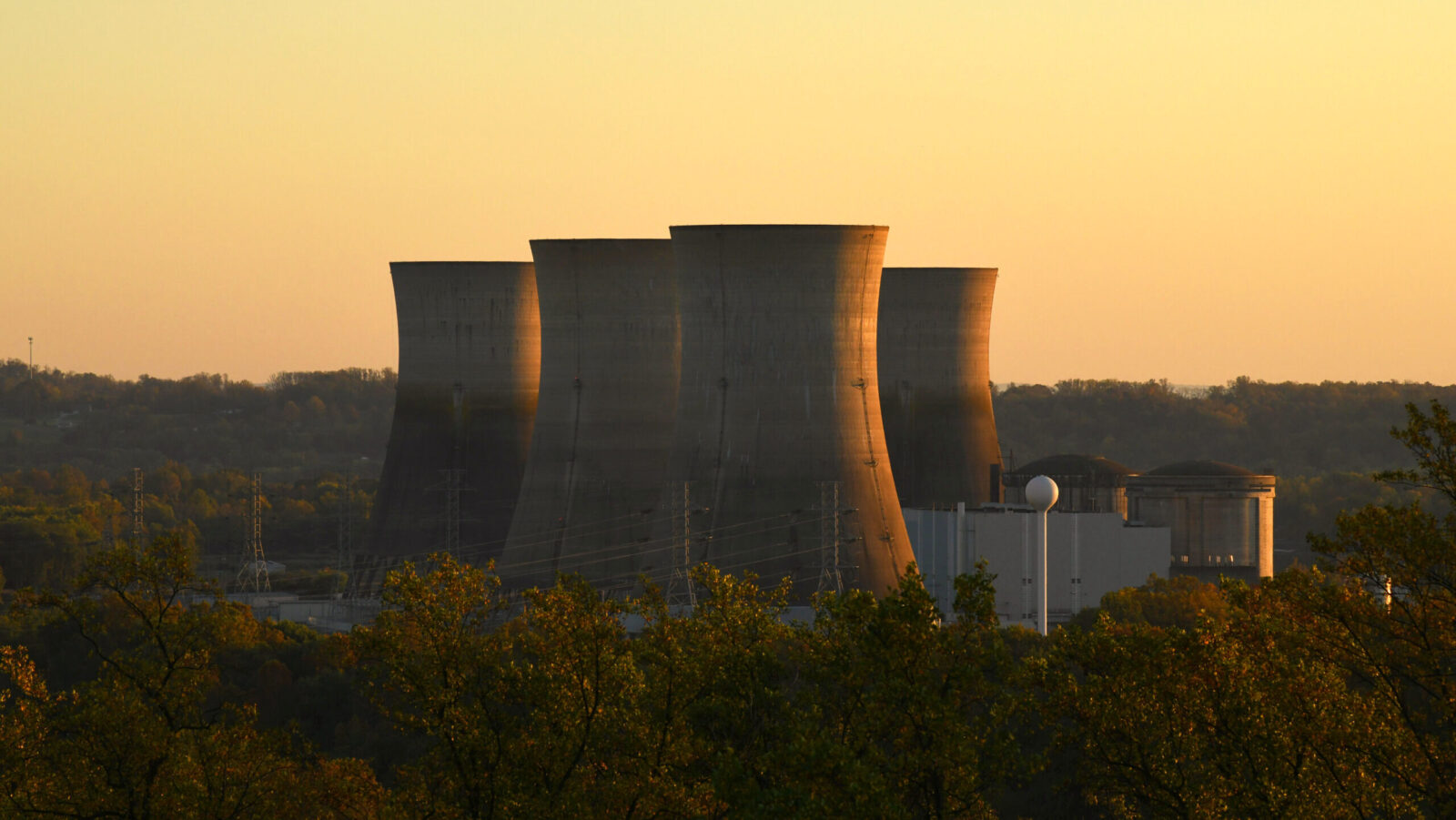
Beneath the obvious AI hyperscaler stocks — Meta, Nvidia and so on — lies another layer of trades: the energy companies providing the power AI needs to, for instance, edit your ex out of the family photo.
Vistra, one of the leading US power generators, reports this morning as it builds out capacity to meet the demand of AI giants. Rival power provider Constellation Energy meanwhile boosted its forecast for the year yesterday after reporting $7.5 billion in second-quarter sales.
Data Centers’ Power Deficit
US power use is expected to keep notching record highs in 2026 and 2027, according to the Energy Information Administration. Data centers could suck up a fifth of the US’s total electricity in 2035, up from about 6% today, BloombergNEF found. In states with more data centers, including Texas, that share is expected to be higher. The grid’s already strained, and the record amount of capacity it’s been able to supply to data centers in the past is just over 7 gigawatts a year (one gigawatt is roughly the equivalent of one nuclear reactor). BloombergNEF analysts expect the grid to come 19 gigawatts short of what data centers demand by 2035.
To fill the gap, hyperscalers and power companies like Vistra and Constellation are trying to create sparks any way they can:
- AI is sourcing its juice from both natural-gas and nuclear options. Earlier this year, Vistra struck a deal to buy Cogentrix Energy and its 10 gas-fired power plants for $4.7 billion and reached a 20-year agreement that’ll see Meta buy power from some of Vistra’s nuclear plants.
- Constellation Energy has forged deals to supply nuclear power to Meta and Microsoft. Constellation said in 2024 it plans to restart Three Mile Island, where the US’s worst nuclear meltdown occurred. The power generated there will supply Microsoft.
Not Overnight: AI’s demand could continue to outpace power providers’ ability to meet it, straining the grid and pushing up electricity prices. When explaining Vistra’s projections for how quickly it could increase its available power supply, president and CEO Jim Burke hedged investors’ expectations this spring, saying, “The physical world takes much longer to develop than what people might imagine it takes.”