

Good morning.
It’s not quite the Met Gala, but the invite list for this week’s Trump-Xi summit may be just as high-profile, though less high couture.
The US delegation headed to Beijing includes Apple CEO Tim Cook, Blackstone and Blackrock CEOs Stephen Schwarzman and Larry Fink, Boeing top boss Kelly Ortberg, Visa and Mastercard leaders Ryan McInerney and Michael Miebach, Goldman Sachs CEO David Solomon and Tesla CEO/former White House “first buddy” Elon Musk, among others. Notably without an invite are executives from Alphabet or General Motors, as well as Nvidia CEO Jensen Huang, whose semiconductors are sure to be at the center of discussions between the two global superpowers. Kendall Jenner also appears to be a snub.
Cerebras Challenges Nvidia’s Chip Dominance with Highly Hyped IPO
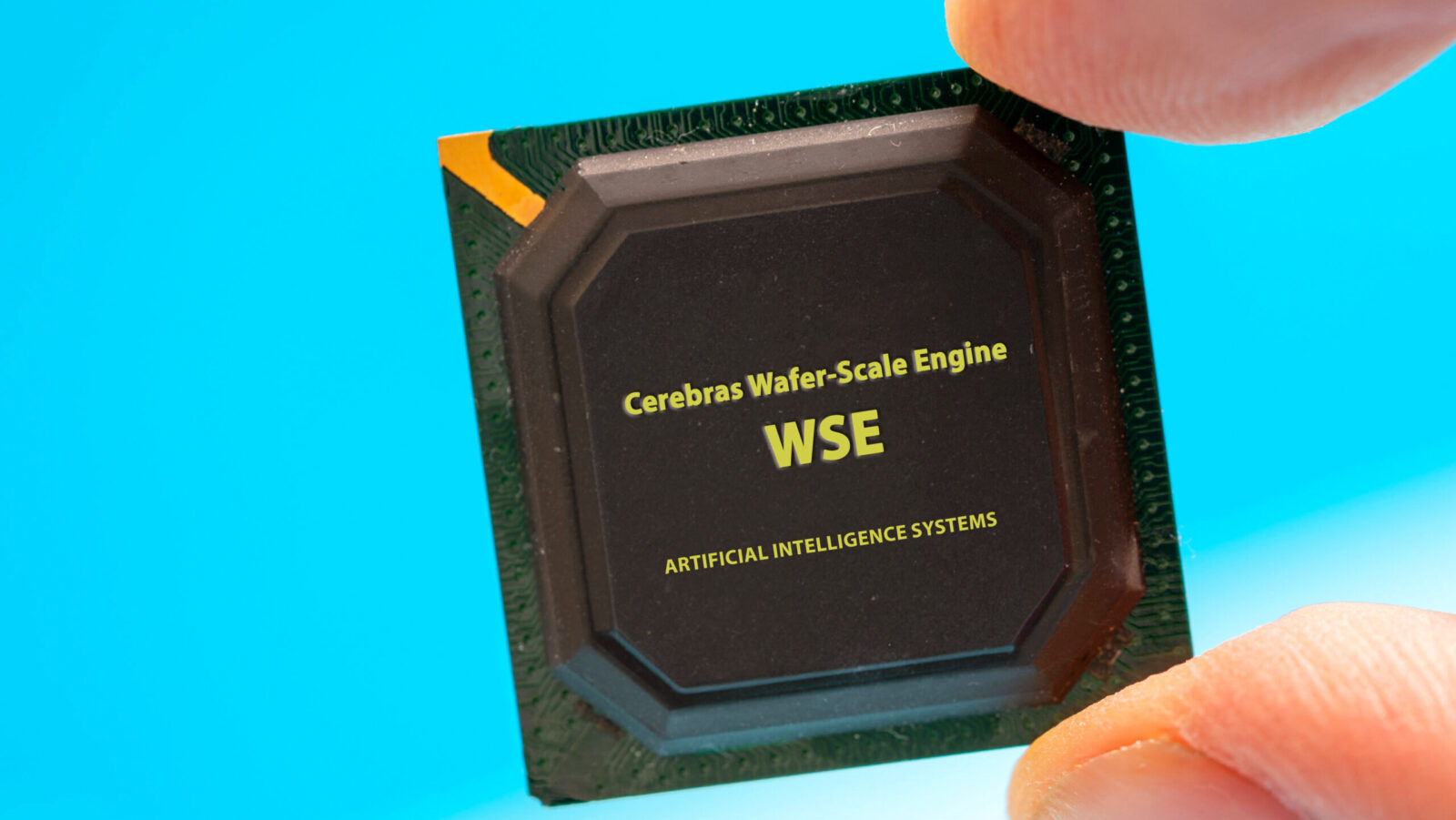
Cerebras is on track to pull off the biggest tech IPO of the year so far. Among all listings, it’s only second to the combined debut last month of Bill Ackman’s Pershing Square Inc. and Pershing Square USA Ltd.
The AI chipmaker on Monday said it plans to list its shares for $150 to $160 each, a jump it made based on high demand from its previous pricing of $115 to $125 a share. Altogether, its 30 million shares could bring in up to $4.8 billion, putting its market cap at a high end of more than $34 billion. Cerebras boosted the price after orders poured in for more than 20 times the number of available shares, Bloomberg reported.
Chips from Cerebras could make hyperscalers less reliant on the market leader Nvidia as companies figure out how to make running AI more cost-efficient.
Divvying Up Nvidia’s Work
Cerebras is known for chips that handle inference workloads, meaning they help AI answer users’ queries. Its chips help run AI after it has already been trained, which gives them an edge at a time when companies have switched their focus from building AI to efficiently keeping it humming along.
Cerebras caters to companies that are trying to reduce their reliance on pricey GPUs from Nvidia, which dominates the AI chip industry:
- The main chip Cerebras sells, called the Wafer-Scale Engine 3, could provide an alternative to Nvidia’s GPUs; Cerebras says its chips can perform inference work faster and use less power than Nvidia’s GPUs, which are less specialized towards inference work. Cerebras secured a $20 billion commitment in January from OpenAI to help supply the ChatGPT-parent with compute power, and Amazon Web Services said in March it’d bring Cerebras chips into its data centers. It’s a defining shift for Cerebras, which previously counted on G42, an Abu Dhabi-based AI company, for the majority of its revenue.
- At the same time, major tech companies including Amazon and Google are creating their own chips meant to take some of the workload away from Nvidia’s chips. Nvidia’s GPUs are still the gold standard for many AI operations, but a new wave of chips could make it so companies can supplement Nvidia’s GPUs with cheaper and more efficient sources of compute power.
Seeking Savings: AI is shifting to a new stage. Now that companies have trained their models, they’re investing in the infrastructure needed to keep them running. Chips that are specialized in running, rather than training, AI can save companies money. And the companies need that cost savings as onlookers question their massive capital expenditures. Layoffs alone aren’t enough to offset AI’s costs, especially in cases where AI’s been found to cost more than the human workers it’s looking to replace.
This Pre-IPO Company Grew 4,000%

From the #1 productivity app in the Meta Quest store to building its own high-resolution AR/VR headsets, Immersed is targeting a $250B+ opportunity in workplace software and collaboration.
You have less than 48 hours left to become a shareholder before the pre-IPO round closes.
It’s similar to when the first smartphones revolutionized mobile computing. If Immersed captures the global enterprise market, the upside could be substantial, given they’ve already achieved 4,000% valuation growth.
Next, they are preparing to scale mass production for Visor, their flagship AR/VR headset. With 75,000+ people on the waitlist and 1.5M+ users on the platform, it’s expected to generate $71M in first-year sales. Their Nasdaq ticker (IMRS) has now been reserved.
Invest pre-IPO in Immersed at $0.72/share by May 14 11:59 PM PT.*
This Trait Gets CFOs Hired. Do You Have It?

Most CFOs can rattle off the numbers. The ones who get hired (and stay) know how to lead with them. Anders Liu-Lindberg breaks down how they do it, including the 10 levers of value creation, AI-driven approaches to revenue growth, and how top finance leaders turn insight into company-wide decisions. Download the CFO Strategic Leadership Playbook from Oracle NetSuite.
Seemingly Nothing Can Jumpstart The Housing Market
The housing market has been the powder keg that never goes boom.
Existing home sales inched up just 0.2% in April, according to data released Monday by the National Association of Realtors (NAR). The sluggish pace defied consensus economist expectations of a gain of as much as 3%, and puts to rest any notions that the housing market’s three-year-long slumber may finally be over.
Expectations, Meet Realty
There’s a reason experts were primed for an uptick. A RedFin report published late March found that there were 46% more sellers in the market than buyers in February, an imbalance totaling around 630,000. That marked the biggest gap on record going back to 2013, prompting the real estate listings giant to declare “a buyer’s market.” Mortgage rates also fell below 6% in late February for the first time since 2022, further fueling hopes of a spring-time market thaw.
Instead, home sales dropped an adjusted 2.9% year-over-year in March, according to the NAR, and those hopes are starting to look like the market that never was, a dream shattered by the vibecession:
- After falling below the psychologically-important 6% figure, mortgage rates began climbing again due to the oil-price shock effects of the Iran War. Last week, the average rate on a 30-year fixed mortgage climbed to 6.37%, according to Freddie Mac.
- The national median existing-home price also rose in April to $417,700, up 0.9% year-over-year and the highest for any April on record, per the NAR. Consumer sentiment, meanwhile, dropped to the lowest level on records going back 74 years, according to the University of Michigan’s report published last week, which also found that consumers’ perception of their own financial health fell to the lowest level since 2009.
Stock Market: On the other hand, expectations of an uptick may have been a touch detached from the hard data. Housing supply remains relatively constricted; inventory ticked up 5.8% from April to March, to 4.4 months’ worth of housing stock. But anything under six months is considered tight, in the territory of a seller’s market. “We really need to see 30% growth in inventory, but we are not seeing that,” NAR chief economist Lawrence Yun said in a statement Monday. The total inventory of 1.47 million homes remains short of the 1.83 million home inventory in the April before covid.