
Good morning.
Corporations are looking for the “Dexit” sign no more.
Tuesday’s midterm elections have upended America’s political landscape and could soon alter where US companies choose to operate. For years, some of the country’s largest public companies have fled Delaware to reincorporate in the friendlier fields of the Lone Star State, lured by special business courts and lower taxes. In 2026, 22 companies have completed the Dexit to Texas, according to one tally from University of Nevada law professor Benjamin Edwards. But Tuesday featured surprise wins for Democrats Gina Hinojosa, the governor-elect who pledged to end “corporate welfare,” and Nathan Johnson, the attorney general-elect who ran on investigating the many Texas-based operations of Musk, Inc. Senator-elect James Talarico, however, let it be known that he is a fan of SpaceX and Tesla and Musk thanked him for the “nice” words. Will the newfound civility be enough to offset a “Texit”? Stay tuned.
Bye Bye $2.5 Trillion: Post-Midterm ‘Momentum Unwind’ Fears Ignite Mammoth AI Selloff
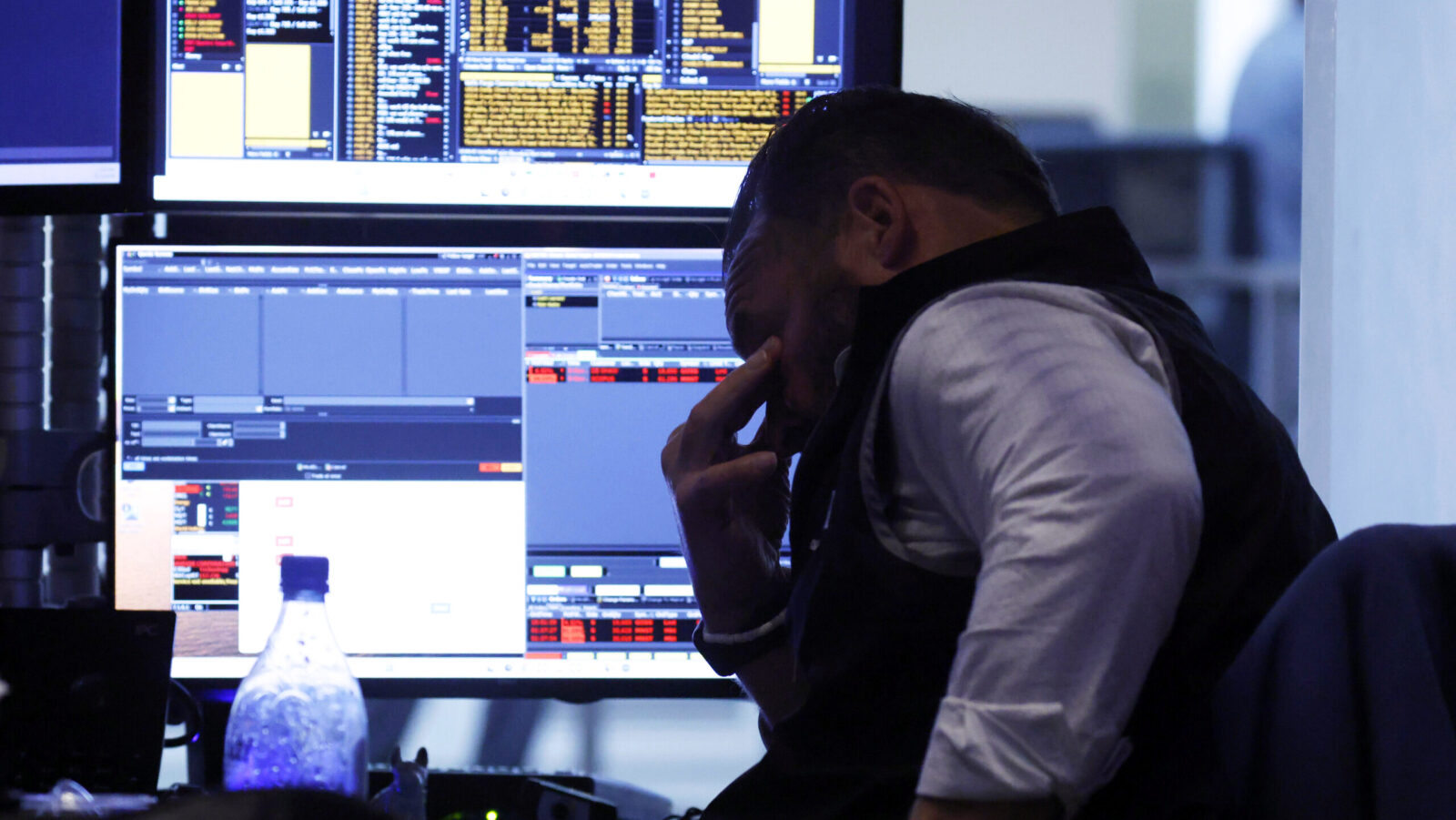
Well, that escalated quickly. Wednesday’s reassuring post-midterm election rally on Wall Street ended faster than a New York minute.
It was replaced on Thursday with a seismic tech selloff that caused the Nasdaq Composite to dip 5.5% into correction territory. Roughly $2.5 trillion in market value, $1 trillion of it concentrated in the Magnificent 7 tech behemoths, evaporated like nail polish remover. Investors began pricing in plans by victorious Democratic politicians to rein in the artificial intelligence buildout that is powering the market’s favorite trade and rotating their portfolios accordingly. Some analysts think they may have gone too far.
‘Blood in the Street’
“We are seeing a complete capitulation-level event in tech stocks today,” said Saxo Bank UK Investor Strategist Neil Wilson on Thursday. “Looks like total degrossing and some leveraged funds may well be blowing up. The blood is in the streets, folks.” Shares in neocloud firms, chipmakers, power providers and data center suppliers all took brutal tumbles. Almighty Nvidia, for example, closed down 9.2%, erasing almost $450 billion from its market capitalization. The iShares Semiconductor ETF dropped more than 12%.
It should be said that the pressure on the AI buildout isn’t new. Even before the midterms, rising interest rates and the strain of funding massive capital expenditure plans had spooked investors. Public sentiment had soured, too, with more than half of Americans viewing data centers as bad for the environment and roughly half considering them bad for household energy costs and quality of life, according to Pew. A tally by Redbud Consulting shows voters passed 44 measures to restrict data centers in communities around the country on Tuesday, compared to just one pro data center measure. The backlash has bipartisan appeal, too. Notably, Republican Governors Greg Abbott of Texas and Ron DeSantis of Florida both paused permits for new data centers in their states in recent months. Democrats, including Abbott’s incoming successor Gina Hinojosa, promised to be more aggressive.
“The fear is a total momentum unwind as Democrats pace the frontier and kybosh data center buildout,” said Saxo’s Wilson. Still, he thinks Thursday’s selloff may have gone too far: “This looks totally overdone, but the nature of sell-everything of this market means we need to look for some stability first.” Others agree:
- “Outright moratoriums remain unlikely to become mainstream,” wrote Coco Zhang, vice president of ESG Research at ING, adding any curbs are likely to be temporary in order to allow states to develop data center policies. “Federal action is more likely to focus on affordability by protecting electricity customers from higher costs and formalizing data centers’ responsibility to help fund grid and energy infrastructure upgrades.”
- Ultimately, ING thinks “tighter AI and data center regulation is unlikely to fundamentally alter the industry’s growth trajectory.” Yorkville Ives Senior Managing Director Dan Ives, one of Wall Street’s most influential technology analysts, tweeted a similar view: “We remain bullish on the AI Revolution buildout … which is still gonna happen in the US just at a slower pace.”
Fear, Indexed: A slower pace of AI buildout will, however, likely mean selling by funds and strategies. Wall Street’s best-known gauge of market anxiety, the CBOE Volatility Index, rose nearly 70% in its biggest jump in 18 months. That reflects options traders who, at the very least, think markets could prove bumpy for at least the next 30 days.
Newly Public Agility Wants to Prove Physical AI Has Legs
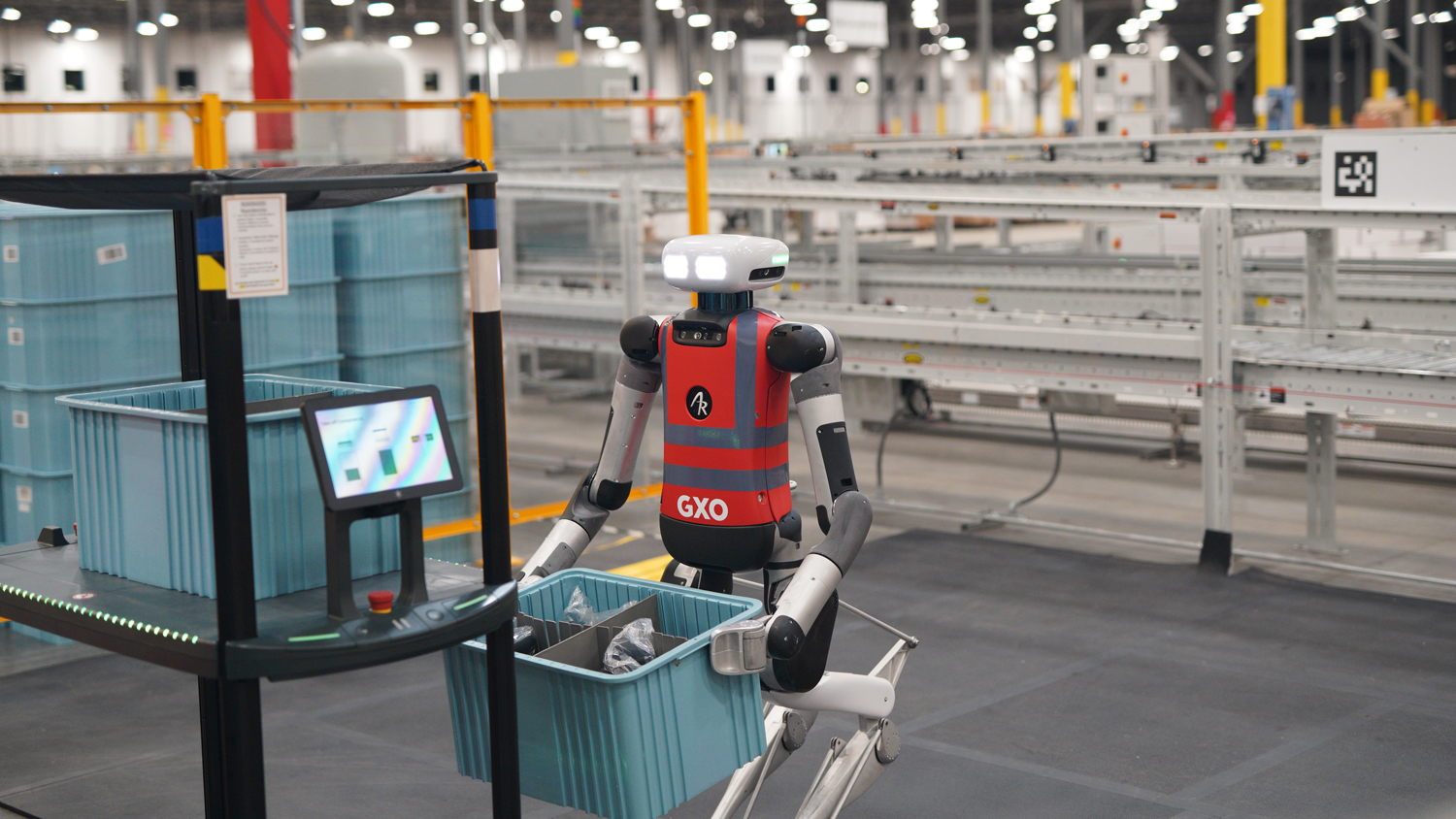
As markets sour on digital AI, physical AI is walking upright onto the Nasdaq. Agility on Thursday became the US’ first publicly traded pure-play humanoid robotics company.
Agility went public through a merger with Michael Klein’s blank-check company Churchill Capital Corp XI (SPACs are so back). The startup secured about $201 million in new funding led by Foxconn, Apple’s go-to iPhone manufacturer. Nvidia and Amazon are also backers.
About a year ago, the CEO of rival humanoid robot-maker Figure AI commented on an Agility X post, “You’ll be bankrupt in <12 months.” Now, Agility says it has $300 million in preorders for its next-gen robot as it seeks to set itself apart from rivals with grit, not gimmicks.
God Forbid a Robot Have Hobbies
Agility’s robots were made to work — not dance, bartend, kickbox, run a half-marathon, do parkour and so on. Its next-gen Digit 5, which can lift 50 pounds and work 20 hours a day, was built for “repetitive workflows that are dull, dirty and dangerous,” CEO Peggy Johnson said. The robots have moved more than 100,000 containers at a GXO warehouse that ships Spanx orders and moved around parts at a RAV4-focused Toyota factory.
If Digit is a recent college grad building its résumé, its rivals are more like interns:
- The robots best known for backflipping and folk dancing,come from China’s Unitree, which beat Agility to public markets when zooming out beyond the US. The company shipped more than 5,500 humanoid robots last year, per its prospectus, but the bots are mainly used for research or marketing (so yes, backflips).
- Back stateside, rivals’ humanoid robots are basically in beta. Figure AI, valued at about 15 times Agility’s deal price, said in July it had built 1,000 robots. Some are being tested by BMW. Elon Musk meanwhile said Tesla’s Optimus bots will ship to customers ready to do their laundry by the end of next year. Humanoids from Boston Dynamics are being tested to work on factory floors, starting with Hyundai’s.
Look Ma, No Thumbs: Digit doesn’t look like a human because of hubris. Johnson said a human shape lets it more easily navigate settings made for humans, and the next generation of Digit is made to work alongside humans — a major leap if human workers can get past the uncanny-valley vibes. Still, Agility isn’t tied to its human cookie cutter and said it’ll consider wheels and other formats in the future. Other companies are ahead when it comes to nonhumanoids: Boston Dynamics has deployed more than 2,000 of its four-legged Spot bots and wheeled Stretch machines for customers including DHL, Gap, Maersk and, because Spot isn’t “Black Mirror” enough already, ICE. But the ultimate goal is fiddly work — complex tasks requiring fine-motor skills, like fastening screws and routing wires. Nothing’s better suited for that than a human … oid.
IPO Season Is Running a Little Late

Not so fast, IPO hopefuls. Last quarter, only around 45% of 29 companies filing for $100m+ IPOs debuted, as volatility ruffled a few feathers. How fast the remaining deals move could signal investor appetite heading into the year-end. See what’s shaping the IPO pipeline and what could influence issuance through year-end in DFIN’s complimentary Q3 IPO & Public Listing Report.