Newly Public Agility Wants to Prove Physical AI Has Legs
The startup secured about $201 million in new funding led by Foxconn, Apple’s go-to iPhone manufacturer. Nvidia and Amazon are also backers.
Sign up for smart news, insights, and analysis on the biggest financial stories of the day.

As markets sour on digital AI, physical AI is walking upright onto the Nasdaq. Agility on Thursday became the US’ first publicly traded pure-play humanoid robotics company.
Agility went public through a merger with Michael Klein’s blank-check company Churchill Capital Corp XI (SPACs are so back). The startup secured about $201 million in new funding led by Foxconn, Apple’s go-to iPhone manufacturer. Nvidia and Amazon are also backers.
About a year ago, the CEO of rival humanoid robot-maker Figure AI commented on an Agility X post, “You’ll be bankrupt in <12 months.” Now, Agility says it has $300 million in preorders for its next-gen robot as it seeks to set itself apart from rivals with grit, not gimmicks.
God Forbid a Robot Have Hobbies
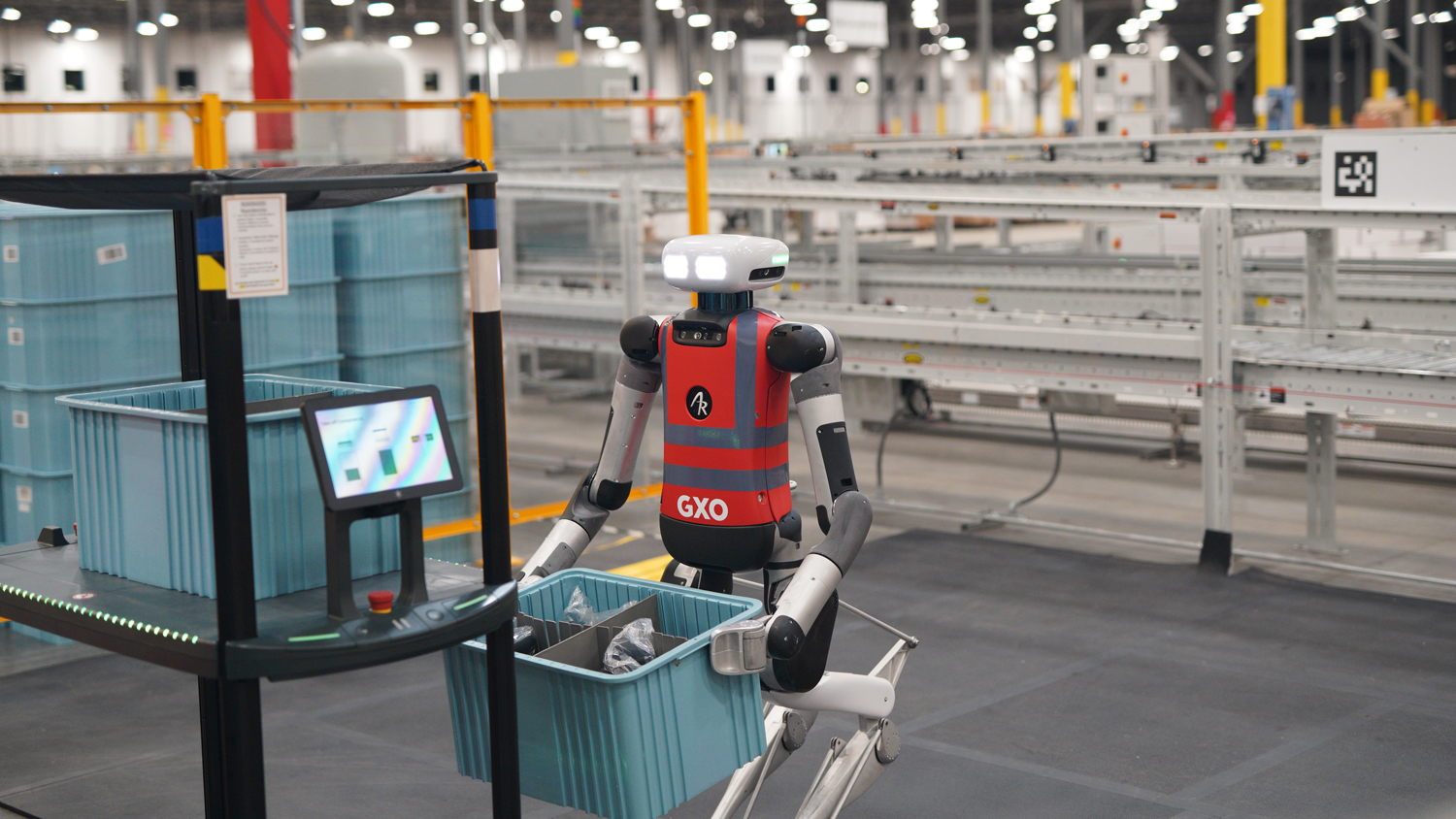
Agility’s robots were made to work — not dance, bartend, kickbox, run a half-marathon, do parkour and so on. Its next-gen Digit 5, which can lift 50 pounds and work 20 hours a day, was built for “repetitive workflows that are dull, dirty and dangerous,” CEO Peggy Johnson said. The robots have moved more than 100,000 containers at a GXO warehouse that ships Spanx orders and moved around parts at a RAV4-focused Toyota factory.
If Digit is a recent college grad building its résumé, its rivals are more like interns:
- The robots best known for backflipping and folk dancing,come from China’s Unitree, which beat Agility to public markets when zooming out beyond the US. The company shipped more than 5,500 humanoid robots last year, per its prospectus, but the bots are mainly used for research or marketing (so yes, backflips).
- Back stateside, rivals’ humanoid robots are basically in beta. Figure AI, valued at about 15 times Agility’s deal price, said in July it had built 1,000 robots. Some are being tested by BMW. Elon Musk meanwhile said Tesla’s Optimus bots will ship to customers ready to do their laundry by the end of next year. Humanoids from Boston Dynamics are being tested to work on factory floors, starting with Hyundai’s.
Look Ma, No Thumbs: Digit doesn’t look like a human because of hubris. Johnson said a human shape lets it more easily navigate settings made for humans, and the next generation of Digit is made to work alongside humans — a major leap if human workers can get past the uncanny-valley vibes. Still, Agility isn’t tied to its human cookie cutter and said it’ll consider wheels and other formats in the future. Other companies are ahead when it comes to nonhumanoids: Boston Dynamics has deployed more than 2,000 of its four-legged Spot bots and wheeled Stretch machines for customers including DHL, Gap, Maersk and, because Spot isn’t “Black Mirror” enough already, ICE. But the ultimate goal is fiddly work — complex tasks requiring fine-motor skills, like fastening screws and routing wires. Nothing’s better suited for that than a human … oid.