Bye Bye $2.5 Trillion: Post-Midterm ‘Momentum Unwind’ Fears Ignite Mammoth AI Selloff
Wall Street’s best-known gauge of market anxiety, the CBOE Volatility Index, rose nearly 70% in its biggest jump in 18 months.
Sign up for smart news, insights, and analysis on the biggest financial stories of the day.

Well, that escalated quickly. Wednesday’s reassuring post-midterm election rally on Wall Street ended faster than a New York minute.
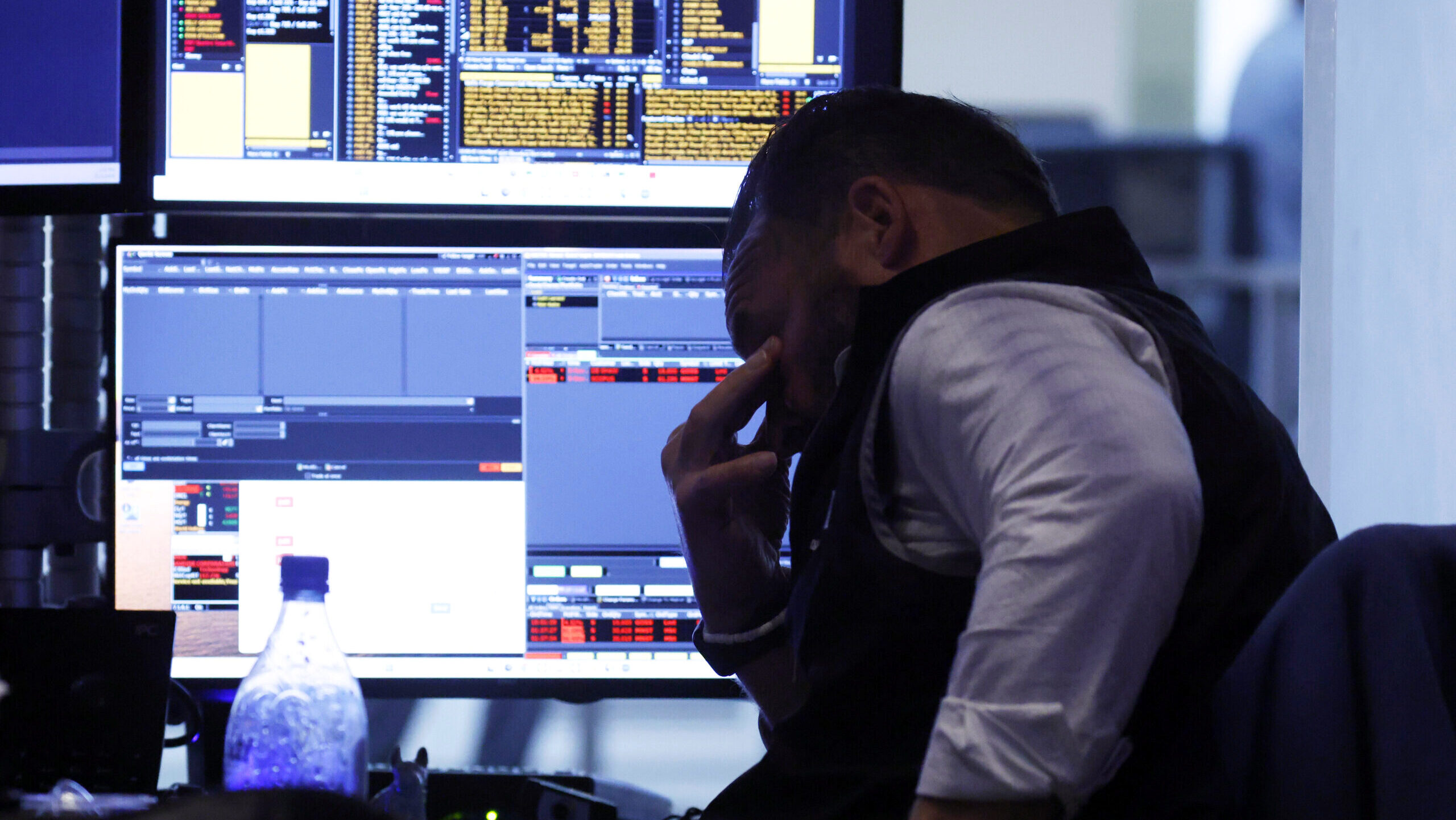
It was replaced on Thursday with a seismic tech selloff that caused the Nasdaq Composite to dip 5.5% into correction territory. Roughly $2.5 trillion in market value, $1 trillion of it concentrated in the Magnificent 7 tech behemoths, evaporated like nail polish remover. Investors began pricing in plans by victorious Democratic politicians to rein in the artificial intelligence buildout that is powering the market’s favorite trade and rotating their portfolios accordingly. Some analysts think they may have gone too far.
‘Blood in the Street’
“We are seeing a complete capitulation-level event in tech stocks today,” said Saxo Bank UK Investor Strategist Neil Wilson on Thursday. “Looks like total degrossing and some leveraged funds may well be blowing up. The blood is in the streets, folks.” Shares in neocloud firms, chipmakers, power providers and data center suppliers all took brutal tumbles. Almighty Nvidia, for example, closed down 9.2%, erasing almost $450 billion from its market capitalization. The iShares Semiconductor ETF dropped more than 12%.
It should be said that the pressure on the AI buildout isn’t new. Even before the midterms, rising interest rates and the strain of funding massive capital expenditure plans had spooked investors. Public sentiment had soured, too, with more than half of Americans viewing data centers as bad for the environment and roughly half considering them bad for household energy costs and quality of life, according to Pew. A tally by Redbud Consulting shows voters passed 44 measures to restrict data centers in communities around the country on Tuesday, compared to just one pro data center measure. The backlash has bipartisan appeal, too. Notably, Republican Governors Greg Abbott of Texas and Ron DeSantis of Florida both paused permits for new data centers in their states in recent months. Democrats, including Abbott’s incoming successor Gina Hinojosa, promised to be more aggressive.
“The fear is a total momentum unwind as Democrats pace the frontier and kybosh data center buildout,” said Saxo’s Wilson. Still, he thinks Thursday’s selloff may have gone too far: “This looks totally overdone, but the nature of sell-everything of this market means we need to look for some stability first.” Others agree:
- “Outright moratoriums remain unlikely to become mainstream,” wrote Coco Zhang, vice president of ESG Research at ING, adding any curbs are likely to be temporary in order to allow states to develop data center policies. “Federal action is more likely to focus on affordability by protecting electricity customers from higher costs and formalizing data centers’ responsibility to help fund grid and energy infrastructure upgrades.”
- Ultimately, ING thinks “tighter AI and data center regulation is unlikely to fundamentally alter the industry’s growth trajectory.” Yorkville Ives Senior Managing Director Dan Ives, one of Wall Street’s most influential technology analysts, tweeted a similar view: “We remain bullish on the AI Revolution buildout … which is still gonna happen in the US just at a slower pace.”
Fear, Indexed: A slower pace of AI buildout will, however, likely mean selling by funds and strategies. Wall Street’s best-known gauge of market anxiety, the CBOE Volatility Index, rose nearly 70% in its biggest jump in 18 months. That reflects options traders who, at the very least, think markets could prove bumpy for at least the next 30 days.