

Good morning and happy Monday,
Apparently, the ghost of John le Carré is writing the headlines now. Yesterday, Nvidia announced its board of directors is opening an investigation following reports that CEO Jensen Huang had an affair with a suspected Chinese spy. US officials linked him to Alice Huang, a former managing director at Singapore-based Nvidia customer Megaspeed, who they believe was recruited by Beijing as an intelligence asset.
The company said its board has “no reason to believe that either national security or Nvidia secrets were compromised” and maintains confidence in the CEO. In a separate, company-wide message, Huang admitted he had been “unfaithful” to his wife and apologized to her and their children. He pledged his support for the investigation and his full cooperation. Shares in the chipmaker, the second most valuable company in the world, are down nearly 6% this morning in pre-market trading. If that dip materializes when markets open, it would make this an affair that (at least temporarily) cost over $220 billion in market capitalization.
Does a Hot Jobs Report Guarantee a December Rate Hike?
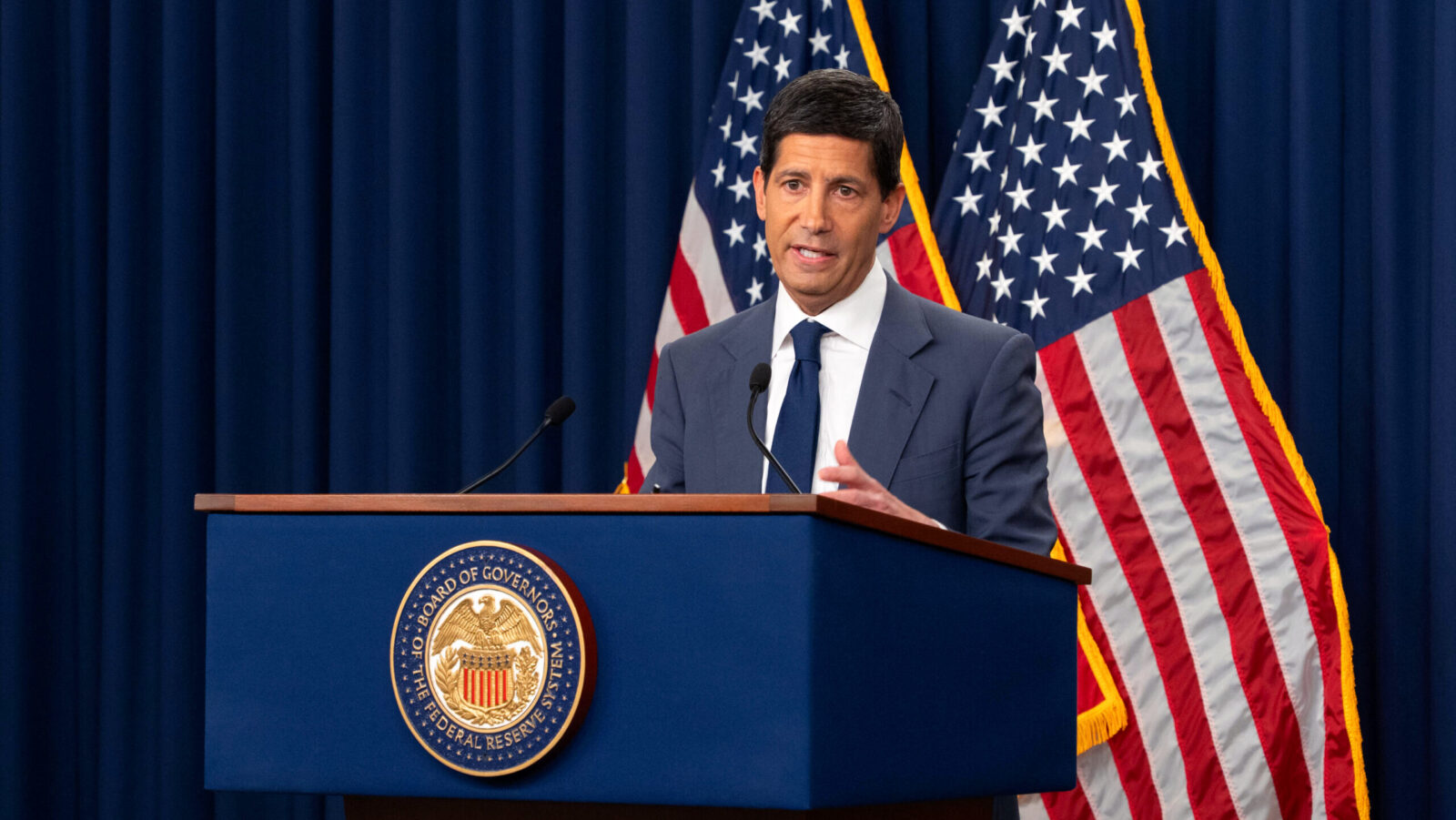
All the pieces are now in place for another quarter-point rate hike at the Fed’s December meeting. That doesn’t mean it has to happen.
The US Labor Department delivered a better-than-expected jobs report on Friday, showing 165,000 new nonfarm jobs added in October, or way, way, way higher than the 59,000 that most experts had expected. The beat came just a day after the announcement that weekly jobless claims had fallen to a 57-year low, a week after a stronger than expected GDP report and ahead of Tuesday’s CPI report, aka the last major data dump ahead of next month’s FOMC meeting. Traders upped their odds of a quarter-point hike on Friday to nearly 80% from 66% the day prior. But experts say that new market realities, driven by a brand new political economy, may stop the Fed’s rate-hiking campaign in its tracks, if not in December’s meeting than in January. In other words: AI may just do Kevin Warsh’s job for him.
AI-nflation
Inflation-taming rate hikes tend to go down a lot easier when the economy is experiencing the type of strong growth (3.4% in the third quarter) and tight labor market conditions shown in the recent data releases. The calculus gets a little more complicated when the same factor is driving both growth and inflation. We’re talking about the massive AI build-out, of course, because when aren’t we these days?
Opinions on the AI build-out’s contribution to GDP growth are diverse. On the bullish end, EY-Parthenon Chief Economist Gregory Daco said in an X post recently that private sector AI investments have driven half of US GDP growth since the start of last year. On the far more conservative side of the spectrum, Goldman Sachs Chief Economist Jan Hatzius thinks the build-out’s contribution to GDP growth is basically negligible. Then there’s inflation, which seems to be driven by — and may soon be tamed by — AI:
- While AI may be disinflationary in the long term, the strains of the current expansion appear inflationary, driving up the prices of energy, computer hardware and software. The build-out’s inflationary forces were pegged by some Fed governors as a cause for September’s rate hike, minutes from that month’s meeting revealed.
- On the other hand, last week’s midterm results delivered widespread political opposition that could slow the pace of a build-out, sparking a massive market sell-off of tech stocks last week as Wall Street questioned the proposed scale of the build-out. That means spending could slow, effectively taming a key inflationary force.
“Continued falls in tech stocks and oil prices could eliminate the prospect of an additional hike in early 2027,” Matthew Martin, senior US economist at Oxford Economics, wrote in a note last week.
Now Hiring: The good news for regular old humans? The robots don’t seem to be impacting the labor market yet. The unemployment rate remains at a healthy 4.1%, while the ratio of open job to unemployed person actually increased in September, to 1.06 from 1.02 the previous month. Productivity, meanwhile, increased at an annualized rate of 3.6% in the latest quarter, per the Labor Department. That’s the fastest pace in a year, but low enough for most economists and experts to think AI’s impact on productivity remains marginal.
How Much of Your GLP-1 Price Tag Is Just Markup?

Here’s something the GLP-1 industry doesn’t advertise: The ingredients in its compounded drugs cost around $5 to produce.
So why do some companies charge up to $500 a month?
Because the industry leaves patients no leverage to negotiate, so they’re stuck paying retail.
Gunnar Lovelace decided a change was overdue. So the founder of grocery disruptor Thrive Market built Collective, a membership community that pools members’ buying power to negotiate wholesale prices from trusted US pharmacies. The more members join, the stronger that buying power gets.
This gets you doctor-prescribed, compounded GLP-1s for $59/month at any dose, plus unlimited doctor messaging and ongoing nutrition support.
Tired of overpriced medicine bills? Try a Collective membership free for 21 days.
Claude Can Do 200+ Things Nobody Told You About
The professionals getting the most from Claude are those who ask it the right questions. Sign up for Superhuman AI and get 200+ prompts that turn Claude into your very own analyst, editor and strategist, plus a 3-min daily newsletter covering the latest AI tools, tutorials and skills. Claim your free prompts.
Zillow-Scrolling Takes a Hit as Millennials Wait Out Mortgage Rates

The walls are closing in on Zillow, whose shares fell last week as millennials stopped even allowing themselves to dream about that ranch-style three-bedroom they bookmarked at 2 a.m. Monthly users on Zillow’s home-scrolling apps and sites dipped 3% (and visits fell 5%) amid what CEO Jeremy Wacksman called “one of the toughest housing markets in a generation.”
Zillow’s revenue overall climbed 7%, mainly driven by its rentals business, which rose 26%. Revenue from real estate agents helping people buy and sell homes, the biggest piece of its business, slid 4%.
The problem: a housing freeze that’s left a generation of would-be homebuyers resigned to renting.
Starter Home? Forever Home
Mortgage rates were higher than Zillow expected, which meant fewer home sales as sellers stayed locked in golden handcuffs and buyers avoided being shackled to big monthly bills. The average 30-year fixed rate in September topped 7% for the first time since January 2025, according to Freddie Mac. Then the pitch got steeper than an A-frame roof: Rates peaked at 7.4% in mid-October and were still hovering around 7.2% this week.
That’s meant fewer “For Sale” signs on lawns across the US:
- Realtors kissed their commissions goodbye, as pending home sales, or signed contracts on existing homes, fell 7.3% in September from the month before. The telltale sign of housing activity was down more than 11% from a year earlier, per the National Association of Realtors.
- Goldman Sachs expects downward pressure from mortgage rates to keep stifling housing activity into next year. More than 95% of mortgage holders had locked in interest rates lower than the market rate (at the time of the report that was about 7.3%) and nearly two-thirds had rates a full two percentage points lower. Goldman expects home sales to slip further next year.
Silver-Hair Lining: Elder millennials (the ones who grew up with Pogs more so than Pokémon) are trying to buy homes. Key word: trying. The median age of first-time homebuyers has been sitting at a record high of 40 for the last two years. Of first-time homebuyers, one in 10 padded their down payments with inheritance and a quarter with personal gifts or loans. A record 10% skipped the mortgage altogether, fronting all-cash for their house in the year through June, and more than a quarter of them used inheritance. Basically, people are getting creative to buy a house — they aren’t above calling in a favor or using the windfall from a will — signaling pent-up demand for the picket-fenced life.