

Good morning.
Justice tasted sweet at Hershey’s on Thursday. A federal court dismissed a proposed class action lawsuit in which two plaintiffs claimed the confectioner deceived customers by selling faceless Reese’s peanut butter-and-chocolate pumpkins in packaging that depicted them with decorative Halloween patterns.
“It is clear that their only injury is their subjective disappointment,” US District Judge Melissa Damian wrote in her decision. She noted the “plaintiffs do not allege that the Hershey’s Reese’s Peanut Butter Pumpkins that they purchased were defective or worthless or that they lost all economic value because of the absence of the decorative carvings.” But, like the antagonist in any good Halloween slasher, this case may refuse to stay dead. Damian dismissed an earlier version of the lawsuit last year, and the plaintiffs’ lawyer said Thursday that his clients plan to appeal the latest decision.
One Company Holds the Key to $665M in Minerals

The Tungsten Queen once wore America’s crown. But now, the country’s largest tungsten project is dormant, just sitting on $665M of untapped resources.
Meanwhile, tungsten prices are up 500%+1 as over $12T worth of industries compete for it.
United States Tungsten is seizing the moment. They’re reopening the Tungsten Queen, aiming to restart production in as little as 24 months. That’s up to 5X faster than typical projects.
The timing couldn’t be better, either. The Department of the Interior has designated tungsten a critical mineral. New US policy will restrict foreign tungsten purchases starting in 2027. And federal agencies are discussing domestic supply contracts.
Claim a piece of this boom. Become an early-stage United States Tungsten investor by 10/9 for up to 23% bonus shares.*
SEC Greenlights Tokenized Stocks After Clarity Act Fails in Senate
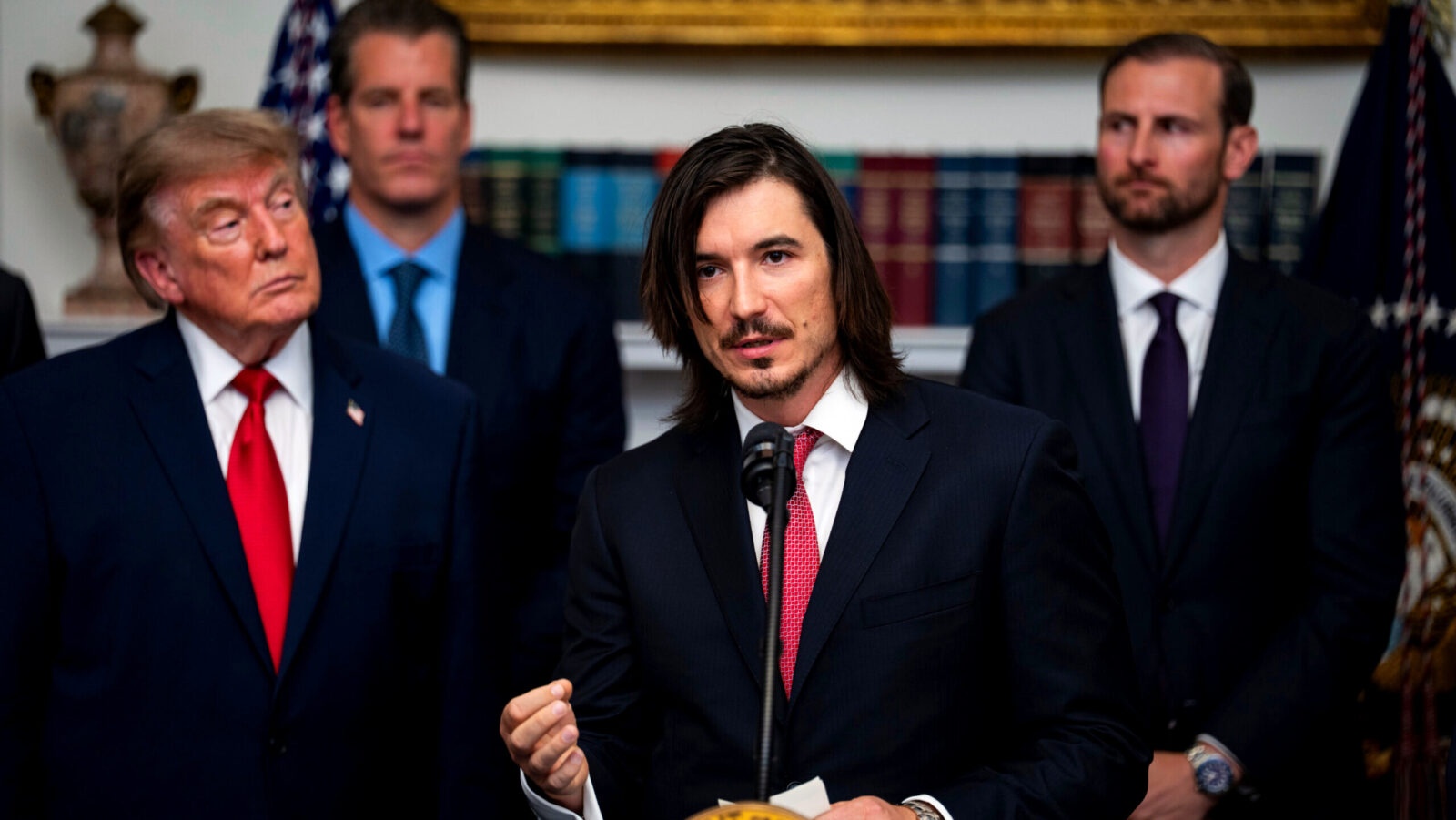
The SEC isn’t waiting for clarity with a capital C to give tokenized stocks the go-ahead.
On Thursday, Wall Street’s watchdog issued a five-year order allowing trading venues to offer digital representations of company shares. The move ushers in a 24/7 type of trading that proponents say reduces counterparty risk through faster settlement. It also comes just days after the Senate blocked the Clarity Act, which would have provided a regulatory framework for cryptocurrency. The new rule is “designed to resolve challenges that have prevented responsible innovation from taking root in the United States while providing investor protections and market integrity standards,” SEC Chairman Paul Atkins said.
The “Innovation Exemption,” which has been in the works for more than a year, shows the SEC is willing to set rules that could push crypto-related offerings forward without lawmakers’ buy-in at a time when investors are hungry for digital assets and trading firms are eager to meet their demand. That’s good news for Robinhood and Coinbase, which both offer tokenized stocks overseas and whose own stocks climbed 5% and 6% respectively on Thursday.
AMC v. Robinhood
The SEC move also answers a big question that has had Robinhood CEO Vlad Tenev feuding with theater-chain AMC’s CEO Adam Aron in recent weeks: Do companies get a say over the tokenization of their stocks?
The chief executive showdown on X started when Aron called Robinhood allowing the trading of a token linked to AMC that the movie theater chain hadn’t OK’d “contemptible” and “vile,” among other things. “Your setting up some kind of fictitious synthetic equity market decouples stock token ownership from a company’s ability to control its own capital-raising efforts,” he added. (Tenev fired back and posted a long take on issuer consent.)
The SEC’s exemption doesn’t apply to synthetic tokens issued by third parties, which mimic share prices but don’t actually give you any ownership and are popular outside the US:
- Instead, it says tokenized stocks have to offer holders the same rights and privileges as traditional securities, including dividends and voting rights.
- The trading venues also have to provide issuers of the underlying stocks a 30-day heads-up that they plan to issue a tokenized version as well as the ability to object and block the move.
Exchanges Want In: It’s not just crypto-trading firms that want the green light for tokenized stocks. The New York Stock Exchange and Nasdaq are prepping their platforms for round-the-clock trading, and the SEC already approved Nasdaq’s plan to allow some tokenized stocks and exchange-traded funds back in March.
Your Close Shouldn’t Take Longer Than Your Board Deck

Manual reconciliations and spreadsheet chains eat days CFOs don’t have, especially with audit season looming. Sage Intacct automates the close, connects real-time financials across entities and gives finance teams visibility to catch issues before they hit the board deck. Built for the companies who have outgrown the basic accounting tools. See how Sage Intacct works.
Generac Soars After $2.4B Deal to Provide Backup Power for Amazon
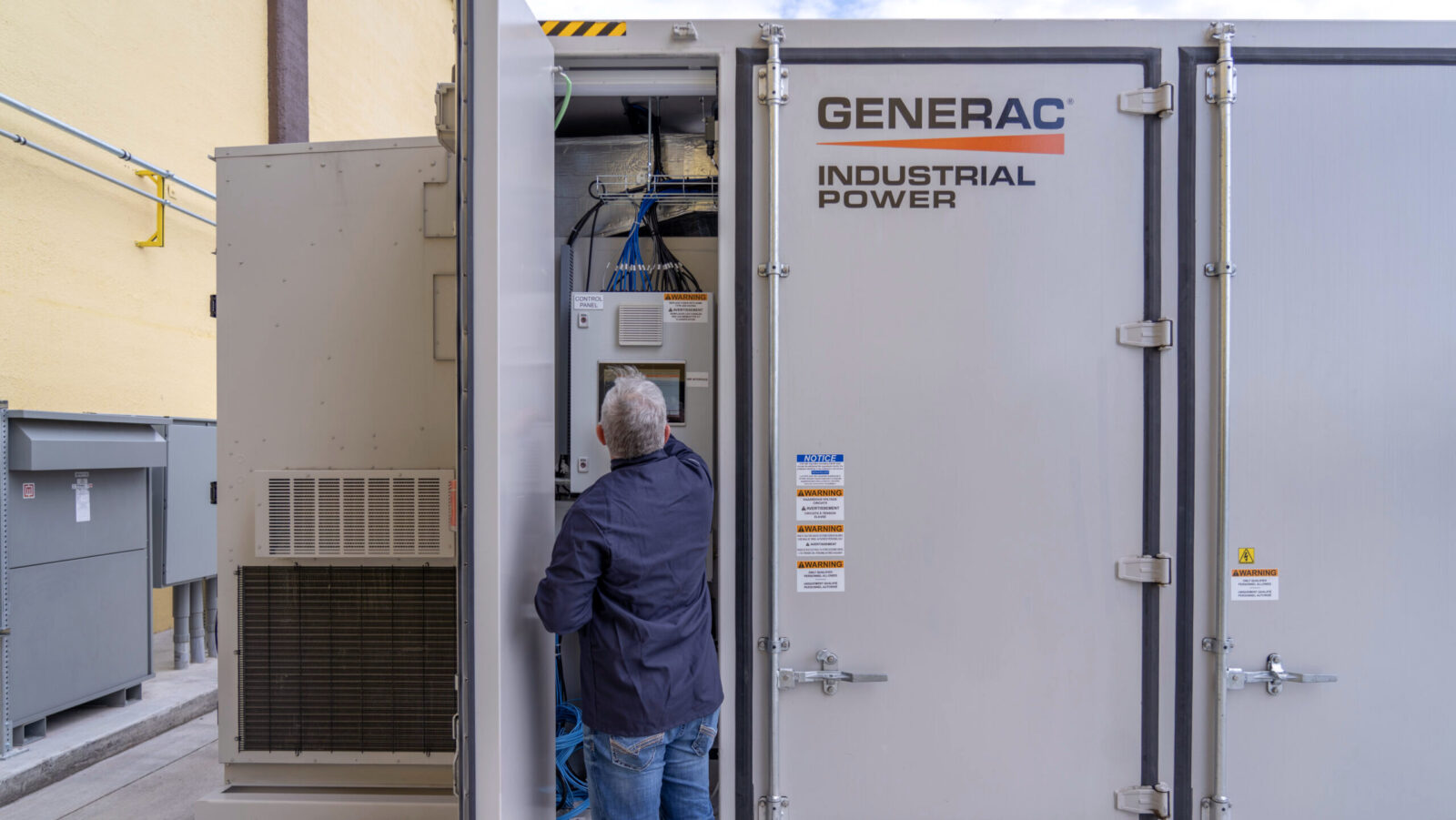
One hyperscaler’s backup plan is another company’s “generational growth opportunity.”
On Thursday, shares of backup power supply company Generac spiked 18.34% after it agreed to supply some $2.4 billion worth of generators to Amazon’s vast data center empire over the next two years. Generac is just the latest in a growing list of unlikely beneficiaries of AI’s energy gridlock.
Tipping the Hyperscales
The company disclosed in its second-quarter earnings call back in July that it had struck agreements with not one but two leading hyperscalers: A filing with the SEC this week revealed both that the second deal was with Amazon and the agreement’s massive scale.
It’s hardly shocking that the backup power company, whose clientele typically includes healthcare, industrial and residential properties, would venture into the data center game. Backup power is critical at installations for which even momentary power outages can corrupt weeks’ worth of AI training progress and fry critical hardware. Meanwhile, connecting to any traditional power source at all has become a bottleneck for the industry. That places generator companies like Generac at the center of hyperscaler efforts to create decentralized, behind-the-meter micro-grids:
- Surging data center demand will require some $110 billion worth of new power plants through 2030, according to a recent Moody’s estimate, but it now takes an average of five years for utility players to gain grid interconnection, according to the Lawrence Berkeley National Laboratory.
- In its most recent earnings call, Generac said that its data center backlog already totaled $1.6 billion before accounting for the Amazon agreement.
Power Trip-Up: Earlier this year, the company told investors that the data center boom represented a “generational growth opportunity.” But to meet the demand of its new agreements, Generac will have to triple its capacity by next year, Canaccord analyst George Gianarikas wrote in a note to clients on Wednesday. Amazon appears ready to help out. As part of the agreement, an Amazon subsidiary received a warrant to buy up to 1.69 million shares of Generac at $201 a pop, though the full offering is only available if Amazon can fill its shopping cart with $8 billion worth of generators.